Tablao Flamenco Cordobés Barcelona: honest show review
Barcelona: flamenco show at Tablao Flamenco Cordobes
Duration: 1 hour
- Free cancellation
A flamenco show in Barcelona requires one clear-headed note before anything else: flamenco is Andalusian, not Catalan. The deeply rooted art form of southern Spain — born in Seville, Jerez and the Roma communities of Andalusia — has no historical connection to Catalonia’s own music traditions (which run to sardana, cobla orchestras and habaneras). This matters for context, not to dismiss the show.
With that said: the Tablao Flamenco Cordobés, established in 1970 on La Rambla, is one of the longest-running tablao venues in Spain. The performers are professional. The production is polished. And for many visitors, seeing a live flamenco show in Spain — wherever in Spain — is a meaningful cultural experience.
| Where | La Rambla 35, central Barcelona |
| Cost | Around €45 (show only) to €65–90 (dinner and show) |
| Time needed | 1 hour (show only) to 2.5–3 hours (dinner and show) |
| Getting there | Metro L3 (Liceu), 3-minute walk |
| Best time | Book 3–5 days ahead; second show on weekends is most energetic |
What the show includes
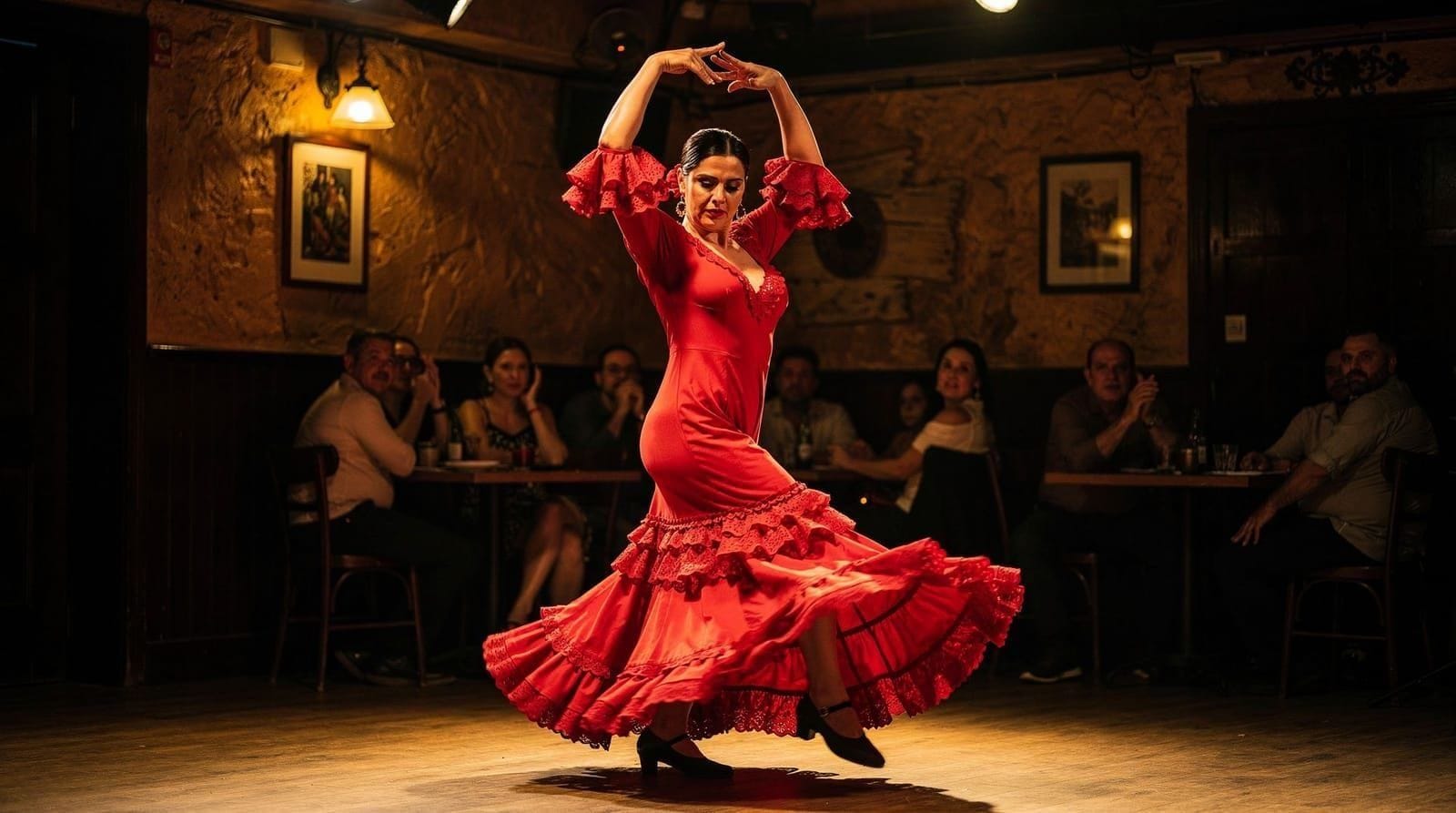
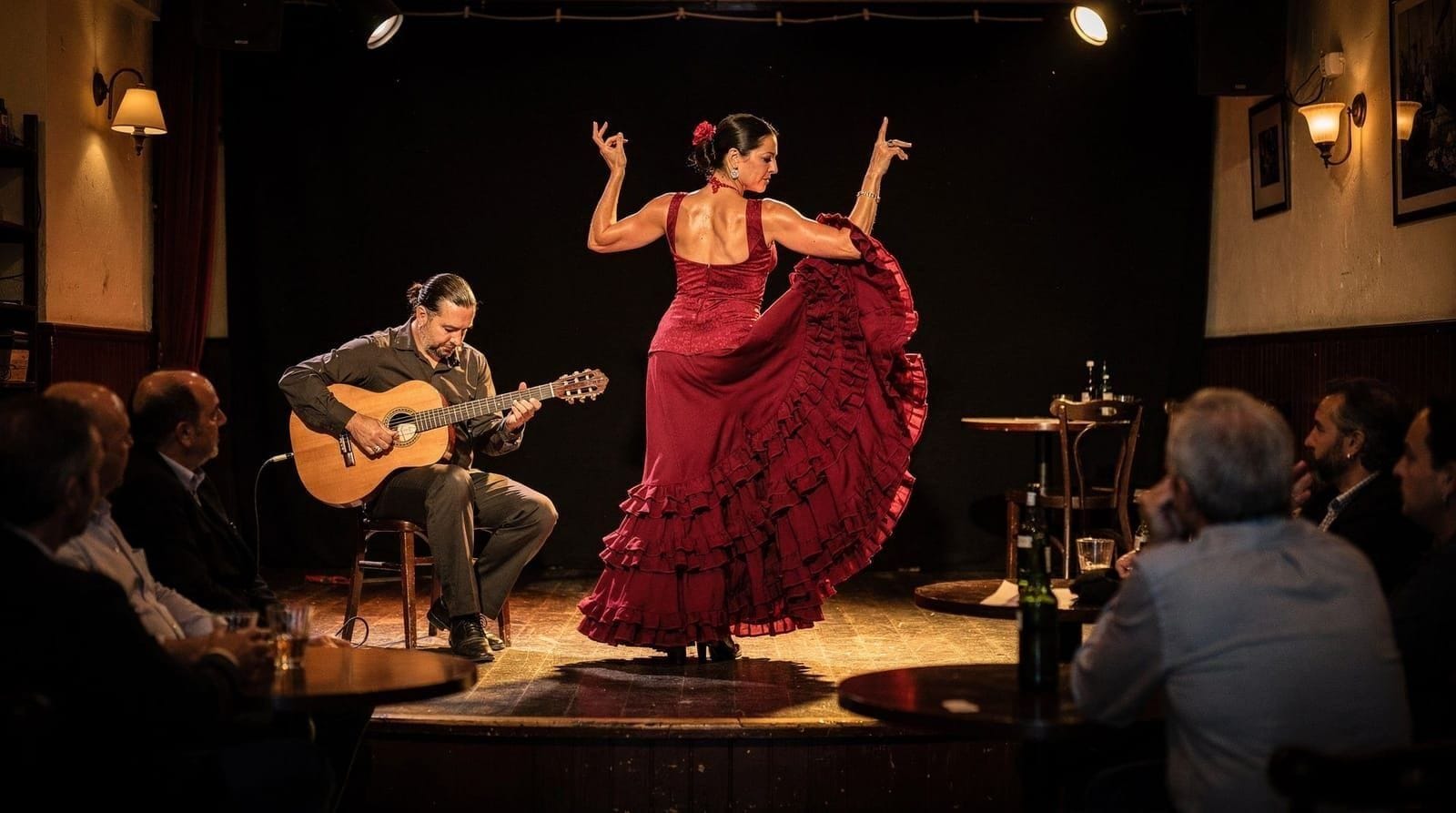
The standard show runs approximately 1 hour and features a company of 8–15 artists: two to three dancers (bailaores/bailaoras), a guitarist (tocaor), a singer (cantaor) and sometimes a percussionist (cajón). The repertoire cycles through the main flamenco palos — soleá, siguiriyas, bulerías, alegrías — with solos, duets and full-company pieces.
The stage setup is traditional tablao style: a wooden floor for percussive footwork, chairs for the musicians at the back, intimate lighting. The venue capacity is around 200 people for the main shows, larger for dinner-show evenings.
Show-only ticket (€45): Admission to the 1-hour performance. Optional drink at additional cost.
Show plus drink (€50–55): Includes one drink (beer, soft drink, house wine or cava) consumed before or during the show.
Dinner plus show (€65–90): Three-course set menu at the restaurant, then the full show. First sitting typically at 7:30pm, show at 9pm. Second sitting available.
Where it is and what to know before you go
The venue is at La Rambla 35, in the middle of Barcelona’s most famous — and most tourist-heavy — boulevard. The location is convenient but the surrounding area is one of Barcelona’s pickpocket hotspots. Keep bags close and avoid the outdoor café tables that line both sides of the street. Our La Rambla honest guide covers the scams and traps in detail.
The theatre entrance is on La Rambla itself; follow signs for the tablao, not the restaurant. Doors open 30 minutes before the show. Seating is assigned when you book — choose seats in the central section if possible for the best sightlines to the stage.
Photography is permitted but flash is prohibited, and most serious photographers switch to lenses that work at high ISO in low light. The lighting is atmospheric rather than bright.
The honest quality assessment
The Tablao Cordobés is a professional production. The dancers have technique; the guitarist is typically excellent. What you will not find here is the raw, spontaneous feeling of a private flamenco gathering in Andalusia, or the charged intimacy of a small peña (private club) in Jerez.
This is ticketed performance for an international audience. The company knows what they are doing, the staging is deliberate, and the emotional arc of the show is constructed for clarity. A first-time viewer will understand what flamenco is after an hour here. An expert will notice the difference between a show calibrated for tourists and one made for Spaniards who grew up with the form.
That gap is not a problem unless you came expecting something else.
Alternatives worth knowing
Los Tarantos at Plaça Reial (€18, 35-40 minutes): Three shows per night, more intimate space, shorter and cheaper. Less theatrical, more immediate. Our best flamenco venues guide rates this as the better value option for most visitors.
Tablao de Carmen at Poble Espanyol (€65, dinner-show): Located in the recreated Spanish village on Montjuïc — a more theatrical venue that pairs the show with Poble Espanyol’s interesting architecture. The dinner here is better than at most other tablaos.
Teatro Flamenco Barcelona (€28, 1 hour): A newer venue near the Gothic Quarter with a consistently good company, strong English-language audience and competitive pricing. Worth checking availability.
Gran Gala Flamenco (€50): The most theatrical of the options, with a larger cast and more elaborate staging. Better production values; less intimate.
The Catalan context: what you are not seeing
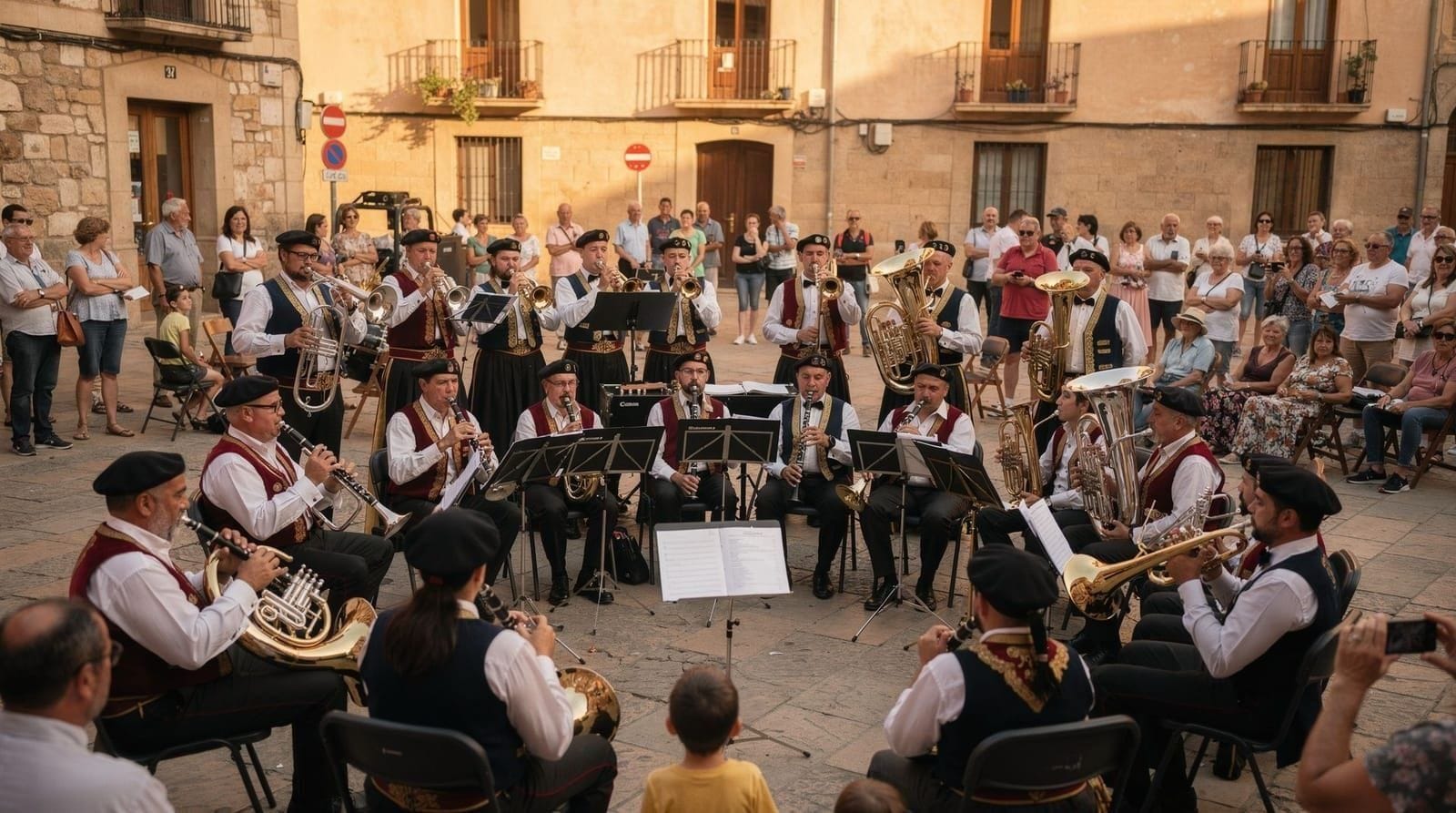
Barcelona’s own performing arts traditions are different and, frankly, less exported. Sardana (the circular Catalan dance) is performed free at the Cathedral most Sundays and at the Parc de la Ciutadella on some weekends. Habaneras (a Cuba-influenced vocal tradition) fill the summer festival season in coastal towns. The castellers (human towers) compete in regional competitions that are occasionally visible in the city. Our Catalan culture guide covers all of these.
None of these are packaged as tourist shows in the same way. That is partly why the flamenco industry fills the gap — it is a spectacular art form, it is Spanish (even if not Catalan), and it is easy to present to international visitors. As long as you understand the geography, there is nothing wrong with going to see it.
When to book
Shows run multiple times per night: first show typically at 7–8pm, second at 9:30–10pm. The second show on weekends is the most in-demand and the most energetic — both for performers and audience. Book at least 3–5 days ahead; same-day tickets are rarely available.
The venue runs shows year-round. There is no single “best season” for flamenco — performances happen nightly regardless of tourist volume, though the January–February off-season sometimes sees smaller companies.
Getting there
Metro L3 (Liceu) deposits you directly at La Rambla, approximately a 3-minute walk to the venue. If you are coming from the Eixample, the walk down via Passeig de Gràcia to La Rambla takes about 20 minutes and covers some of the best modernisme architecture in the city.
Do not take a taxi from La Rambla itself — walk a block off the boulevard and use the ride-hailing app or call a white taxi (meter only, never agree a flat price before getting in). If you plan to eat before the show rather than book the dinner package, our best tapas neighbourhoods guide has options within a short walk of La Rambla.
Is it worth it? The verdict
Yes, if: This is your first time seeing live flamenco, you want to understand the form, and you are comfortable paying €45 for a quality cultural evening. The Tablao Cordobés delivers a well-produced hour of professional performance.
Consider the alternatives if: You are on a tighter budget (Los Tarantos at €18 is a better entry point). You are a flamenco aficionado who will notice the difference between a tourist show and the real thing. You want Catalan culture specifically (see our Catalan music vs flamenco guide for context on what’s local).
Skip the dinner if: The 7:30pm serving time is too early for you (most Catalans eat at 9–10pm), or you want to eat well and see the show — do both separately and you will eat better.
The art of flamenco: what you are watching
Flamenco is not a single style of dance — it is a family of forms called palos, each with its own rhythm, emotional register and historical roots. Understanding the difference between them changes what you get from a tablao show. You stop watching a performance and start watching specific things.
The palos: The Tablao Cordobés typically cycles through four to six palos in a one-hour show. The major ones you will encounter:
- Soleá (soh-leh-AH): Considered the mother of flamenco, soleá is slow, grave and deeply melancholic. The rhythmic cycle is 12 beats with accents on beats 3, 6, 8, 10 and 12. When a dancer performs soleá, the footwork is measured and deliberate rather than fast — the intent is weight and depth, not spectacle.
- Bulerías (boo-leh-REE-as): The opposite of soleá — fast, syncopated, improvisational and often playful. The same 12-beat cycle but at double or triple speed. Bulerías is where performers most clearly feed off each other and the audience; it typically ends the show and produces the most visible spontaneity.
- Siguiriyas (see-ghee-REE-yas): The most demanding palo emotionally, siguiriyas deals with suffering, death and longing in a way that is difficult to watch without being affected. The metre is unusual even by flamenco standards. If the singer closes their eyes and the room goes absolutely silent, you are probably watching siguiriyas.
- Alegrías (ah-leh-GREE-as): As the name suggests, joyful and celebratory — originated in Cádiz. Characterised by graceful arm movements (floreos) and skirt work. Often given to female soloists as a showcase piece.
- Tangos flamencos: Fast, rhythmic, rooted in 4/4 time. Not the Argentine dance — a completely different form, energetic and often comedic in the hands of a skilled cantaor.
What to watch in the dancers: The footwork (zapateado) is the most immediately spectacular element, but serious watchers focus on the arms (braceo) and hands (floreos) — the slow rotation of the wrists and the separation of each finger are technically demanding and emotionally expressive in ways that take years to develop. Watch the torso, too: flamenco posture is a controlled tension, the chest lifted and the back arched in ways that look effortless and are not.
The cante jondo: “Deep song” is the vocal tradition at the heart of flamenco. The cantaor (male singer) or cantaora performs in modes derived from Moorish and Romani musical traditions, with melismatic passages (single syllables held and ornamented across many notes) that have no direct equivalent in Western classical music. The singing often sounds anguished to unfamiliar ears — this is intentional. Duende, the word used to describe flamenco at its most powerful, comes closest to English as “soul” or “spirit,” but connotes specifically the kind of beauty that contains darkness.
Why silence matters: The tablao audience participates not by clapping on the beat but by holding silence at the right moments. Clapping on-beat during soleá or siguiriyas is considered disruptive. The correct response to a moment of power is silence, a sharp exhale, or the word “olé” — said quietly, not shouted. The shout version (“OLÉ!”) is reserved for a moment of exceptional technical achievement, particularly a difficult footwork sequence executed cleanly. Watch the Spanish visitors in the room for timing cues.
The venue and neighbourhood
La Rambla context: La Rambla is Barcelona’s most famous street and, depending on the hour, one of its most uncomfortable ones. The 1.3-kilometre boulevard runs from Plaça de Catalunya to the Columbus Monument at the port. It functions as a processional route, a tourist hub and a pickpocket corridor in roughly equal measure. The Tablao Cordobés at number 35 sits near the centre of the boulevard, in a block where the pedestrian promenade is at its widest.
The neighbourhood has improved in recent years — the city has increased police presence and removed several persistent scam pitches — but the basic vigilance rules apply: do not sit at the outdoor café tables with your bag on the back of your chair, keep your phone in a front pocket, and do not engage with anyone offering games of chance on a folding table. The tablao itself is inside a proper building with controlled entry; the risk is in the 10 minutes before and after on the street.
The building layout: The Tablao Cordobés occupies a building that also contains a restaurant on the ground floor and the performance space below or to the rear (depending on the current configuration). The entrance sequence takes you past the bar area — drinks can be ordered before the show or during the interval — and into the performance space. The room is dark, deliberately theatrical, with the stage visible from all seats.
Seating categories: When booking, you will typically see two or three seating tiers — front (ring or first row), central, and rear. The front seats give the most immediate view of footwork, which is important because the zapateado is heard as much as seen, and proximity to the stage floor matters. Central section seats offer a balanced view of the whole company. Rear seats are significantly cheaper but lose the footwork detail. If this is your first flamenco show, central is the pragmatic choice; if you have seen flamenco before and want the footwork experience, spend the extra for front-row.
The bar and pre-show: The show-plus-drink ticket covers one standard drink. The bar serves beer, wine, cava and soft drinks. Ordering cava is the traditional choice and fits the occasion better than a pint. Drinks are typically consumed in the bar area before being taken to your seat; some shows allow a drink table at your seat, others do not.
What to wear and arrive knowing
Dress code: There is no enforced dress code at the Tablao Cordobés. However, this is an evening performance in a traditional venue — shorts and flip-flops read as visibly out of place in a way that will make you feel underdressed. Smart casual (trousers or a dress, a light jacket for the air-conditioned interior) fits comfortably. Barcelona restaurants and evening venues generally trend toward the presentable end of casual; the tablao is no different.
Phone policy: Photography without flash is permitted during performances. Video recording is generally allowed. What is not acceptable is holding up a bright screen throughout the show — the light from a phone in video mode is visible to the performers and to everyone seated around you, and interrupts the atmosphere the show depends on. Take your photos in the first five minutes, put the phone away, and watch the rest live. You will not regret it.
What happens at the end of a palo: Unlike a concert, flamenco shows do not pause for applause between every piece. The company often moves directly from one palo to the next with only a change of personnel on stage. Applause is appropriate at the end of a clearly concluded piece, particularly after a demanding solo. If you are uncertain, watch the Spanish-speaking audience members for cues. Sustained applause is welcomed at the show’s close.
Arriving late: Shows begin on time and the doors close. Arriving after the show starts means waiting in the bar area until a natural break — you may miss the first one or two palos entirely. There are no reserved late-seating arrangements. Plan to arrive at least 15 minutes before start time; 20–25 minutes gives you time for a drink and comfortable seating.
Showing and after-show area: After the performance, the bar area reopens and some performers may be visible in the venue. The tablao does not organise formal meet-and-greet arrangements, but in less crowded shows a brief acknowledgement with a performer is not uncommon if you approach respectfully.
A flamenco show in Barcelona is a worthwhile evening for most visitors — go in knowing what it is and you will enjoy it more than if you arrive expecting something it was never designed to be.
Compare alternative tours
Frequently asked questions about Tablao Flamenco Cordobés Barcelona
How much does the Tablao Flamenco Cordobés show cost?
Show-only tickets start at around €45 per adult. Show plus drink is slightly more. Dinner-and-show packages run €65–90 depending on the menu. Book in advance — walk-up on the night is rarely possible.Is flamenco authentic in Barcelona?
Flamenco is not a Catalan art form — it originates in Andalusia (Seville, Jerez, Granada). That said, professional companies like those at Tablao Cordobés employ excellent Andalusian dancers and musicians. The show is authentic in execution even if not native to Barcelona.How long does the show last?
Shows run approximately 1 hour. Dinner-and-show evenings run 2.5–3 hours in total including the meal.Is it touristy? Who goes?
Yes, it is a tourist venue. The audience is almost entirely visiting tourists. That does not mean the performance is poor — the artists are professional — but you will not find locals in the seats.What is the difference between Tablao Cordobés and Los Tarantos?
Tablao Cordobés is a larger, more theatrical production with a bigger company (15+ performers). Los Tarantos at Plaça Reial is smaller and more intimate — shorter shows at €18 and several showtimes per night. Los Tarantos feels less polished but more immediate.Should I book the dinner option?
Only if dinner timing works for you — the first show often starts at 8pm, which is early for a Spanish dinner. The food is fine but not exceptional. For the food alone, you can eat much better for similar money in the Gothic Quarter.