Best restaurants in El Born: where the locals actually eat
El Born is where Barcelona eats well. Not just tourists browsing Instagram maps — actual barcelonins, the ones who grew up here or moved here for the neighbourhood’s particular density of good things: independent bars, serious kitchens, wine lists that go beyond the obvious, and terraces where you can sit for two hours without anyone hurrying you along.
| Where | El Born, between the Gothic Quarter and Barceloneta |
| Budget | Around €25–40/person for a proper meal with drinks |
| Getting there | Metro L4 to Barceloneta or Jaume I |
| Best time | Weekday lunch for space, book ahead Fri–Sat evenings |
| Don’t miss | El Xampanyet’s house cava, Bar del Pla’s croquetes |
The neighbourhood has changed significantly over the past two decades, but unlike parts of the Gothic Quarter just across the Via Laietana, it has not surrendered entirely to the tour-group economy. The restaurants listed here are the ones where the regulars actually return.
A neighbourhood built around food and drink
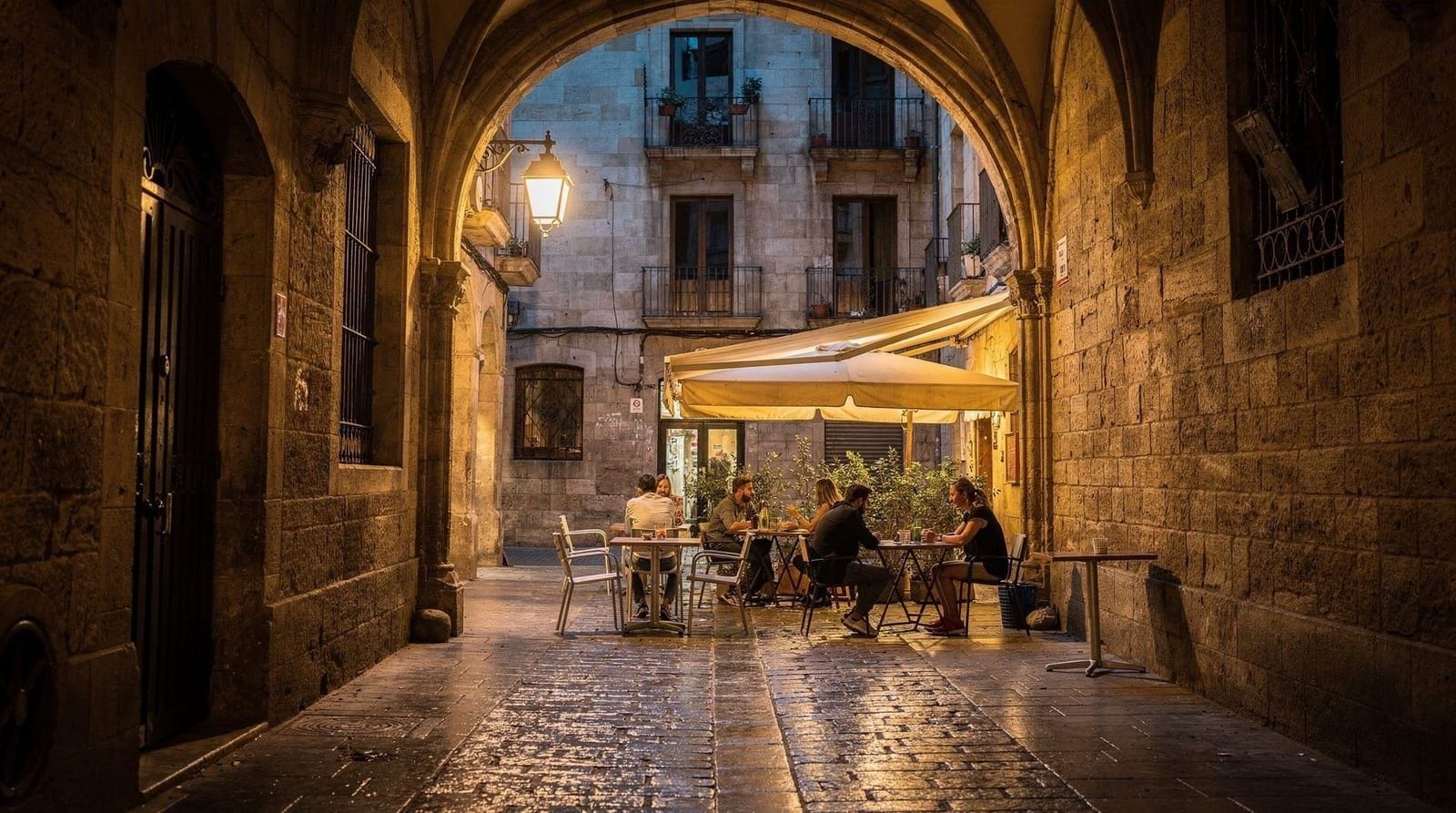
El Born sits between the Gothic Quarter and Barceloneta, anchored by the Basílica de Santa Maria del Mar and the covered Mercat de Santa Caterina. The medieval streets — narrow, cobbled, lined with palaces and workshops — make walking between bars and restaurants a pleasure rather than a chore. This is the right neighbourhood for an unplanned evening: turn up, see what looks good, let one drink lead to another.
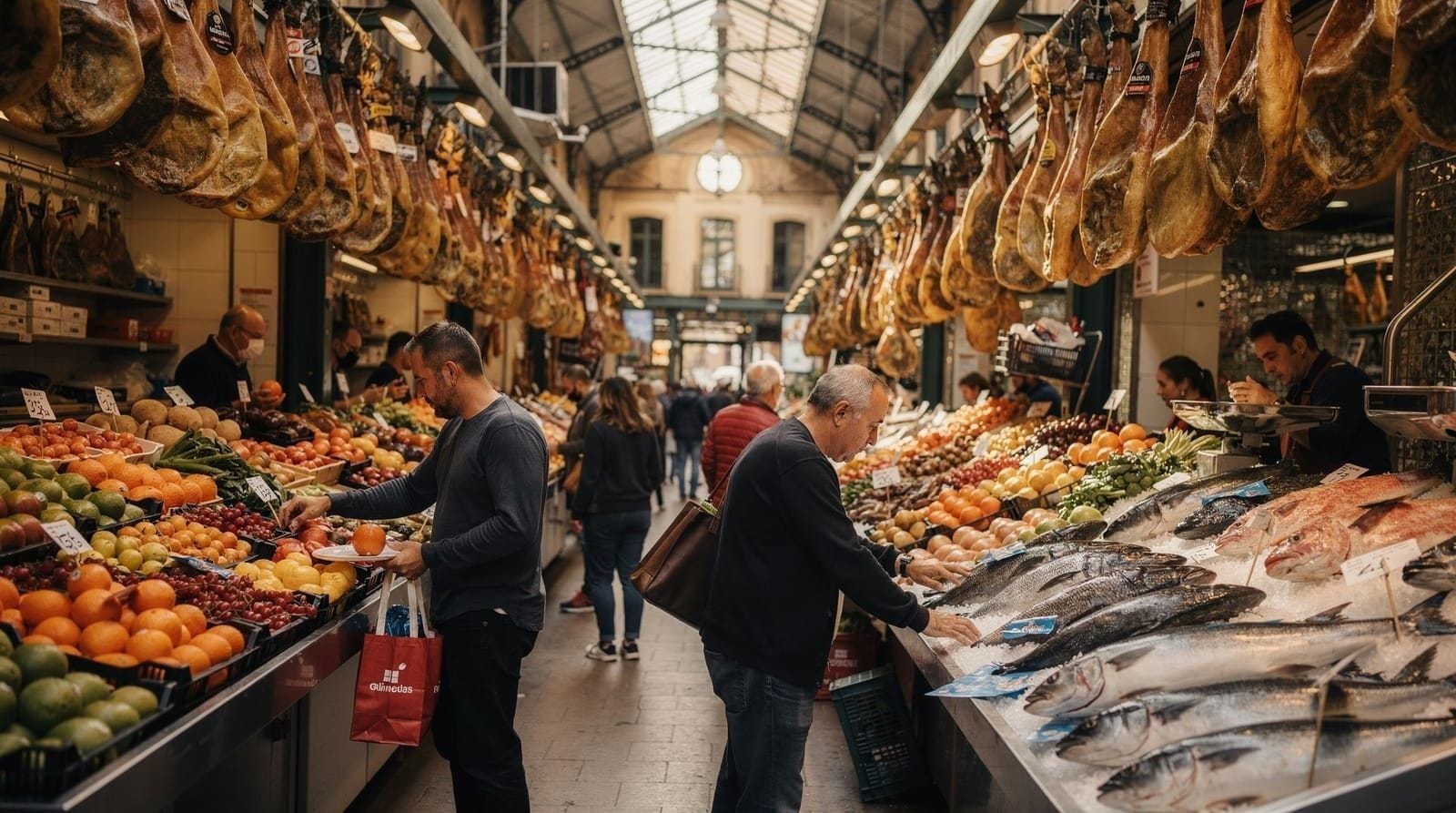
Before we get to specific venues, one practical point about the area’s market. Mercat de Santa Caterina — the market with the extravagant mosaic roof designed by Enric Miralles — is El Born’s answer to La Boqueria, and in almost every way it is better. There are fewer tourist food stalls, more stallholders who have been trading for decades, and the fruit and vegetable quality is outstanding. Barcelonins shop here; La Boqueria is mostly theatre at this point. If you are staying nearby and want to self-cater for any meal, Santa Caterina is the obvious starting point.
If you would rather have a local walk you through the neighbourhood’s food scene than piece it together alone, a guided tapas tour hits several of these spots in one evening:
How to choose: quick vs. sit-down vs. drinking
| Style | Where | Price range | Best for |
|---|---|---|---|
| Quick / market lunch | Mercat de Santa Caterina terrace bar | €8–14 | Budget, speed, between sights |
| Sit-down lunch | Bar del Pla, Espai Mescladís | €14–24 | A proper midday meal without rushing |
| Vermouth / tapas bar | El Xampanyet, Bormuth | €10–20 | Late afternoon, sociable grazing |
| Dinner | Bar del Pla (evening), Ocaña | €25–45 | An evening out with booking ahead |
Coffee and morning pastry
The neighbourhood does not do fussy brunch in the way that Eixample has embraced. Mornings in El Born are quieter and more Catalan in character: an espresso, a croissant, possibly a pa amb tomàquet (bread rubbed with ripe tomato and drizzled with olive oil) if the bar is old enough to do it properly.
Bar del Pla (Carrer de la Montcada, 2) doubles as a morning café and later becomes one of the neighbourhood’s better lunch and dinner options. The pastries are good, the coffee is serious, and the marble bar has the right kind of worn-in feel. Come back in the evening — more on this venue below.
Cafès El Magnífico on Carrer de l’Argenteria is one of the city’s finest coffee roasters, family-run for over a century. No food to speak of, but if you want to understand what Barcelona coffee culture can be at its best, this is the address. Beans to take home too.
Both are within a five-minute walk of the Picasso Museum, which makes them a natural stop before the museum opens or right after, when the morning crowd has thinned and a table is easier to find.
Lunch: the neighbourhood’s best options
Bar del Pla
Return here for the real deal. Mains run €18–24 and the kitchen does Catalan classics with genuine care: croquetes de pernil that are actually creamy inside, salt cod with honey and pine nuts, rabbit with romesco. The dining room is small and fills quickly; either arrive early or be prepared to wait at the bar with a glass of cava. The wine list is honest and fairly priced. This is the kind of cooking that has nothing to prove and does not need to.
Espai Mescladís
One of El Born’s more interesting projects: a social enterprise restaurant that provides employment and training to people from vulnerable backgrounds. The daily set menu is €14 — soup or salad, a main, dessert, bread and water — and the cooking is genuinely accomplished rather than merely virtuous. The menu changes according to what’s seasonal and available. Lunch only on weekdays; worth seeking out if you are looking for good food at a price that does not punish you for eating in the centre.
Mercat de Santa Caterina (for DIY lunch)
The market’s upstairs terrace bar serves simple food at market prices: bocadillos, daily specials, cold drinks. Surrounded by neighbourhood shoppers rather than other tourists. A perfectly reasonable option if you are on a budget or just want something quick before a visit to the Picasso Museum nearby.
Vermouth hour and afternoon tapas
In Barcelona, vermut is not just a drink — it is a ritual, typically happening between noon and 2pm on Sundays but increasingly available through the week in the right bars. El Born has two outstanding addresses for this.
El Xampanyet
The address that defines what a Catalan cava bar should be. Carrer de la Montcada, 22 — roughly halfway up the street that leads to the Picasso Museum, on the left as you walk up. The house cava comes in little earthenware jugs, chilled and slightly sweet, the way it has been served here for decades. Order the anchovies. The bar itself is covered in tiles and has not changed its look in living memory, which is precisely the point. Go on a Tuesday lunchtime if you want to avoid the weekend crush.
Bormuth
A few streets away on Carrer del Rec, Bormuth does a more contemporary interpretation of the vermut bar: good vermut selection, strong gin and tonic list, pintxos and small plates rather than the traditional can of anchovies. The crowd skews younger than El Xampanyet but is still recognisably local. The outdoor tables fill fast when the weather is right.
If vermouth hour turns into a proper crawl, pace yourself: two or three stops of a small drink and a couple of bites each works better than committing to one place for the whole afternoon. That is, in effect, how locals actually do it — El Born rewards movement more than any single address.
Dinner in El Born
Bar del Pla (evening)
Worth returning to in the evening if you missed lunch. The atmosphere shifts — slightly louder, more animated, the lighting warming up. The menu is the same but the rhythm of service changes, with more emphasis on sharing and grazing through several smaller dishes. Book ahead for dinner, especially Thursday through Saturday.
Ocaña
Technically just over the border into the Plaça Reial area at the edge of El Born’s territory, but included here because its energy is entirely of this neighbourhood. The ground floor cocktail bar is beautiful — all faded colonial elegance, palms, mirrors, ornate ceilings. The tapas are competent rather than remarkable, but this is primarily a place to drink well and watch the square. Evening only; prices are Plaça Reial (i.e., slightly higher than elsewhere), but the space earns it.
El Xampanyet (second visit)
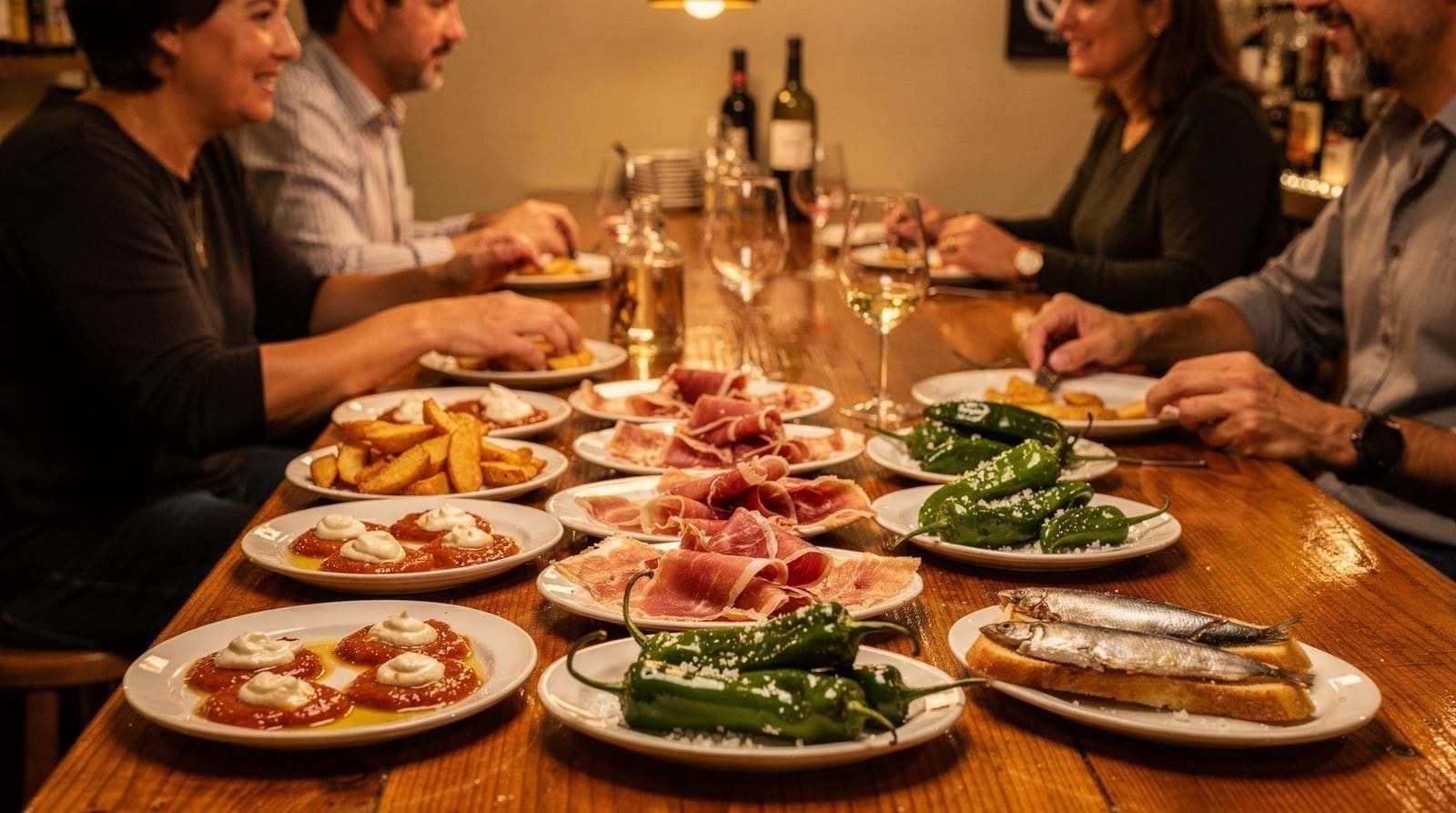
If you did not make it to El Xampanyet during the afternoon, an early evening visit before dinner is also worth considering. The bar transforms slightly as the light drops — the neighbourhood regulars give way to a broader crowd, the noise level rises, and the little jugs of house cava start to feel like the most logical drink in the world. Pair with the cured meats and whatever seasonal conserves they have open that day. It is not a dinner — but it is the best kind of opening act.
The oldest bar in Barcelona (a detour worth taking)
Bar Marsella sits in El Raval rather than El Born strictly speaking — a short walk across the Rambla del Raval — but no list of drinking establishments in this part of the city is complete without it. Founded in 1820, serving absinth since before most countries decided it was dangerous, the interior has not been thoroughly cleaned since roughly that date. Bottles of absinthe gather dust on shelves that have been gathering dust for two centuries. Hemingway drank here; Picasso supposedly did too, though Barcelona claims Picasso for every bar. Order the absinthe with a side of sugar and hot water. It is not the best drink you will have in Barcelona; it is the most atmospheric.
Practical notes for El Born
When to go: El Born is genuinely busy on weekends, particularly in summer and around events at the Parc de la Ciutadella. Weekday lunch is the best time to eat without competing for tables. Friday and Saturday evenings require advance bookings at the better places.
Neighbourhoods nearby: The Gothic Quarter is immediately adjacent, though its restaurant quality is more variable. Barceloneta is a short walk south if you want to eat by the water. For broader context on where El Born fits among Barcelona’s best neighbourhoods for food, the differences between areas matter more than most visitors expect.
Budget: Expect to spend €25–40 per person for a proper lunch or dinner with drinks, less if you stick to the set menus or graze on pintxos rather than ordering à la carte. The Barcelona on a budget guide has more detail on keeping costs reasonable across the city.
Getting there: Metro line L4, Barceloneta or Jaume I stations. Both are a five-to-ten-minute walk into the heart of El Born depending on where you are heading. For context on the broader transport options across Barcelona, a single metro ticket covers a single journey regardless of distance — it is worth loading a T-Casual card (10 journeys) if you plan to use the metro more than three or four times in a day.
If you would rather combine the food with a short guided history walk through the medieval streets around Santa Maria del Mar, this option pairs a Gothic-El Born walk with wine and tapas stops:
El Born is not the cheapest place to eat in Barcelona — that would be Poble-sec or parts of Gràcia — but it is consistently one of the most rewarding. The neighbourhood has enough history and authenticity that the food feels rooted in something real rather than assembled for visitor consumption. That is a harder thing to find in a city with Barcelona’s tourist volumes than it might seem.
FAQ
Do I need to book restaurants in El Born in advance? For casual lunch or vermouth-bar grazing, no — walk-ins are normal. For sit-down dinner at popular spots like Bar del Pla or Ocaña, book ahead, especially Thursday through Saturday evenings, when tables fill quickly.
Is El Born more expensive than other Barcelona neighbourhoods for food? Slightly, yes. Expect €25–40 per person for a proper meal, above Poble-sec or parts of Gràcia, but below the Passeig de Gràcia tourist-restaurant tier. The quality difference generally justifies the gap.