Rainy day in Barcelona: 10 things to do indoors
Rain in Barcelona is usually short-lived. The city averages around 55 rainy days per year, and most of those are brief afternoon showers rather than full grey days. But sometimes the weather genuinely turns — particularly in November through February — and you wake up to a grey sky and a forecast that says rain until evening. Here’s how to use that day well.
| Rainiest months | November–March |
| Best museum pick | MNAC (Romanesque collection) |
| Best free option | Mercat de Santa Caterina |
| Best booked-ahead pick | Picasso Museum |
| Rainy-day habit | Wait an hour before cancelling outdoor plans April–October |
A note on Barcelona rain
Before the options: Barcelona’s rainy days have a different character to, say, London’s. A November rainstorm here tends to be heavy and then done, leaving the streets clean and the air clear. If it’s raining in the morning, the afternoon is often fine. This affects how you plan: don’t write off the entire day, and don’t cancel outdoor plans just because it’s grey when you wake up.
The best months for sustained rain are November through March. In summer, rain is rare and usually afternoon thunderstorms. If your trip falls in April–October and it’s raining, wait an hour before pivoting to all-indoor plans.
The Picasso Museum, booked online
The Picasso Museum on Carrer de Montcada in El Born is one of the best cases for advance online booking in Barcelona — and on a rainy day, it’s essential. The physical queue gets long and wet. Booking online (€15 standard ticket, €19 with temporary exhibitions) lets you walk in at your allotted time.
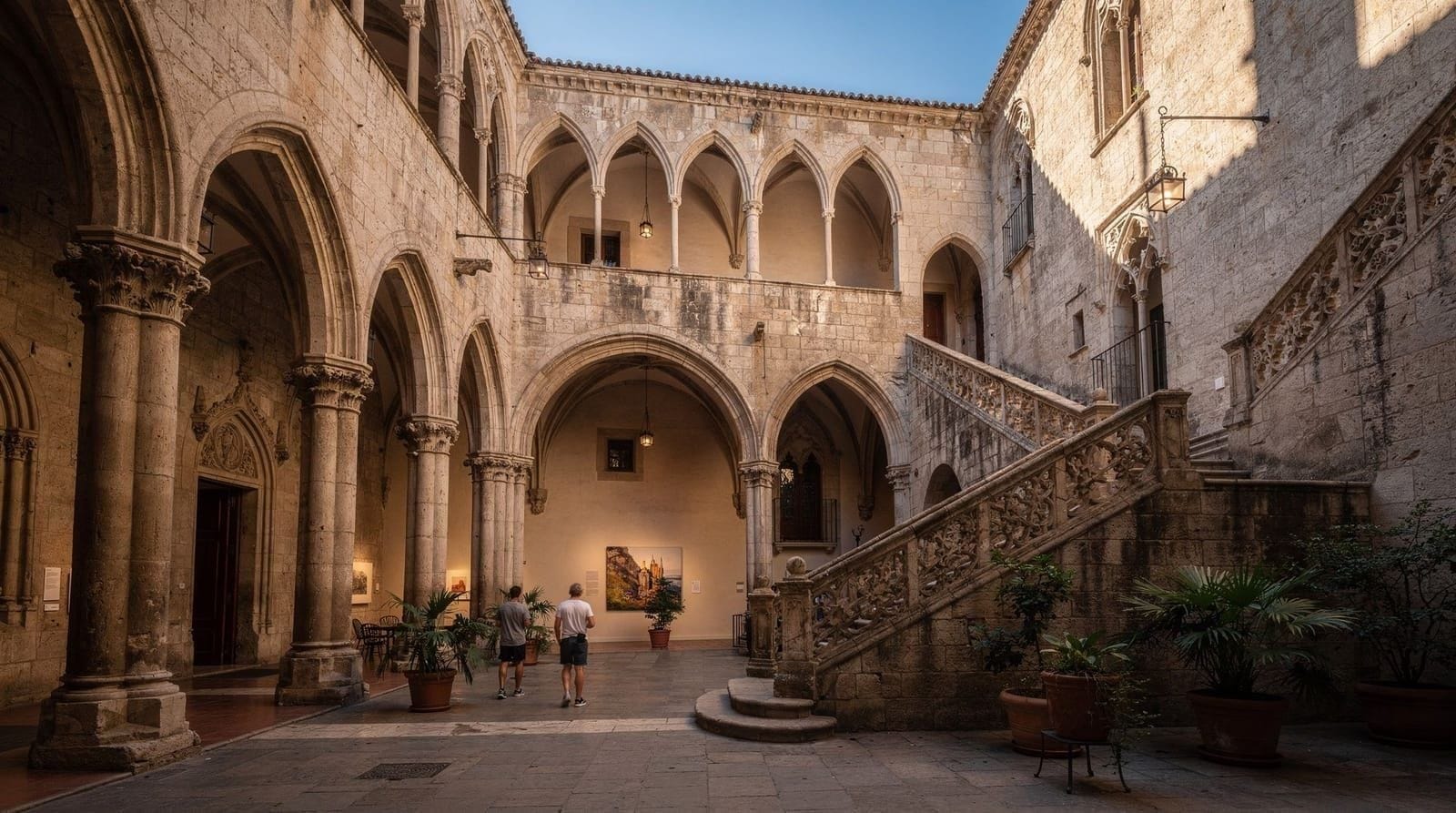
The collection focuses on Picasso’s early years in Barcelona and is particularly strong on his academic work as a teenager and the Las Meninas series from 1957. Even if you’re not a devoted Picasso follower, the medieval mansion buildings that house the collection are extraordinary. Free on the first Sunday of the month and Thursday evenings from 5pm — book a slot in advance even for free entry. Our Picasso Museum guide covers the highlights and what to prioritise if you have two hours.
MNAC — the Romanesque collection alone justifies the visit
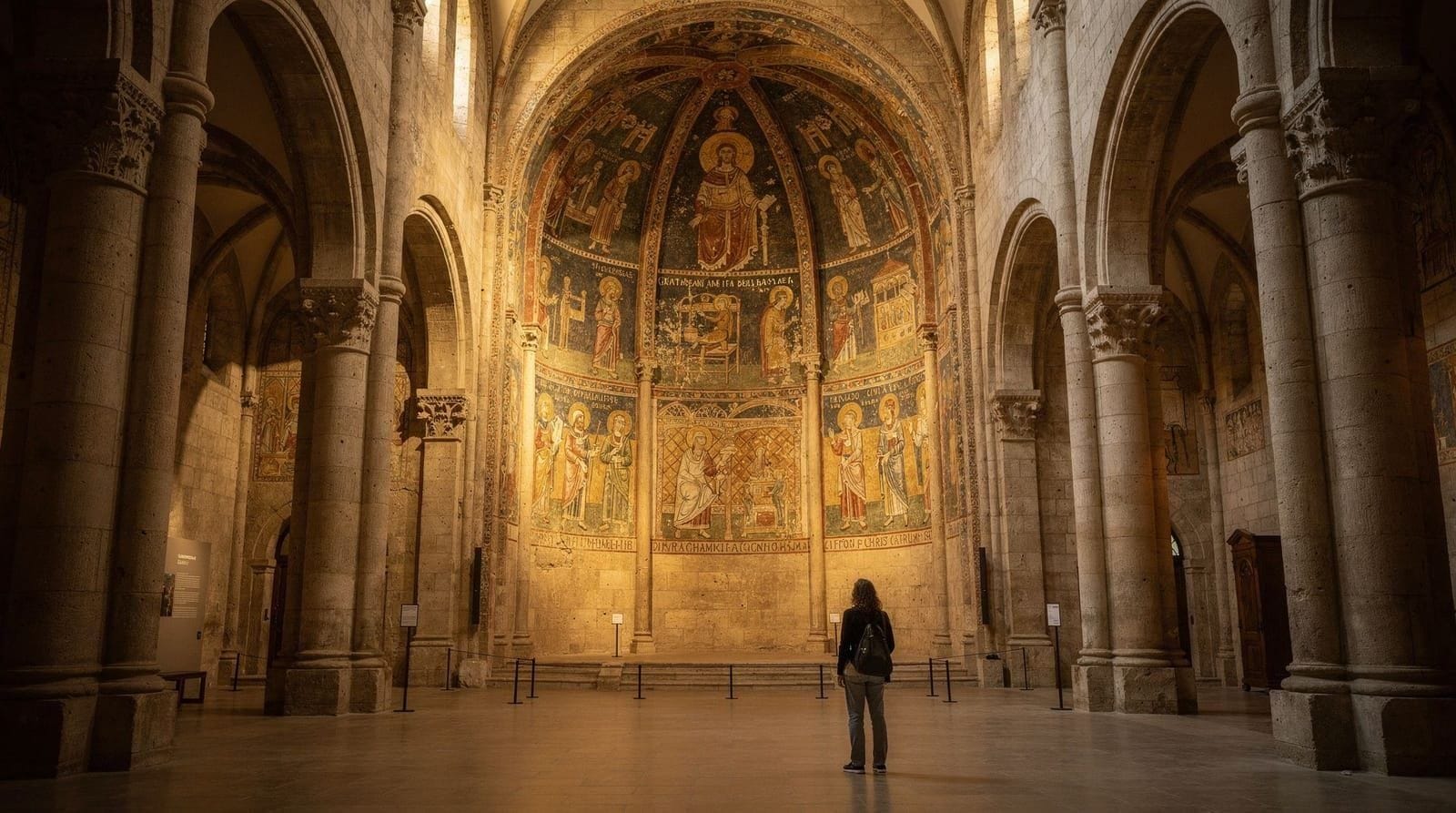
The Museu Nacional d’Art de Catalunya on Montjuïc houses one of the world’s finest Romanesque art collections — entire church apses moved stone by stone from Pyrenean chapels in the early 20th century and reassembled inside the museum. The scale and quality is unexpected; this is not a specialist interest collection but a genuinely spectacular visual experience.
Beyond the Romanesque, the Modernisme galleries cover the same period as the city’s famous architecture but from the perspective of decorative arts, furniture, and painting. The building itself — the Palau Nacional, built for the 1929 International Exposition — has a spectacular oval hall. Entry is around €12 (check current pricing and free entry days). Our MNAC guide explains what’s in each section. Allow three hours minimum.
MACBA — contemporary art in El Raval
The Museu d’Art Contemporani de Barcelona sits in the El Raval neighbourhood in a Richard Meier building from 1995 that looks deliberately clean and white against the neighbourhood’s older fabric. The permanent collection covers European and Latin American art from the 1940s onwards, and the temporary exhibition programme tends to be genuinely ambitious rather than populist.
On a rainy day, the building’s tall atrium and ramp system are particularly striking — the light through the glass facade changes character with cloud cover. Entry around €12; free on some weekend afternoons (check current schedule). The surrounding Plaça dels Àngels has skaters sheltering under the building’s overhang on wet days, which adds its own atmosphere.
Palau de la Música Catalana — guided tour or live concert
The Palau de la Música Catalana in the Sant Pere neighbourhood (between the Gothic Quarter and El Born) is one of the most extraordinary concert halls in the world. Designed by Lluís Domènech i Montaner and completed in 1908, the auditorium is a stained-glass and mosaic extravaganza — the ceiling alone, an inverted dome of coloured glass, is worth the visit. The building is UNESCO listed.
You can visit via a guided tour (€22, runs daily) or by attending a concert, which gets you the full experience of the space as it was intended. The Palau has a regular programme including early morning “good morning” concerts and classical series. Check the programme before your trip; attending a concert is a more memorable experience than a tour. Our Catalan music guide places the Palau in the broader context of Barcelona’s musical culture.
La Boqueria — coffee and tasting, not a shopping expedition
La Boqueria on La Rambla is one of the most photographed markets in the world and in peak tourist season it can feel more like a theme park than a working market — stalls catering primarily to visitors, prices elevated, and the central sections congested. On a rainy day in autumn or winter, it becomes something much closer to its original self.
The tasting bars and juice stalls are at their best when you can actually stand at them without being jostled. A coffee and a piece of jamón ibérico at the counter of one of the central bars is a legitimate morning activity. Buying ingredients for a picnic is less sensible in the rain. Our La Boqueria market guide covers which stalls are worth stopping at and which are primarily there for tourists.
A cooking class in El Born
A rainy day is the perfect excuse for a cooking class, and El Born has several well-regarded options. Most classes run two to three hours, cover three to four dishes (typically starting with pa amb tomàquet — bread with tomato — then moving through a seafood dish and dessert), and include the meal you’ve made at the end. Prices typically range from €65–95 per person.
Our cooking classes guide reviews the main options and what style of class suits which kind of traveller. Book a day or two ahead — rainy days fill up fast.
Hospital de Sant Pau — self-guided Modernisme
The Hospital de Sant Pau is one of the city’s most undervisited major sights. Designed by Lluís Domènech i Montaner and built between 1901 and 1930, it was a functioning hospital until 2009 and is now a UNESCO World Heritage site open to visitors. Entry is €15–17 depending on whether you choose a guided option.
The complex — 12 pavilions connected by underground galleries, each decorated with mosaics, ceramics, and carved stone — is stunning in wet weather: the terracotta and white ceramic facades look particularly vivid against a grey sky. It’s a 10-minute walk from the Sagrada Família along Avinguda de Gaudí, making it natural to combine if you’re already in that part of the city. Our modernisme route guide places it alongside the other major Modernisme buildings.
Joan Miró Foundation on Montjuïc
The Fundació Joan Miró, designed by Josep Lluís Sert in 1975, is one of the city’s most enjoyable museums — bright, spatially generous, and full of work by an artist who was genuinely playful even at a large scale. The permanent collection covers Miró’s entire career and includes major textile works, sculptures, and the full range of his painting from the 1910s to the 1980s.
The building itself is worth noting: Sert’s design uses terraced levels and skylights to fill the space with natural light, which works remarkably well even on overcast days. Entry around €14. Our Joan Miró Foundation guide covers the highlights. Allow two hours.
A vermut bar crawl in Poble-sec
A grey afternoon is precisely when the vermut bar culture of Barcelona comes into its own. The tradition — sweet vermouth served with a splash of soda, an olive, and something salty to eat, consumed between noon and 2pm at a standing bar — is one of the genuinely distinctive pleasures of the city.
Poble-sec has some of the best vermut bars in the city. Carrer de Blai, known for pintxos bars, also has several old-fashioned vermut spots. Bar Calders and Bar Olimpia are two reliable options. Budget €3–5 per vermut plus a couple of euros for snacks. Our vermut guide explains the custom and suggests an order of stops.
Mercat de Santa Caterina — the quieter market
Mercat de Santa Caterina in El Born is the neighbourhood’s working market and a genuinely beautiful building — the undulating mosaic roof by Enric Miralles is one of the city’s architectural highlights. On a rainy morning, the market has a particular warmth: the stalls are brightly lit, the coffee at the market bar is good, and because it primarily serves local residents rather than tourists, it functions even when conditions outside are unpleasant.
It’s smaller than La Boqueria and easier to navigate. On a slow morning you can take your time looking at the stalls without being jostled, which is exactly what a rainy morning calls for.
Food markets and covered arcades as a rainy-day fallback
Beyond the dedicated market visits above, Barcelona has several covered spaces that work as impromptu rainy-day refuges without requiring a plan. The passages and covered sections around the Eixample shopping streets, the glass-roofed sections of larger department stores near Plaça de Catalunya, and the arcaded streets in the lower Gothic Quarter all offer a way to keep moving and looking at the city without getting soaked. None of these require booking or planning — they’re useful precisely because you can duck into them on short notice when a shower starts.
A rainy half-day combining two sights
If you only have half a day and rain, a workable combination is the Hospital de Sant Pau in the morning followed by a short walk to the Sagrada Família neighbourhood for lunch (even without going inside, the exterior is visible from covered arcades nearby), then the Picasso Museum or MACBA in the afternoon depending on which side of the city you’re based. This avoids excessive transit in the rain while covering two genuinely different architectural experiences in one day. Check opening hours before setting out — the Hospital de Sant Pau and Picasso Museum keep different weekly schedules, and it’s worth confirming both are open on your specific day.
Planning around the rain
If you’re travelling in November through March and want to hedge against bad weather, the best approach is to put your most weather-dependent activities (day trips, Bunkers del Carmel sunset, beach time) on days where the forecast looks good, and hold these indoor options for the grey days. All of the sights above can be pre-booked with reasonable flexibility. The best time to visit Barcelona guide has a fuller breakdown of what weather to expect by month.