Cooking classes in Barcelona: paella, tapas and what to expect
Barcelona: paella cooking class with Boqueria market visit
Duration: 4 hours
- Free cancellation
Are cooking classes in Barcelona worth the money?
Yes, for most visitors — particularly those who cook at home and want to understand Catalan and Spanish technique rather than just eat it. A half-day class (3–4 hours) typically includes a market visit, hands-on cooking of two or three dishes, and eating what you made with wine. Prices run €65–85 per person.
A cooking class in Barcelona occupies a different space from a tapas tour or a restaurant meal. It is slower, more instructional, and the result is something you can take home — not leftovers, but technique. Understanding why a sofregit needs thirty minutes to cook properly, or how the socarrat forms in a paella pan, changes how you eat the dish next time and how you might attempt it yourself.
The city has a well-developed cooking class scene. Most classes are pitched at international visitors who cook at home and want to engage seriously with the food culture rather than just consume it. The best schools are small, keep group sizes low, and begin with a market visit that is educational rather than decorative.
| Where | Schools mostly in Eixample, El Born or near La Boqueria |
| Cost | Around €65–85/person; budget versions €40–50 are usually demonstrations only |
| Time needed | 3–4 hours, mid-morning to early afternoon |
| Best for | Home cooks who want technique, not just a meal |
| Booking | 3–5 days ahead; a week+ in July/August |
What a typical cooking class looks like
The standard format in Barcelona is a half-day class running three to four hours, usually beginning in the late morning. It breaks into two distinct phases.
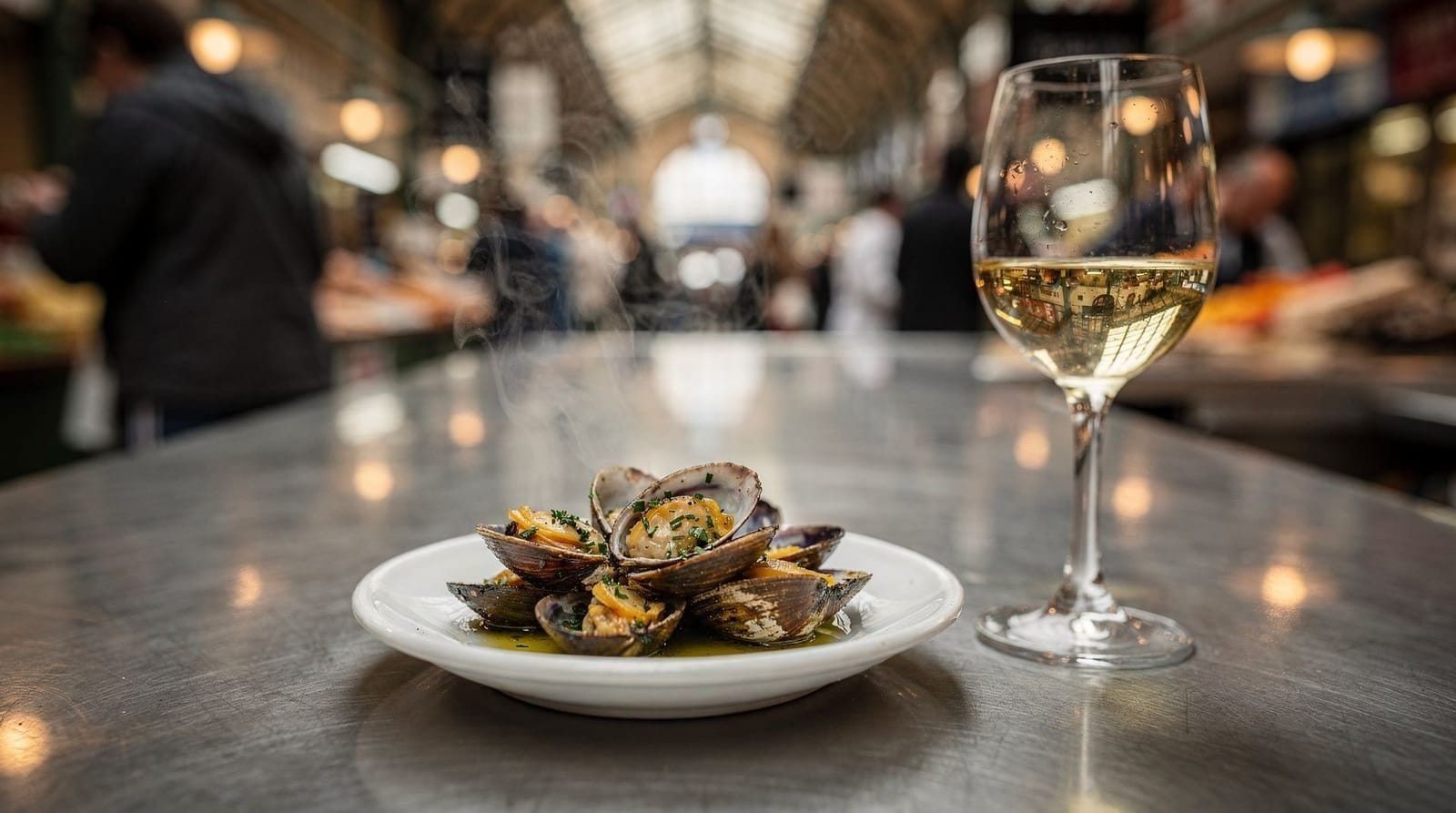
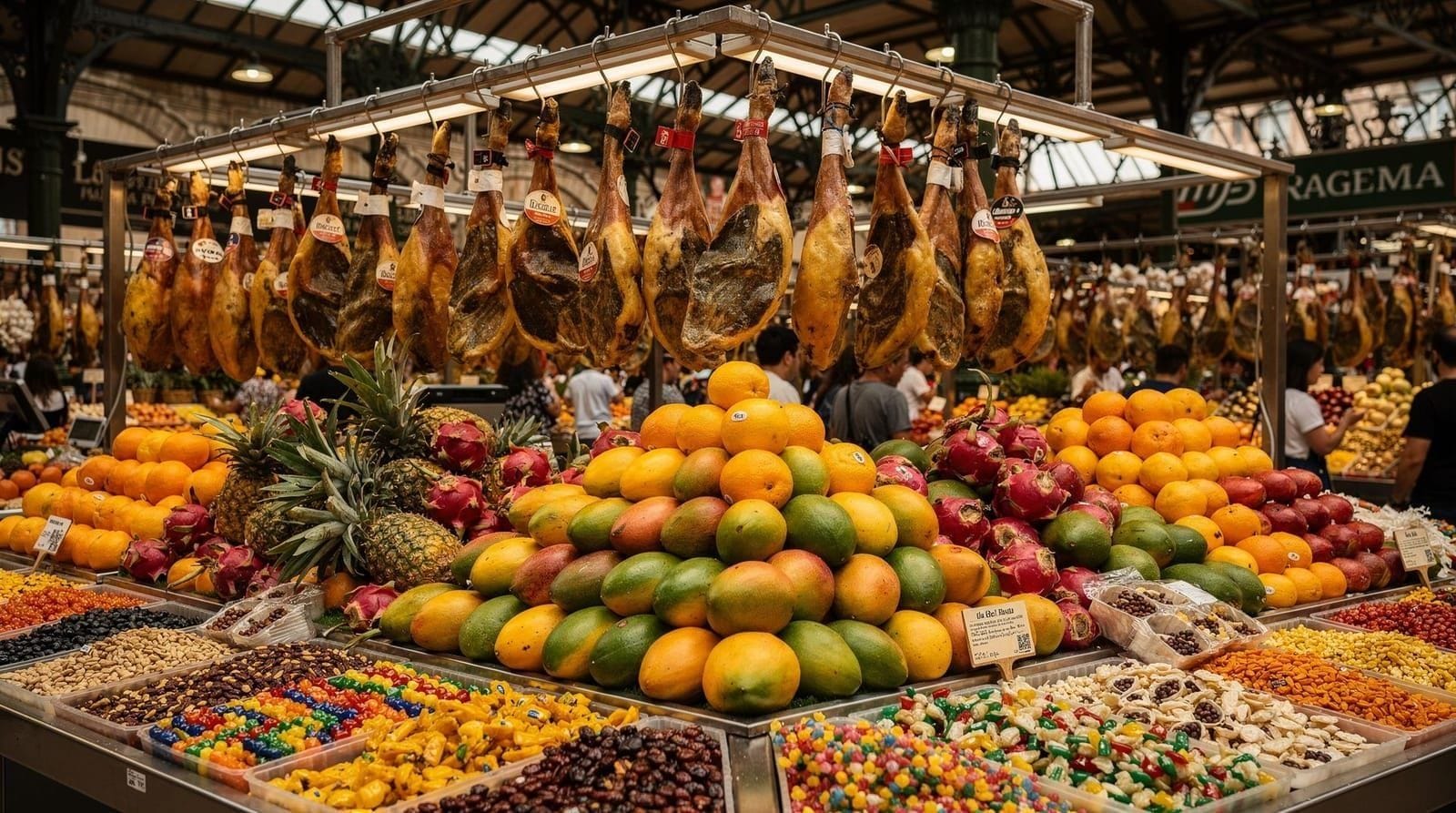
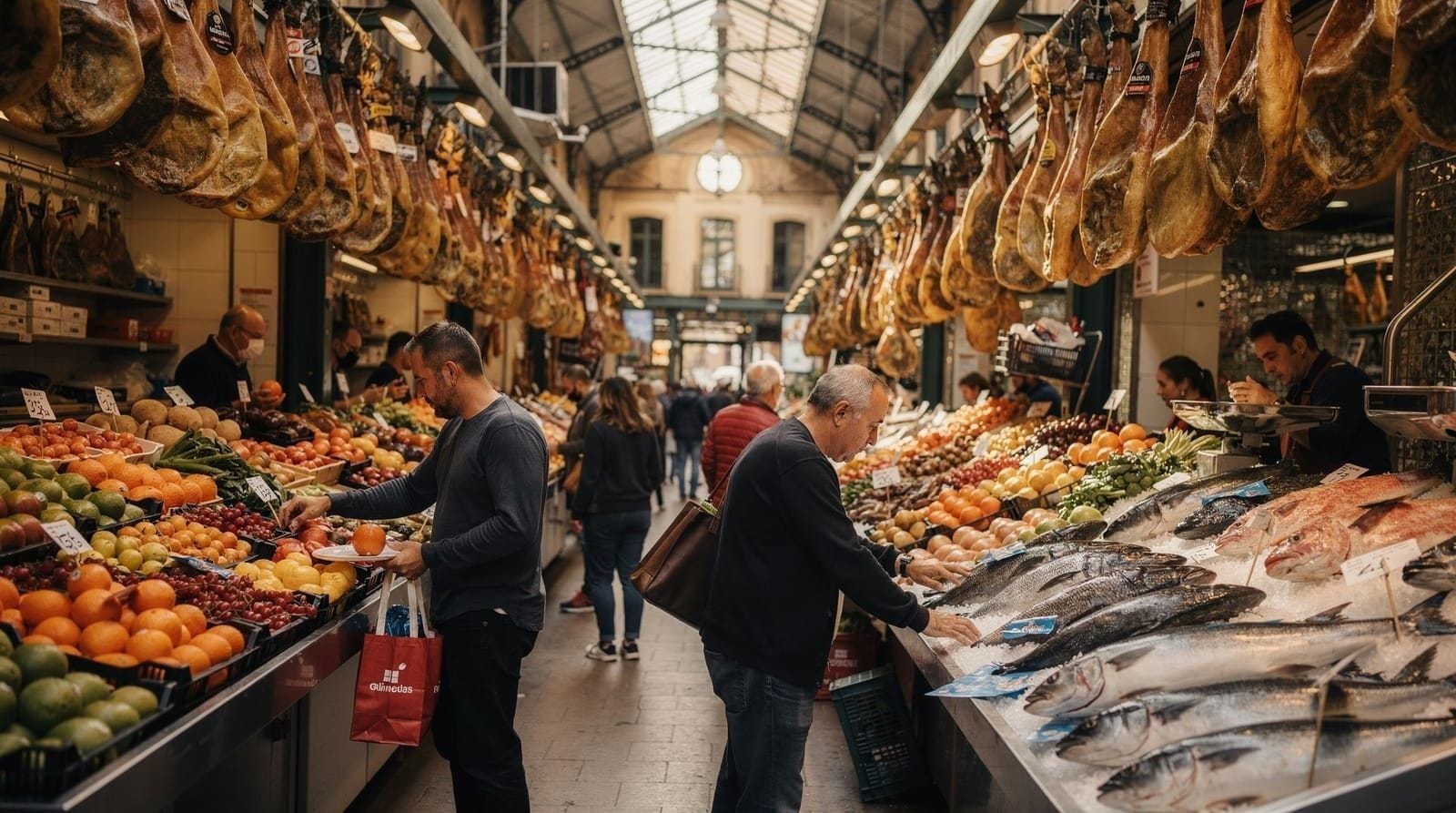
The first phase is the market visit, typically to La Boqueria on La Rambla, lasting 45–60 minutes. Here the instructor walks you through the key ingredients for the session — selecting fresh seafood, choosing the right type of rice, understanding the difference between sweet and smoked paprika. A good guide is honest about the market: La Boqueria has become heavily tourist-oriented in the central aisles, but the fish counters and charcuterie sections deeper inside remain genuinely excellent. You will be buying ingredients that actually get cooked, which changes how you look at the produce.
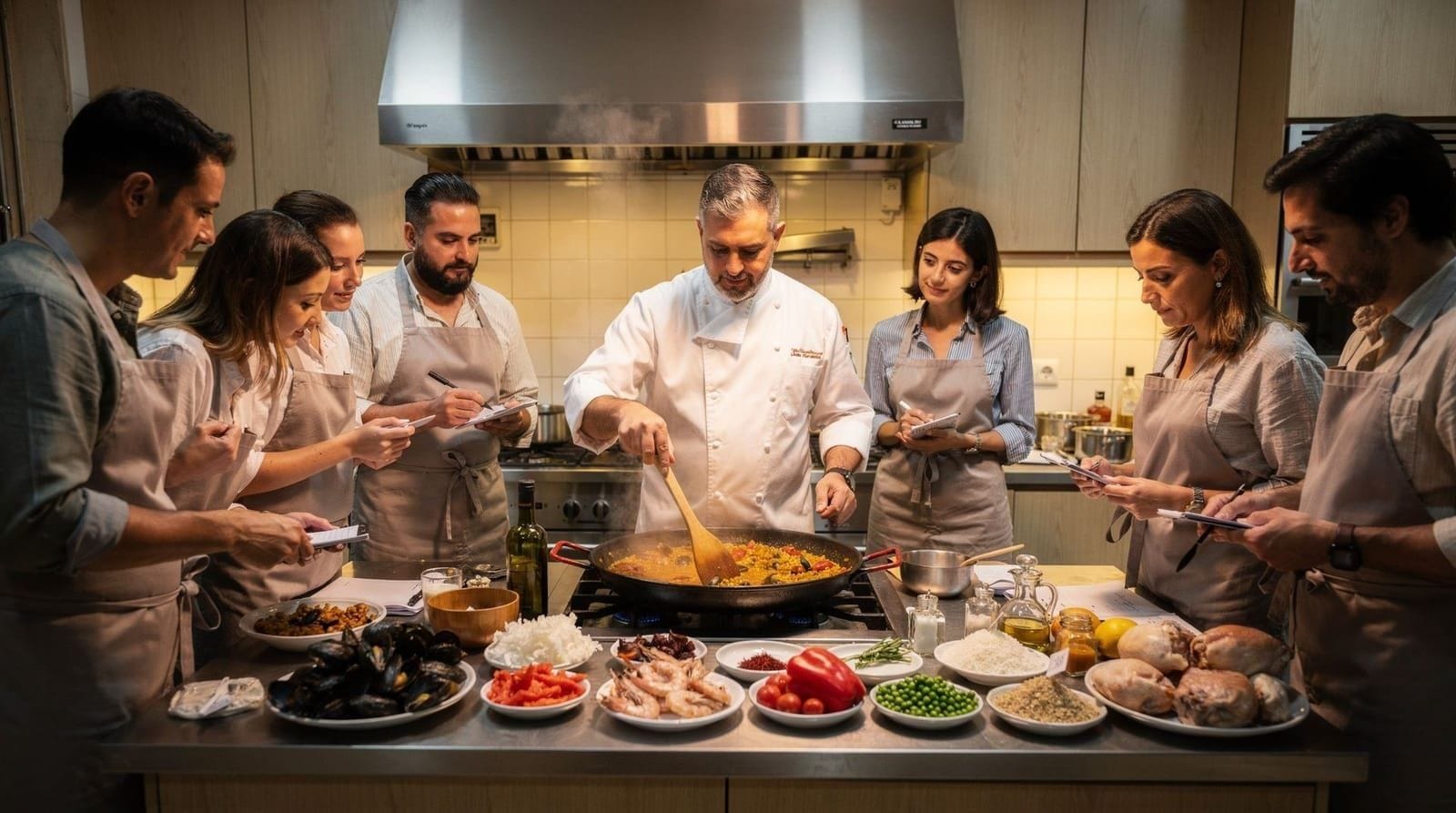
The second phase is the cooking session itself, held in a purpose-built kitchen space. Most schools in Barcelona have professional-grade kitchens designed for group teaching: long central counters, individual stations, good ventilation. The instructor demonstrates each step, then students work through it. This is hands-on cooking, not a demonstration you watch — you are at the hob, managing heat, stirring the sofregit, portioning the rice.
At the end, you sit down and eat what you made. Wine is usually included; some schools add bread, salad and dessert to round the meal out properly. The eating portion is an important part of the experience — it gives you immediate feedback on what you produced.
Paella: honest context before you cook it
Most visitors to Barcelona come wanting to cook paella, which makes sense — it is the Spanish dish with the highest international recognition. Before you do, it is worth understanding a few things that will make the class more meaningful.
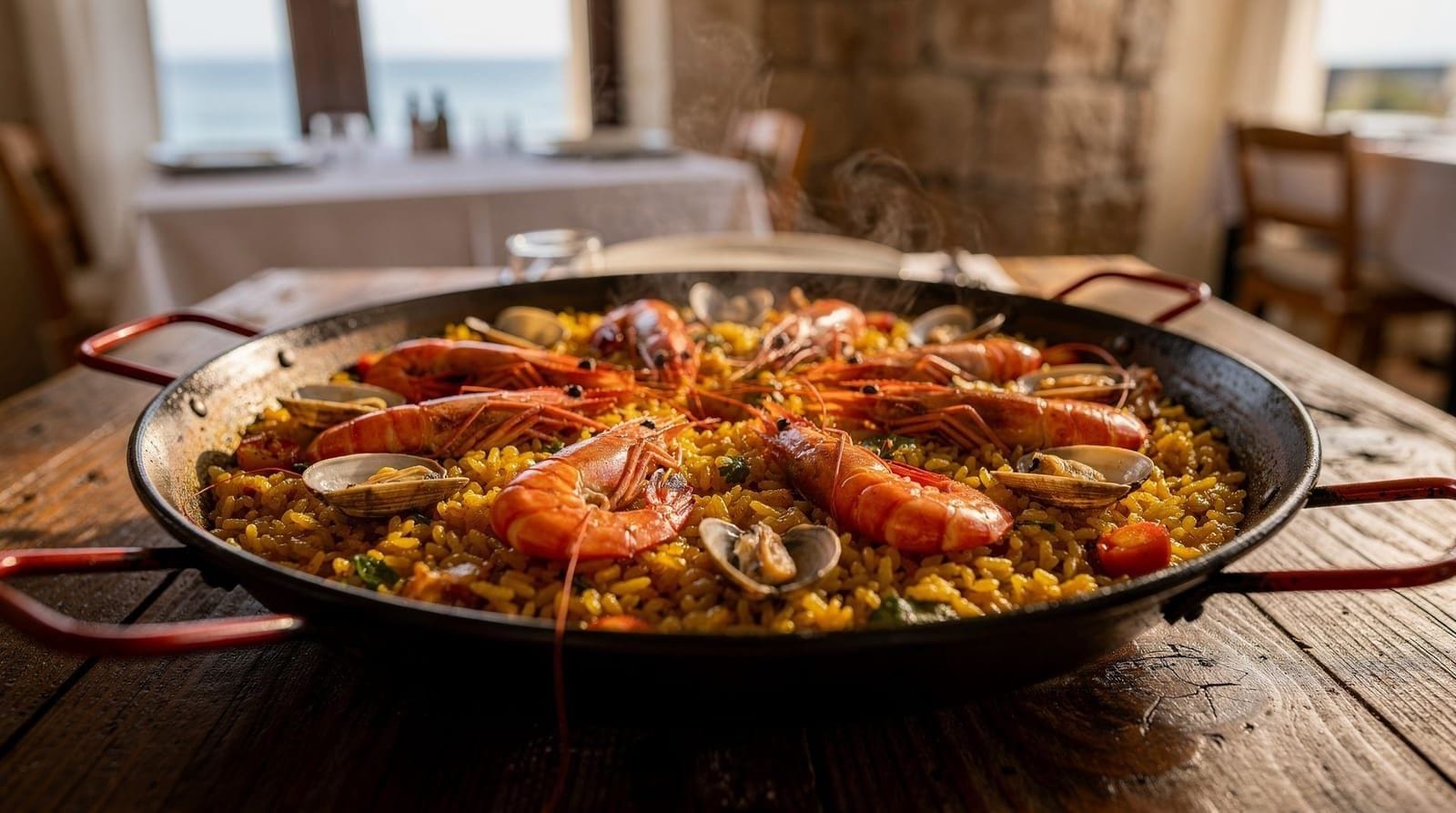
Paella is Valencian, not Catalan. It originated in the rice-growing wetlands of Valencia, where it was a workers’ dish made with rabbit, chicken, green beans and water. The seafood paella you see in Barcelona — rice with clams, prawns and mussels — is a coastal adaptation of that original, not the Catalan version of things. This is not a problem with the class; it is context that makes the food more interesting.
The Catalan seafood equivalent is fideuà. Made with short, thin noodles (fideus) instead of rice, cooked in the same type of pan and by the same method, fideuà is what coastal Catalan fishing communities have been eating for generations. Some classes offer this as an alternative or addition to paella; it is worth asking about if you want something more specifically rooted in Catalan food culture.
The socarrat is the goal. The defining quality of a well-made paella is the socarrat — the thin, slightly caramelised layer of rice that forms against the bottom of the pan in the final minutes of cooking. It requires high heat at the right moment and the confidence to leave the pan alone. Classes teach this specifically because it is the technical element most home cooks get wrong, and it is what separates a real paella from something that merely looks like one.
See our best paella in Barcelona guide for where to eat paella if you want to taste it before or after cooking it — and for an honest account of why the beachfront restaurants near Barceloneta are generally worth avoiding.
For a more intimate format that adds a personal, multi-generational angle to the instruction:
Choosing the right class
The cooking class market in Barcelona ranges from serious culinary schools to hotel add-ons with little genuine content. The differences matter. Here is what to assess when choosing:
Group size: the best indicator of quality. Classes of eight to twelve people allow the instructor to give individual attention and keep the kitchen workable. Classes of twenty or more become demonstrations with participation as an afterthought. Check the maximum before booking.
Market visit included: a class that starts with a market visit is generally more serious about the educational component than one that starts in the kitchen with pre-bought ingredients. The market visit slows everything down and adds cost, which is why less invested operators skip it.
What you actually cook: some classes cover one dish in depth; others rush through three or four at the level of demonstration. For paella especially, depth is better than breadth — the technique is specific and worth learning properly.
Eating together: a class that ends with the group sitting down to eat what they made is a more complete experience than one where you plate up and leave. The communal meal is part of what makes cooking class culture work as a social format.
Language: classes are conducted primarily in English for international groups, occasionally with additional Spanish translation. If your group includes Spanish speakers, ask in advance.
Quality operators in Barcelona include schools in the Eixample and Gràcia neighbourhoods, typically running classes from late morning into early afternoon. The mother-daughter format offered by some schools adds an appealing personal dimension — two generations cooking together and explaining how technique has evolved across family history.
The market visit: what to take from it
Even if you have already visited La Boqueria as a tourist, a market visit in the context of a cooking class is a different experience. You are there with a purpose, buying specific things, and the instructor explains what they are looking for and why.
A few things worth paying attention to during the market portion:
Fish freshness markers: clear eyes, firm flesh, bright red gills, no strong smell. The fish counters at La Boqueria’s deeper sections are genuine — the same suppliers that sell to restaurants. The instructor will usually let you handle and smell the options before choosing.
Rice variety: paella requires a short-grain round rice — bomba or senia variety from the Valencia region or from the Ebro Delta in southern Catalonia. It is not interchangeable with risotto rice, long-grain rice, or sushi rice. Knowing this matters for when you try to replicate the dish at home.
The full ingredient list: sofregit (onion, tomato, garlic cooked down for 20–30 minutes), saffron, smoked paprika, stock (made from the prawn heads and shells in a seafood paella), and fresh seafood — typically prawns, clams, mussels and sometimes squid. The quality of each component is visible at the market in a way that a pre-packaged ingredient kit cannot replicate.
Our guide to what to eat at La Boqueria covers the market in depth, including which sections to prioritise and which to walk past.
What you learn about Catalan technique — beyond the recipe
A well-run cooking class teaches principles, not just recipes. The distinction matters because a recipe is a fixed instruction set that produces one result; a principle gives you a framework to cook differently the next time based on what is available or how you feel.
The most transferable principle from a Barcelona paella class is the sofregit. This onion-and-tomato base — cooked slowly in olive oil for twenty to thirty minutes until deeply reduced and almost caramelised — is the foundation of not just paella but most Catalan braised and rice dishes. It appears in fideuà, in sarsuela (a Catalan seafood stew), in arròs negre (rice cooked in squid ink) and in countless other preparations. Once you understand how a sofregit should look, smell and taste, you have access to a whole repertoire of dishes that use the same base.
The second major principle is heat management. Paella is cooked at high heat initially to toast the rice or noodles slightly, then at a steady medium heat as the stock is added and absorbed, then briefly at high heat again at the end to create the socarrat. Each phase requires a different kind of attention. In a class setting, the instructor can watch what you are doing and adjust in real time — something a recipe book cannot do.
A third principle is resting. Paella should rest off the heat for three to five minutes before serving, covered loosely with a cloth or newspaper (the traditional method). During this period the rice settles, the socarrat firms up, and the residual heat finishes any undercooked grains. Skipping this step produces a less cohesive result.
These principles apply to anything you cook. A cook who understands sofregit, heat management and resting will cook better food generally — the paella class is a vehicle for broader culinary literacy.
A note on the Catalan culinary tradition: Catalan cooking is not the same as Spanish cooking. The most visible differences involve the use of olive oil (abundant, high quality, from local appellations), the prominence of fish and seafood from the Costa Brava and Costa Daurada, the frequency of combining meat and seafood in the same dish (mar i muntanya — sea and mountain), and the use of picada, a paste of toasted almonds, garlic, parsley and sometimes chocolate or fried bread that is stirred into stews and braises as a thickener and flavour intensifier. Mar i muntanya dishes and picada-finished stews rarely appear in cooking class curricula but are worth asking about if your instructor has Catalan roots.
Tapas classes: a different kind of session
While paella dominates the cooking class market, some schools offer sessions focused specifically on tapas. These are structured differently: rather than one dish built from scratch, you cover four or five preparations — croquetes de jamón, patatas bravas with alioli, pan con tomate, perhaps a tortilla española, and something seasonal from the market.
A tapas class is a better choice if:
- You are not particularly interested in rice dishes
- You want a broader range of techniques in a single session
- You are cooking for groups at home and want multiple dishes you can replicate independently
The challenge is that a good tapas class at this price point needs an instructor who is genuinely knowledgeable about regional variations and ingredient quality, not just someone walking you through steps. Ask ahead of time whether the class covers the why as well as the how.
For context on the tapas culture you will be learning to cook, our tapas tours guide covers where and how locals actually eat tapas in the city.
Pairing a cooking class with the rest of your food itinerary
A cooking class fits most naturally into a food-focused day rather than as an isolated activity. Because most classes run from mid-morning into early afternoon (finishing around 1–2 pm), they leave the rest of the day free for neighbourhood exploration, museum visits or an evening tapas session.
A natural sequence for a food-focused day:
Morning: market visit and cooking class, finishing with lunch of what you made. Most classes end by 1:30–2 pm.
Afternoon: walk into the Gothic Quarter or across to El Born. Both are within walking distance of La Boqueria and the Eixample cooking school belt. If you started early and energy allows, the Picasso Museum is in El Born and has good availability for afternoon slots.
Evening: the logical continuation is a tapas crawl in the same neighbourhoods — you now have the culinary context to appreciate what you are eating differently. Our tapas tours guide maps the best stops across El Born and Poble-sec.
Alternatively, some visitors prefer to visit a serious restaurant for a long lunch the day after a cooking class — comparing their attempt at paella with a professional version. Can Solé in Barceloneta is the obvious choice; reserve 24–48 hours in advance for a paella, which must be pre-ordered.
After the class: continuing the food education
A morning cooking class pairs naturally with an afternoon or evening exploring the food culture you have just learned to replicate. A few suggestions:
From the Gothic Quarter or El Born, you are close to both the Picasso Museum and the best tapas bars in the city. An afternoon at the Picasso Museum followed by a cava and pintxos evening in El Born is a complete day.
If you cooked paella and want to compare your version to a professional one, Can Solé in Barceloneta — a family-run restaurant operating since 1903 — is the benchmark. Reservations are necessary and worth making.
For a wider picture of where to eat across the city’s different neighbourhoods, our best neighbourhoods guide situates the food scene within the broader geography.
Wine pairings and drinks in class
Most cooking classes include wine alongside the meal at the end, and the better ones pair it thoughtfully rather than pouring whatever is open. Understanding the basics of Catalan wine and what works with what you cooked adds another layer to the experience.
With paella: a dry white wine from Penedès — made from Xarel·lo, Macabeu or Parellada grapes — is the traditional accompaniment. These wines are clean, lightly mineral and not heavily oaked, which makes them work alongside the delicate flavours of fresh seafood without overpowering them. A Brut Nature cava (the driest category) from the same region is the celebratory alternative.
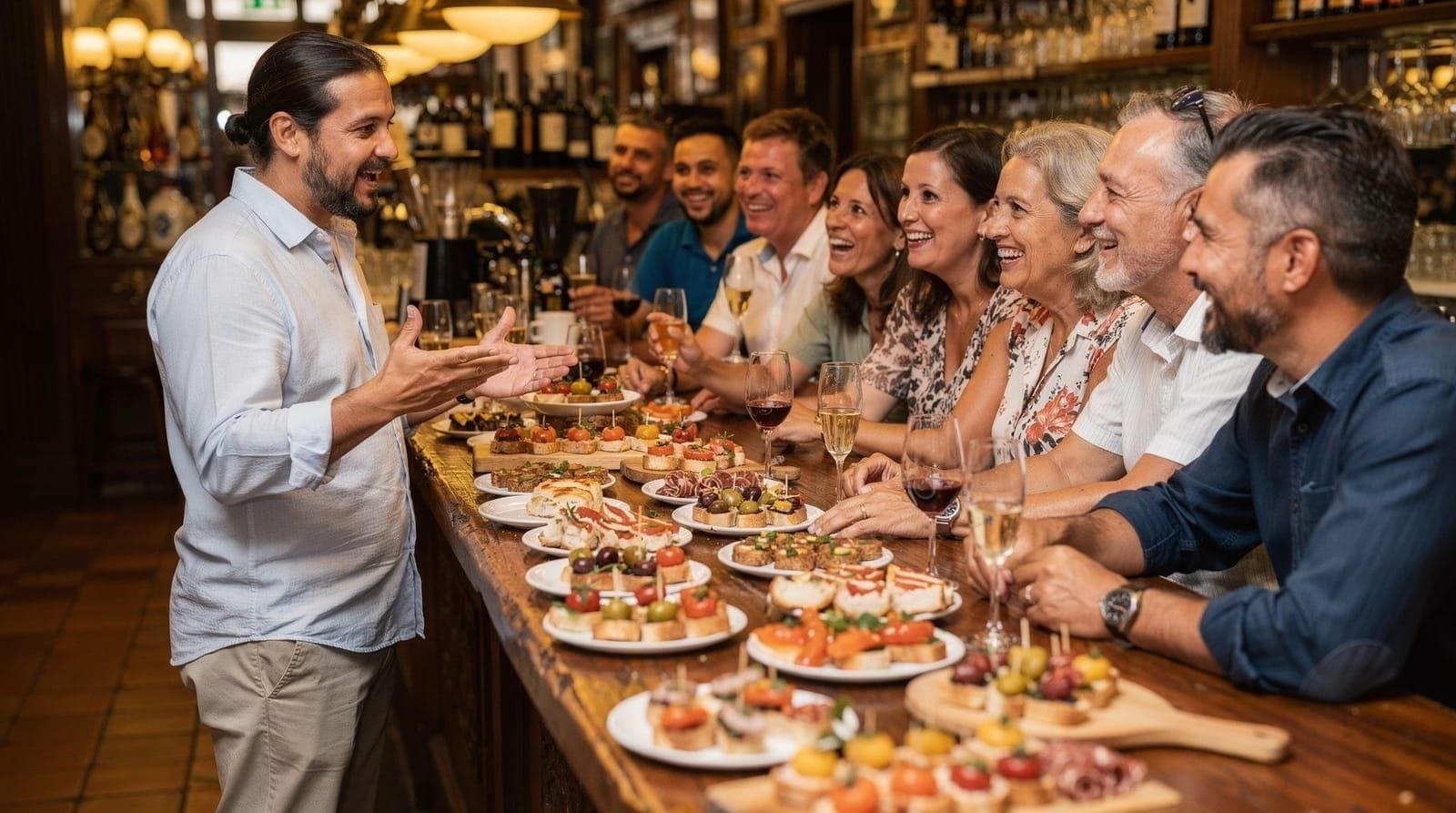
With tapas: the pairing depends on the dish. Croquetes and fried items work with cava or a light red. Anchovies and salt-cured fish pair well with a cold, unoaked white. Heavier meat-based tapas can handle a young garnacha or a light tempranillo. Instructors at good schools will walk you through these pairings as you eat.
Vermut as an aperitif: some classes begin with a glass of house vermouth and a small snack — following the traditional Catalan aperitif ritual — before moving into the cooking session. This is a minor pleasure but worth appreciating as an introduction to one of the most characteristically Catalan drinks habits. See our vermut guide for the fuller story.
What to avoid: sangria is not served in serious cooking classes, nor is it Catalan. If a school offers sangria as part of the drinks package, that is a mild indicator of its orientation toward the tourist market rather than authentic food culture.
The wine included in most classes is modest in quality — house pour rather than curated selection. Classes that mention specific producers or appellations in their description are likely to take the drinks more seriously.
Cooking classes with children
Several schools in Eixample and El Born run family-friendly sessions specifically aimed at parents cooking alongside children, typically simplifying the market visit and giving kids a hands-on role — kneading dough, shaping croquetes, or stirring the sofregit under supervision. These sessions run shorter (2–2.5 hours) and skip anything involving open flame or hot oil for younger children, though most schools set a minimum age around six or seven for genuine participation rather than passive watching. Pricing is usually similar to the adult class, sometimes with a reduced child rate. If travelling with teenagers rather than young children, a standard adult class works fine — most instructors are used to mixed-age groups and adjust their pace naturally. See our Barcelona with kids guide for how a cooking class fits into a wider family itinerary, and check directly with the school about their age policy before booking, since it varies more than for most other family activities in the city.
Private and group bookings
For groups of six or more — a family reunion, a work trip, a hen or stag weekend — most schools offer private sessions with a dedicated instructor, either at a scheduled time of your choosing or as a buyout of a standard class slot. Private bookings typically cost more per person than the standard group rate (often 20–40% more) but include more individual attention and let you set the timing around the rest of your day. Some schools will also travel to an apartment or villa kitchen for a private group, which works well for larger accommodations with a proper kitchen setup, though the market visit component usually still requires meeting at the school or at La Boqueria first. Book private sessions further ahead than standard classes — 2–3 weeks is a reasonable minimum in high season, since instructors need to be scheduled specifically rather than slotted into an existing group.
Practical details
Duration: 3–4 hours including market visit and eating.
Price: €65–85 per person. Higher-end classes with smaller groups or specialist instructors run to €100+. Budget versions at €40–50 tend to be demonstrations rather than hands-on sessions.
Location: most schools are in the Eixample, El Born or near La Boqueria — all convenient from central accommodation.
Dietary needs: most schools accommodate vegetarian requests with advance notice. A vegetarian paella can be made with vegetables and beans; fideuà adapts similarly. Vegan and gluten-free options vary by operator — ask when booking.
What to bring: nothing, except an appetite. Apron, equipment and ingredients are all provided.
What you take home: most schools give printed recipe cards, sometimes with suggested sourcing notes for when you try to reproduce the dish elsewhere.
Whether you choose a paella class with a Boqueria market visit or a multi-dish tapas session, a half-day cooking class is one of the most genuinely useful things you can do as a food-interested visitor to Barcelona — it turns passive eating into active understanding.
Frequently asked questions about Cooking classes in Barcelona
What do you cook in a Barcelona cooking class?
Most classes focus on paella or tapas — or both. A paella class typically covers sofregit (the Catalan onion-tomato base), seafood preparation and the technique of achieving the socarrat (the caramelised bottom crust). Tapas classes often include croquetes, patatas bravas and pan con tomate.Do Barcelona cooking classes include a market visit?
Most do, yes. The standard format is a visit to La Boqueria or a local market to buy ingredients, followed by the cooking session. The market portion typically lasts 45–60 minutes and is part of the educational experience — you learn to select fish, read seasonal produce and understand how locals shop.Is paella really a Catalan dish?
No — paella is Valencian in origin, from the rice-growing regions around Valencia. It arrived in Barcelona and became part of the culinary landscape, but Catalans have their own rice and noodle tradition. Fideuà — made with thin noodles instead of rice — is the Catalan seafood equivalent and arguably worth seeking out alongside the paella.How far in advance should I book a cooking class?
3–5 days ahead is usually sufficient outside peak summer. In July and August, book a week or more ahead — classes in good schools fill quickly because group sizes are kept small (typically 8–12 people per session).What should I wear to a cooking class?
Comfortable clothing you don't mind getting splashed. Most schools provide aprons. Closed-toe shoes are sensible if you are going to be standing at a hob for an hour. No special equipment is needed — everything is provided.Can beginners take a Barcelona cooking class?
Absolutely. Classes are designed for home cooks with no professional experience. The pace is explanatory rather than technical, and instructors focus on the principles you can replicate at home rather than restaurant-grade precision.
Top experiences
Bookable activities with verified prices and instant confirmation on GetYourGuide.
Barcelona: Catalan paella cooking class
- Free cancellation
Barcelona: paella cooking experience & Boqueria market tour
- Free cancellation
Barcelona: paella class, Boqueria tour with mother-daughter chefs
- Free cancellation
- Small group
Barcelona: paella & tapas cooking class with sangria
- Free cancellation