First-timer mistakes in Barcelona (and how to avoid them)
Most Barcelona mistakes aren’t about the city being difficult or dangerous — they’re about information gaps. The city works well, the public transport is excellent, and the food scene is genuinely great if you know where to look. These are the specific errors that trip up first-timers, and how to sidestep each one.
| Biggest mistake | Booking Sagrada Família too late |
| Easiest fix | Book major sights the day you confirm travel dates |
| Money mistake | Eating sit-down meals on La Rambla |
| Safety focus | Pickpocketing on La Rambla, not violent crime |
| Best single habit | Walk one street off the main tourist axis before deciding where to eat |
Leaving Sagrada Família tickets too late
This is the big one. In peak season — late June through August — entry tickets to the Sagrada Família sell out eight to twelve weeks in advance. People arrive at the door expecting to buy a ticket on the day and find themselves looking at a screen showing the next available slot is four days away. Standard entry starts at €26; tower access (€36–46) goes even faster.
The fix is simple: book the moment you know your travel dates. Go directly to the official Sagrada Família website, or use a guided option that bundles skip-the-line entry with context you’d otherwise miss.
Our full Sagrada Família guide explains what the different ticket types include and which towers have the better views. If you’re reading this in spring planning a summer trip, open that tab now before you do anything else.
Eating on La Rambla
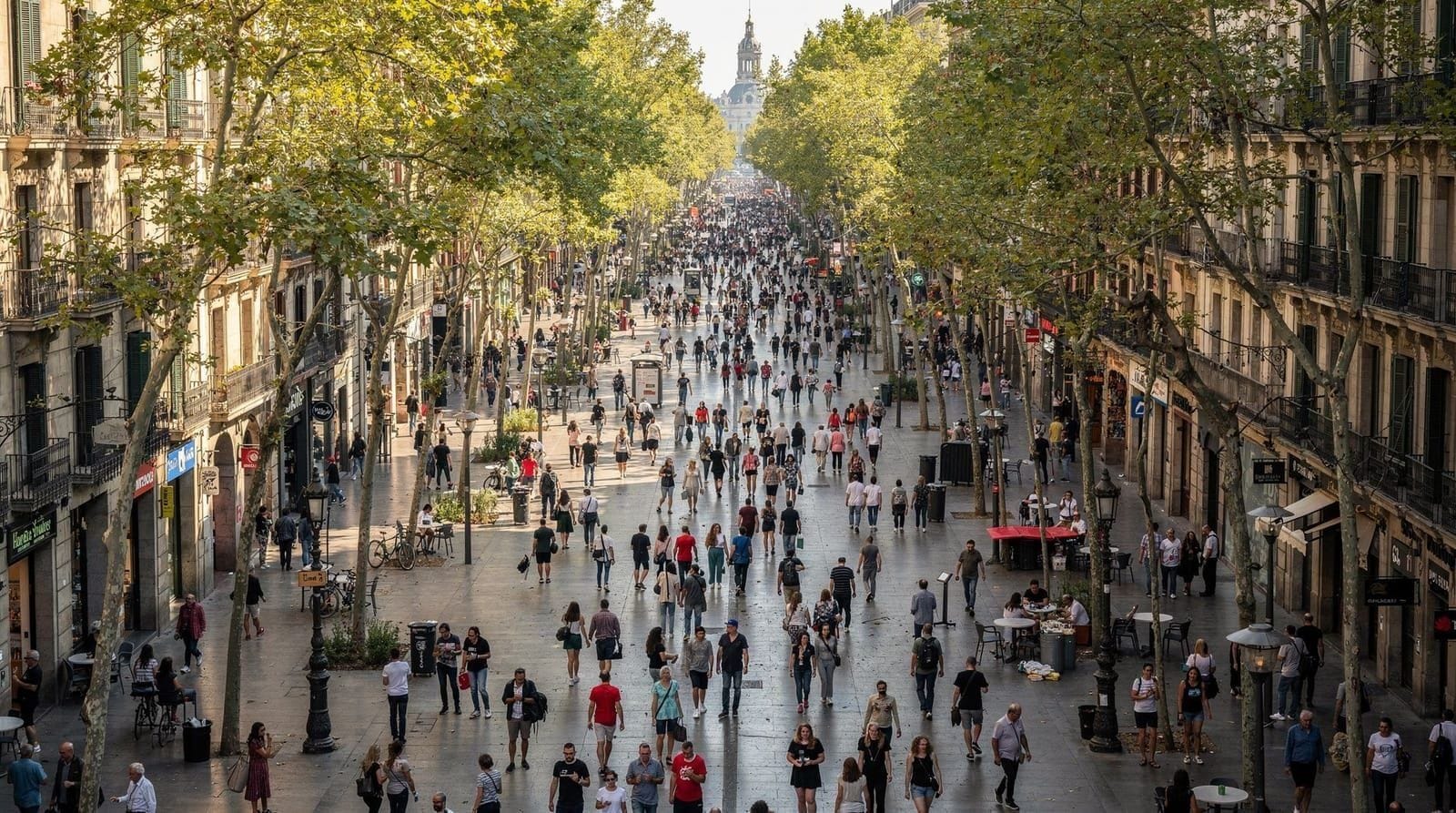
La Rambla is worth walking. It’s busy, atmospheric, and there’s no question it’s a central part of the Barcelona experience. But sitting down for a meal at one of the terrace restaurants along it is almost always a mistake. Prices are inflated, quality is aimed squarely at people who won’t be back, and the combination — mediocre food at double the fair price — is what gives “tourist trap” its meaning.
Step one street off La Rambla and you’re in a different world. Cafés charge normal prices, restaurants serve actual Barcelonans, and the experience is considerably better. Our honest La Rambla guide explains which street food stalls are worth stopping at and which restaurants to leave alone.
Assuming you can walk everywhere
Barcelona is bigger than it looks on a map. The distance from the Gothic Quarter to Park Güell is a 45-minute uphill walk. From Barceloneta to the Sagrada Família is 40 minutes on foot. First-timers often under-plan the transport and end up tired and losing time.
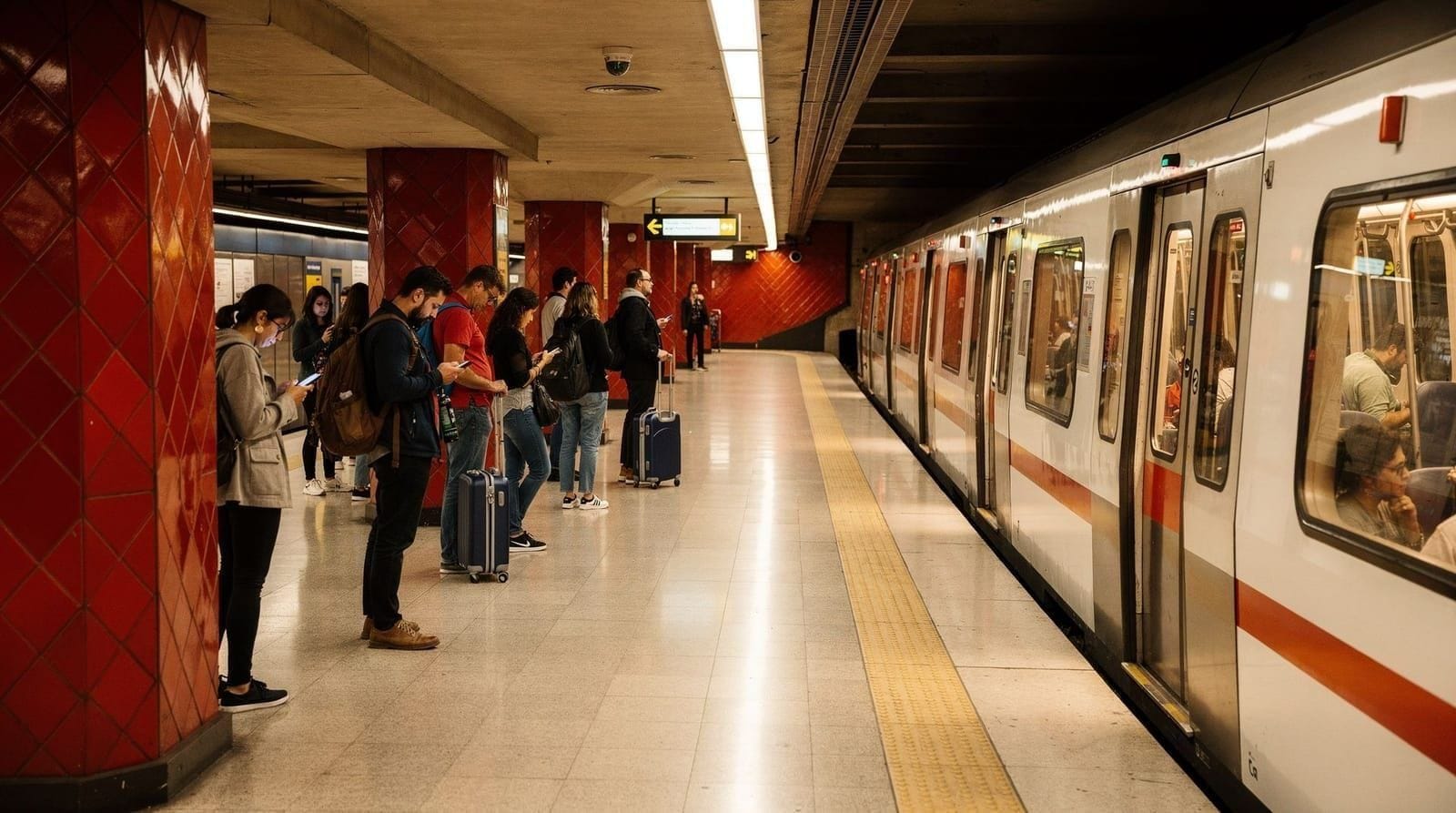
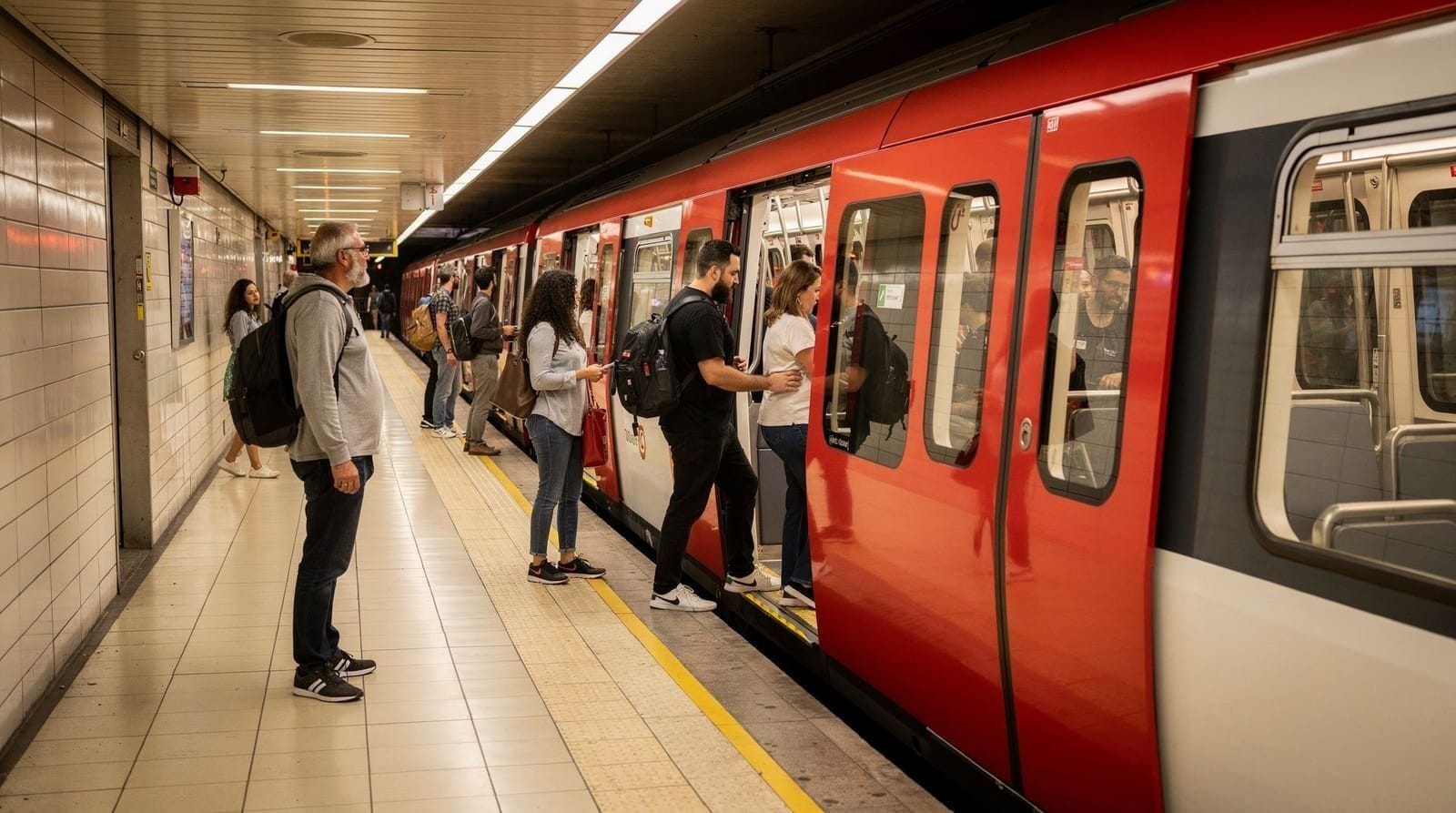
The metro is fast, clean, and covers most of the city well. A T-Casual card costs €13 for 10 trips and takes the stress out of getting around. Buy one at the airport when you arrive and top up as needed. Our getting around Barcelona guide covers all the options, including which sights are better reached by bus or tram rather than metro.
Carrying your bag carelessly on La Rambla
Pickpocketing is the most commonly reported crime affecting tourists in Barcelona, and La Rambla is where it happens most. The targets are almost always people who make it easy: backpacks with unclipped hip belts swinging behind them, phones left on café tables, bags hung on chair backs.
The counters are straightforward: wear bags to the front on La Rambla, don’t put valuables in outer pockets, use a money belt for your passport and reserve cash. The vast majority of people walk La Rambla without incident — but it’s not the place to be distracted. Our avoiding pickpockets guide and Barcelona safety guide cover this properly.
Getting the currency wrong
This sounds embarrassing but it happens more than you’d think, particularly for visitors from the US or UK who aren’t used to the euro. Barcelona is in Spain, which uses the euro (€). Not pounds. Not dollars. Double-checking your currency conversion before assuming prices means you won’t have the awkward moment of thinking something seems cheap and then realising you’ve been calculating in the wrong currency. A meal that seems like €15 is roughly £13 or $17 — which reframes whether it’s reasonable value.
Buying the Barcelona Card when you don’t need it
The Barcelona Card costs €20–45 depending on duration and gives you free unlimited public transport plus discounts at museums. It sounds good. But for many first-timers it doesn’t actually save money. Our Barcelona Card worth it guide does the calculation properly, but the short version is: if you’re planning to visit several major museums at full price on consecutive days, it may be worth it. If you’re spending time at Sagrada Família (not covered), Park Güell (not covered), or beaches, you’ll likely do better with a T-Casual card for transport and individual museum tickets.
Our transport pass comparison lays out the T-Casual, Hola BCN, and Barcelona Card options side by side so you can make an honest comparison before buying.
Missing the free entry times at the Picasso Museum
The Picasso Museum charges €15 for a general ticket and €19 for a ticket with temporary exhibitions. These are fair prices. But the museum also offers free entry on the first Sunday of every month, and free entry on Thursday evenings from 5pm onwards. If your dates happen to include either, booking the free slot is worth doing (you still need to reserve online to guarantee entry). Our Picasso Museum guide has the current hours and booking information.
Going to Barceloneta and assuming that’s the beach experience
Barceloneta is the beach closest to the city centre and in July–August it’s very crowded — rows of sunbeds, persistent beach vendors, and the kind of density that makes relaxing difficult. It’s still worth a visit, and the neighbourhood itself has good seafood restaurants and atmosphere. But if you want to actually lie on a beach and swim in comfort, a short trip further along the coast makes a significant difference.
Bogatell and Mar Bella are just 20 minutes by metro or bike from Barceloneta and are noticeably calmer. Sitges, a 35-minute train ride south, has excellent beaches and a very different atmosphere — our Sitges day trip guide covers how to make a day of it.
Thinking flamenco is a Barcelona tradition
Flamenco is from Andalusia — Sevilla, Granada, Cádiz. It’s one of Spain’s great art forms but it has no particular roots in Catalonia. Barcelona has flamenco shows because tourists want to see flamenco, not because it’s a local tradition. If you see flamenco in Barcelona and enjoy it, that’s fine. But understand that you’re watching an imported performance, not something culturally of this place.
Catalan performance traditions include the sardana (a circle dance you can see for free at the Cathedral on Sundays), castellers (human towers — extraordinary to watch), and a rich classical music heritage. Our Catalan culture guide is worth reading before you arrive.
Using a reseller for Park Güell tickets
The €13 entry to the Park Güell Monumental Zone is a fixed price — there’s no legitimate “premium” version. But reseller websites charge €16–18 for the same ticket, often with unclear cancellation policies and confusing booking flows. The official site is park-guell.barcelona (the city parks authority). Book there directly. Our Park Güell guide links to the right booking page and explains the different entry zones.
Overlooking Poble-sec and the less obvious neighbourhoods
First-timers tend to concentrate on the Rambla–Gothic–Born–Barceloneta axis, which is entirely understandable. But some of the best eating, drinking, and atmosphere in Barcelona is in Poble-sec, tucked between Montjuïc and the Eixample. Carrer de Blai is known for its pintxos bars — the Basque-style bite-sized bar snacks that cost €1–2 each and are excellent. The neighbourhood has a local, relaxed feel that the Gothic Quarter has largely lost.
Gràcia is another first-timer miss — a formerly independent village that was absorbed into the city in the 19th century and still feels distinct. Plaça del Sol and Plaça de la Vila de Gràcia have outdoor café life that’s genuinely local rather than tourist-facing. Our best neighbourhoods guide maps all of this out.
Underestimating how far Montjuïc and the beaches are from the centre
The old city (Gothic Quarter, El Born, La Rambla) feels compact enough to walk everywhere, so first-timers often assume the rest of the city works the same way. It doesn’t. Montjuïc is a genuine hill with its own funicular and cable car system; walking up from the port in the heat is a slog most people regret. Similarly, the calmer beaches beyond Barceloneta — Bogatell, Mar Bella — are a deliberate metro trip, not a stroll. Build 20–30 minutes of transit into any plan that includes Montjuïc or the beaches beyond the closest one, and check the getting around Barcelona guide before assuming a route is walkable.
Not booking Park Güell alongside Sagrada Família
Because Park Güell is a park, first-timers sometimes assume they can turn up and walk in. The Monumental Zone — the ticketed core with the dragon staircase and the main terrace — requires a timed-entry ticket booked in advance, and it sells out on the same timeline as Sagrada Família in peak season. Booking them together, on the same day you confirm your travel dates, avoids the common scenario of getting into the Sagrada Família but finding Park Güell fully booked for your entire stay.
The through-line
Most of these mistakes share a common cause: arriving without enough information and defaulting to the most obvious option — the restaurant that’s right there, the beach everyone knows, the ticket type that sounds comprehensive. Barcelona rewards slightly more preparation. Twenty minutes of reading before you leave will save hours of frustration when you’re there.