La Mercè festival: Barcelona's biggest free party
Every September, Barcelona throws a party that costs nothing to attend and lasts five days. La Mercè is the city’s patron-saint festival — the feast of Our Lady of Mercy — and it is the single best argument for scheduling your trip at the end of the month. In 2026, the main programme runs from September 23 to 27, filling plazas, streets and parks with hundreds of events that are almost entirely free.
| Dates 2026 | September 23–27 |
| Cost | Free — almost the entire programme |
| Best day for crowds | September 27 (Sunday, quietest) |
| Best day for spectacle | September 26 (correfoc fire run) |
| Where to stay | Eixample, not the Gothic Quarter/El Born if you need sleep |
What actually happens at La Mercè
The festival is not one thing. It is dozens of parallel traditions happening at the same time across the city, and understanding what each one is helps you plan where to be when.
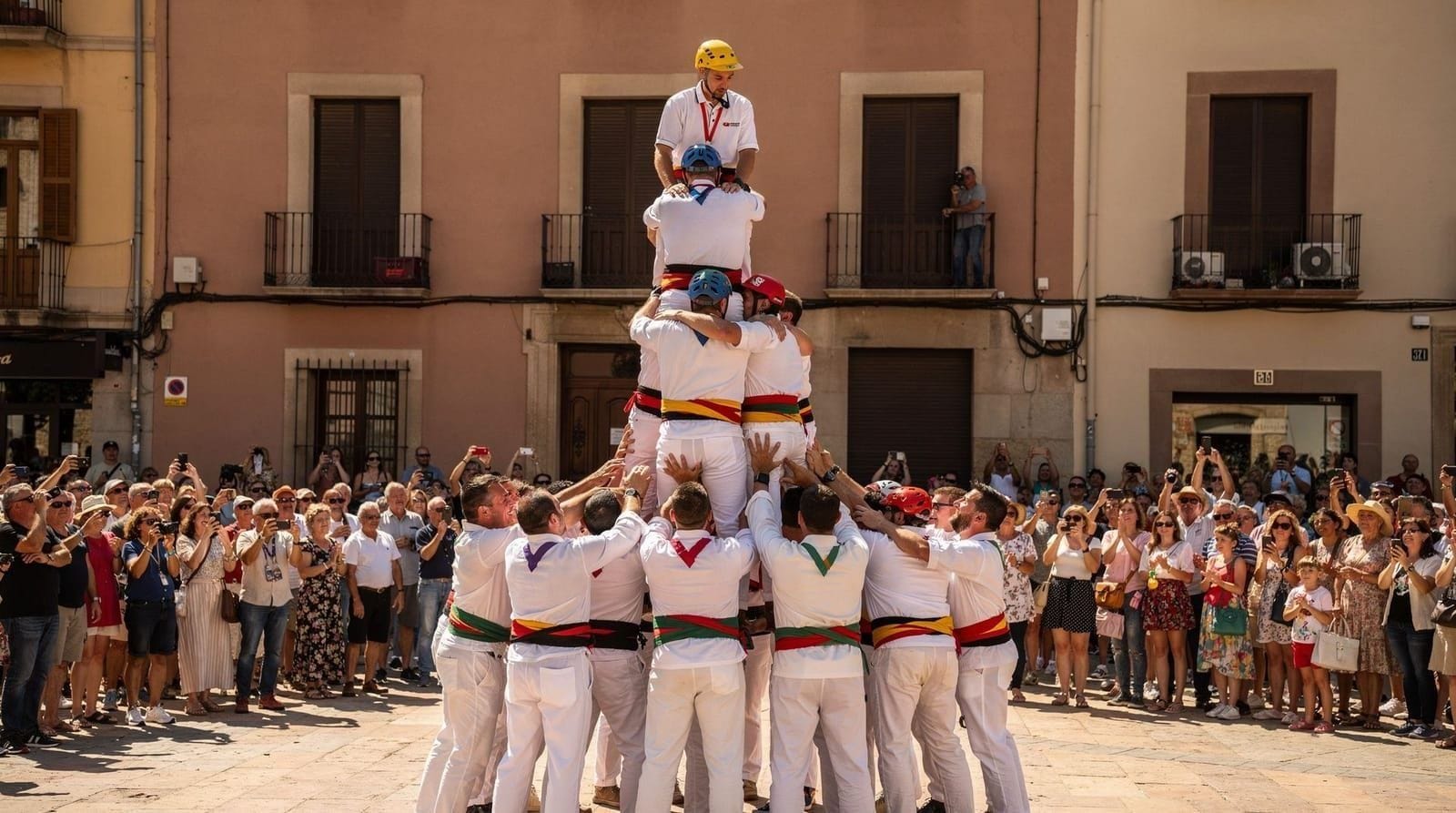
Castellers (human towers) are perhaps the most visually arresting tradition in all of Catalonia. Teams — colles castelleres — work together to build towers of bodies that can reach nine or ten storeys high, with a child climbing to the very top as the enxaneta. The main castellers performance during La Mercè traditionally takes place in Plaça de Sant Jaume, the civic heart of Barcelona sandwiched between the Ajuntament and the Palau de la Generalitat. Go early to get a position near the front; the square fills completely. If you want deeper context on what you’re watching, read our guide to castellers and human towers before you go.
Correfoc (fire run) happens on the evening of September 26 and is the event that most surprises first-time visitors. Groups of people dressed as devils — diables — parade through the streets carrying metal contraptions that spray sparks and fireworks in every direction. Crowds press in deliberately to get sparks on their skin. It sounds chaotic because it is. The main correfoc runs through the Gothic Quarter and along the waterfront, but neighbourhood versions happen throughout the city.
What to wear for the correfoc: this is not optional advice. Wear a long-sleeved cotton top (synthetics melt), trousers rather than shorts, closed shoes, and a hat or scarf for your hair. Goggles are not overkill — many locals wear them. Keep your phone in a pocket rather than raised above your head. Do not bring anything you cannot afford to have singed.
Gegants (giants) are the enormous papier-mâché figures carried on the shoulders of hidden bearers who make them dance. Each neighbourhood has its own set of gegants with their own names and history. During La Mercè they parade through the streets accompanied by music, and they appear at various events throughout the five days. Children are often transfixed by them; adults find them genuinely beautiful.
Free concerts are the backbone of the programme. The Ajuntament organises headline acts at several outdoor stages including Parc de la Ciutadella, Moll de la Fusta by the port, and various neighbourhood squares. The lineup spans pop, rock, electronic, rumba catalana and traditional Catalan music. Full programmes are released on the official Barcelona website (lameva.barcelona.cat/merce) a few weeks before the festival. Expect names you know alongside Catalan acts you probably should know.
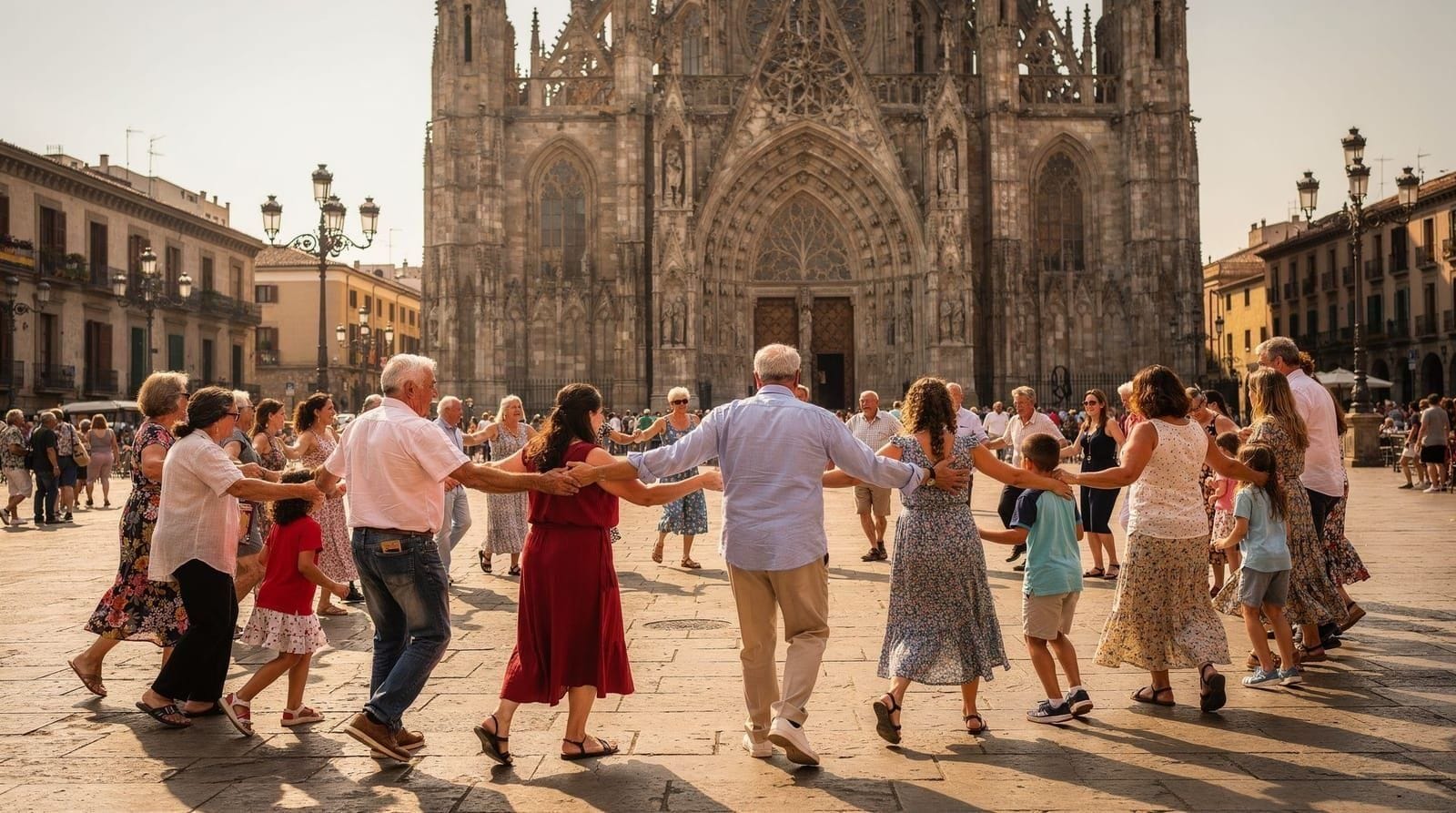
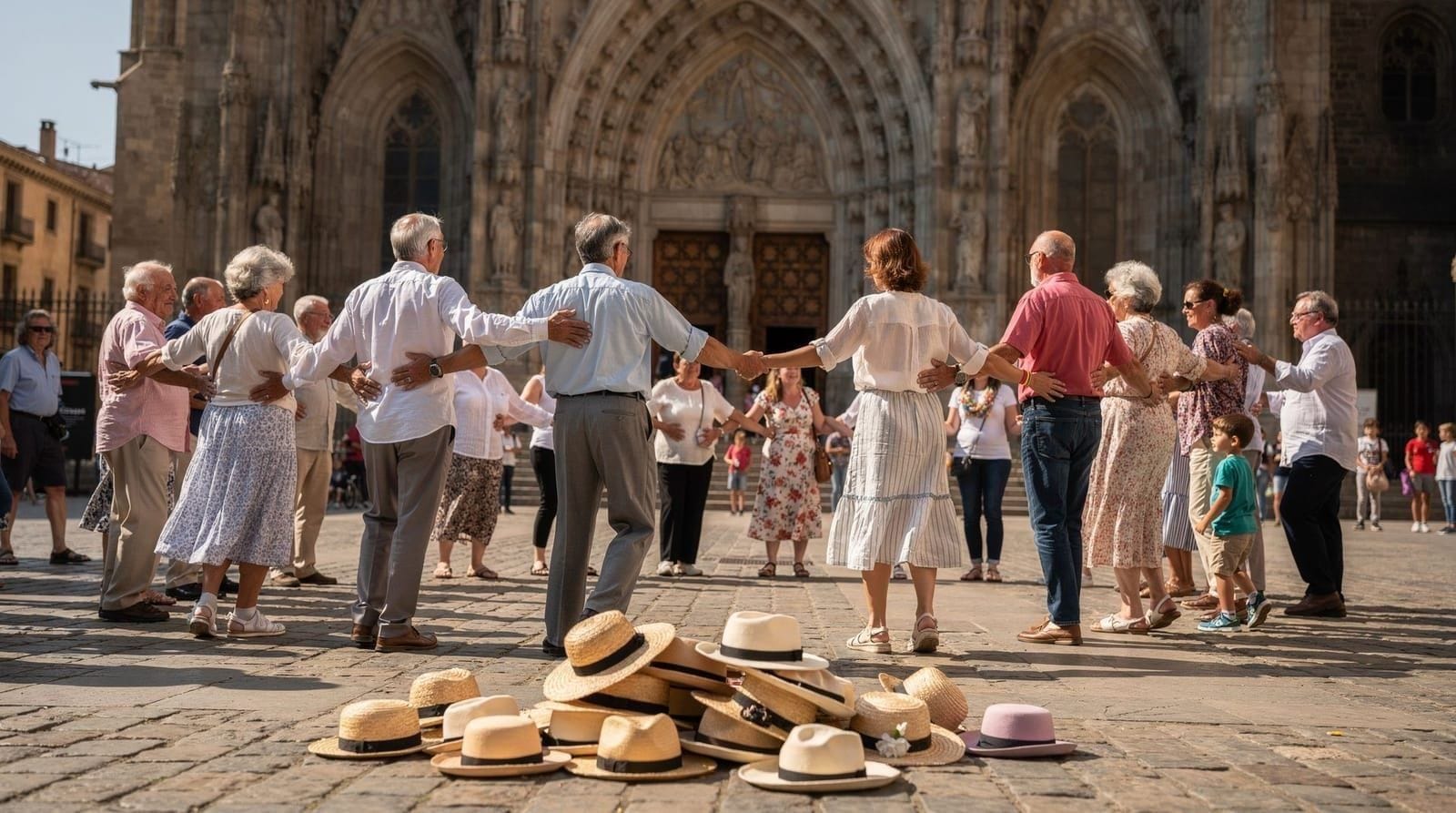
Sardanes — the circular folk dance of Catalonia — are danced in Plaça de la Catedral and Plaça de Sant Jaume during the festival. Joining in is entirely acceptable and encouraged. You do not need to know the steps; the circles are open to strangers. Our sardana dance guide explains the tradition if you’d like to understand what you’re watching.
How to navigate the five days
The programme is vast and can feel overwhelming. A practical approach: pick two or three anchor events you definitely want to see and use the rest of the time to wander.
September 23 (Wednesday) is the official opening day with the opening parade and the first gegants processions. Plaça de Sant Jaume hosts the ceremonial launch. Evenings get busy quickly.
September 24 is La Mercè day itself — the actual feast day — and this is when you’ll find the most concentrated official events, including the main castellers competition in Plaça de Sant Jaume if the schedule follows the usual pattern.
September 25–26 are peak festival days. The big concerts run, neighbourhood events multiply, and the city’s bars and restaurants are absolutely packed. If you are staying in the Gothic Quarter or El Born, sleeping in with the windows open may not be possible.
September 27 (Sunday) is often the quietest day, with closing events and a more local, less tourist-heavy feel. It is arguably the best day if crowds are a concern.
| Day | What’s on | Crowd level |
|---|---|---|
| Sep 23 (Wed) | Opening parade, first gegants | Moderate, building |
| Sep 24 (Thu) | La Mercè feast day, main castellers | High |
| Sep 25 (Fri) | Peak concerts, neighbourhood events | Very high |
| Sep 26 (Sat) | Correfoc fire run, peak concerts | Very high |
| Sep 27 (Sun) | Closing events, local feel | Lower |
Where to stay and getting around
Eixample is a sensible base — far enough from the noisiest old-city events to sleep, close enough to reach Plaça de Sant Jaume in fifteen minutes on foot. The metro runs extended hours during La Mercè, and buses follow adjusted festival routes. Our guide to getting around Barcelona covers the transport options in detail; a T-Casual card (ten journeys, around €12.15) is the simplest solution for a festival week.
Do not attempt to drive or park anywhere near the old city during the main days. It is not worth it.
The neighbourhood dimension
One of the underrated aspects of La Mercè is that it decentralises. While the flagship events happen in the medieval centre, every neighbourhood runs its own parallel programme. Gràcia, Poble Sec and Poblenou all have their own gegants, concerts and activities. If you are curious about Barcelona’s neighbourhoods beyond the tourist circuit, La Mercè is a perfect occasion to explore them.
The Montjuïc area hosts events at the Grec amphitheatre and the Castell, with impressive views over the city as a backdrop. The Magic Fountain on Avinguda de la Reina Maria Cristina sometimes runs special light shows during the festival — worth checking the schedule.
Eating and drinking during La Mercè
Festival week is busy for restaurants; book ahead for dinner if you have somewhere specific in mind. The street stalls and food trucks that appear around event venues are reliable for a quick meal. Local staples to lean into: pa amb tomàquet (bread rubbed with tomato, a Catalan staple, never expensive), croquetes, patates braves with alioli, and whatever is on tap at the nearest cervecería.
A note on drinks: La Mercè is the perfect moment to try vermouth (vermut) as the locals drink it — before lunch, standing at a bar counter. Sangria is not a Catalan tradition; cava is. Our vermut guide and cava vs champagne articles give you the full picture. Do not let anyone sell you a jug of sangria at festival prices.
Practical details for 2026
- Dates: September 23–27, 2026
- Cost: almost entirely free
- Programme: published on the official Barcelona city website roughly four to six weeks before the festival
- Best neighbourhoods to be in: Gothic Quarter, El Born, Barceloneta for the waterfront concerts
- Accommodation: book well in advance. September is high season in Barcelona regardless of the festival; La Mercè week adds further pressure on central hotels and apartments
One more thing worth saying: La Mercè is a festival for Barcelona people. The audience at the castellers is not primarily tourists. The gegants have names and histories that locals know by heart. Showing up with some curiosity about Catalan culture — rather than treating it as content for a reel — makes for a richer experience, and it shows.
If you’d rather see the city calmly before the crowds build
Festival week is intense by design, and not everyone wants five days of it. A sensible approach for visitors who want the atmosphere without the full immersion is to arrive a day or two before the 23rd, cover the major sights — Sagrada Família, Park Güell, a walk through the Gothic Quarter — while the city is still at its normal pace, then dip into La Mercè for one or two evenings rather than the whole run. This also solves the accommodation-noise problem: your calmer days are done before the festival’s peak nights hit.