Barcelona in 48 hours: the honest two-day plan
Two days in Barcelona is enough to get a real sense of the city — the architecture, the food, a couple of the essential sights, and the feel of a few different neighbourhoods. It’s not enough to do everything. This plan is built around that constraint: what to actually prioritise, in what order, and what to leave for a return visit.
| Pace | Two full days, one Gaudí-heavy, one old-town-heavy |
| Total sightseeing budget | Around €70–110/person for entry tickets |
| Transport | T-Casual card (€13, 10 metro/bus trips) |
| Booking urgency | Sagrada Família first — before anything else |
| Best for | A layover, a weekend add-on to a longer Spain trip |
Before you read the itinerary, one logistical point that changes everything.
Book Sagrada Família before you plan anything else
Seriously — before you read the rest of this. Standard entry starts at €26 and in peak season (late June through August) it sells out eight to twelve weeks in advance. Tower access (€36–46) goes even faster. Open the official Sagrada Família website in another tab right now, confirm your dates, and book. You’ll need a timed entry slot, and that slot will determine what time your first morning starts. Our Sagrada Família booking guide covers ticket tiers and what to do if the official site is sold out for your dates.
If official tickets are gone for your window, a guided skip-the-line option is often still bookable and removes the queue-management stress entirely:
Done? Good. Now the itinerary.
Day 1 morning: Sagrada Família and the Eixample
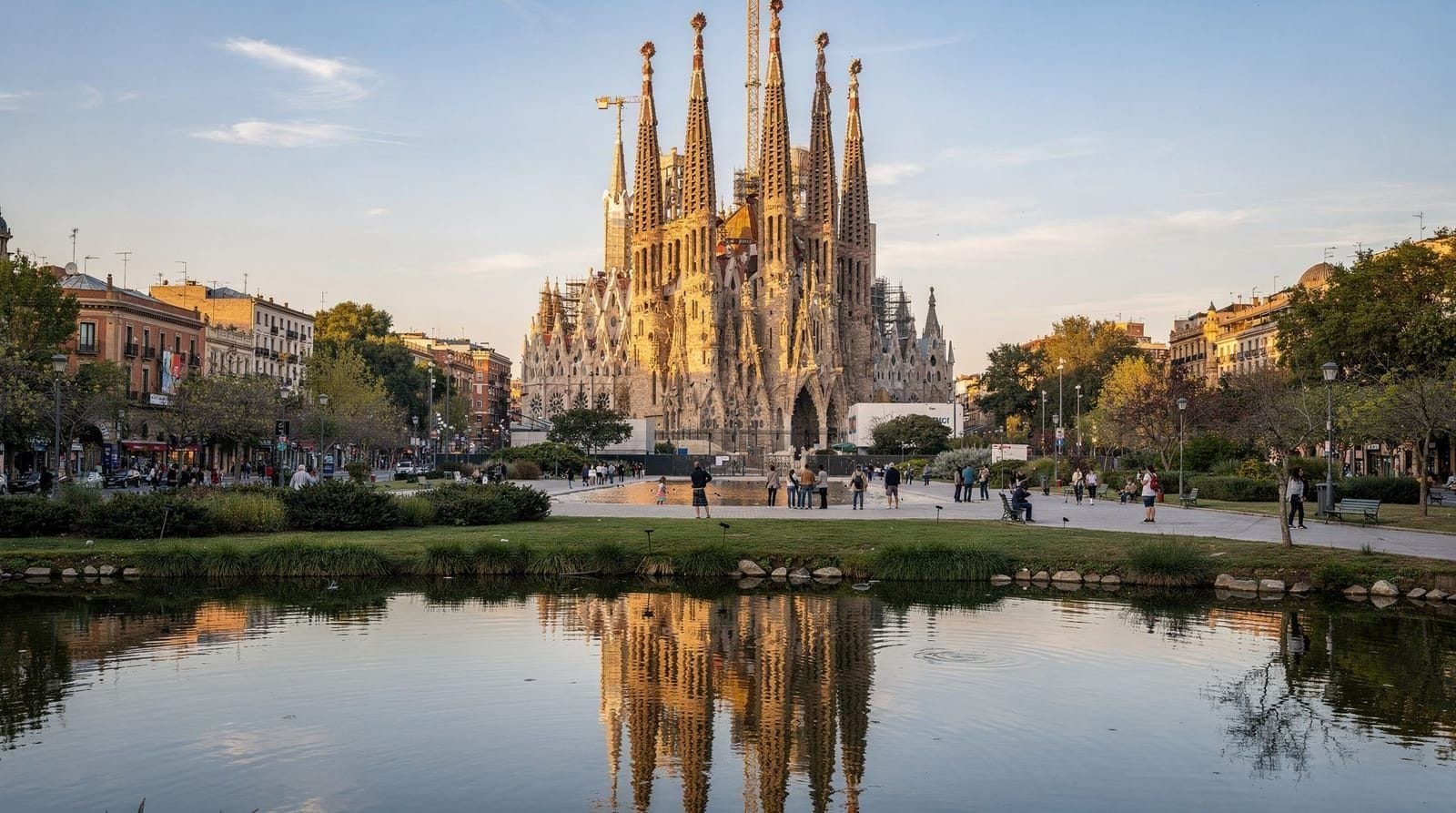
Whatever time your Sagrada Família entry is — aim for first available, typically 9am — build everything else around it. The Sagrada Família deserves two to three hours minimum. This is not a quick look; it’s one of the most complex and extraordinary buildings in the world, still under active construction (the centenary year of 2026 marks a significant milestone), and the interior on a sunny morning — when the light comes through the stained glass on the eastern facade — is extraordinary.
After the Sagrada Família, walk south into the Eixample — the gridded 19th-century expansion district. This is Modernisme territory. The walk down Avinguda de Gaudí takes you past the Hospital de Sant Pau (worth a detour if you have time — see our full guide via the modernisme route). Then head southwest to Passeig de Gràcia, Barcelona’s most elegant boulevard.
On Passeig de Gràcia, the key stop is the Casa Batlló exterior and courtyard (from €29 to go inside — a genuine spectacle, though not necessary to appreciate the building from outside). A few doors down is the La Pedrera (Casa Milà) — also stunning from the street, and from €25 if you want to go in. Our Casa Batlló guide and La Pedrera guide compare the two if you’re choosing only one interior ticket. If you’d rather not decide, the modernisme route guide lays out how the two buildings and the wider Eixample facades connect into a single self-guided walk.
For lunch, step off Passeig de Gràcia into any of the side streets. A menú del día (three courses, wine, bread) runs €13–16 in the Eixample and is your best value option.
Day 1 afternoon and evening: Gràcia
From Passeig de Gràcia, it’s a 15-minute walk north into Gràcia, the former independent village now absorbed into the city. This neighbourhood has a different feel from the Eixample — smaller squares, more local cafés, fewer tourists. Plaça del Sol and Plaça de la Vila de Gràcia are good reference points for café terraces and people-watching.
In the late afternoon, consider the walk up to the Bunkers del Carmel — about 25 minutes on foot from Gràcia uphill — for the best panoramic view in the city. It’s free, no booking required, and at sunset on a clear day it’s genuinely memorable. Check weather before committing to this; the view requires visibility. Wear real shoes — the last stretch is a steep, uneven path, not a paved promenade.
Evening dinner in Gràcia: the neighbourhood has a good selection of restaurants with a local clientele. Budget €20–35 per person for a proper dinner with wine, or less if you go for a few tapas and a caña. Our best tapas neighbourhoods guide has specific street recommendations.
Day 2 morning: Gothic Quarter, El Born, and the Picasso Museum
Start early at the Cathedral — before 9am if possible, when the nearby streets are quiet and the light is good for photographs. The Cathedral itself is free (a small fee applies for certain areas like the cloister). The Gothic Quarter rewards slow walking: detour down Carrer del Bisbe for the neo-Gothic bridge, find Plaça de Sant Felip Neri with its Civil War bullet marks, and wander south toward the old Roman walls.
From the Gothic Quarter, cross into El Born — through the Barri de la Ribera, one of the oldest parts of the city. The Basílica de Santa Maria del Mar (13th century, free, extraordinary interior) is the neighbourhood’s centrepiece. Then head to the Picasso Museum on Carrer de Montcada: €15 standard, €19 with temporary exhibitions, free on first Sundays and Thursday evenings from 5pm. The museum covers Picasso’s early years and is particularly strong on his time in Barcelona as a young artist. Book online to skip the queue. Our Picasso Museum guide explains the collection.
Lunch in El Born: the neighbourhood has excellent options for a quick lunch. The sandwich shops and small restaurants on Carrer del Parlament (technically Poble-sec, but close) are good; alternatively, the covered market of Mercat de Santa Caterina nearby has a bar where you can eat simply and cheaply surrounded by local market activity.
If you’d rather not queue for the Picasso Museum at all, a skip-the-line ticket bundled with a guided introduction covers both the wait and the context in one booking:
Day 2 afternoon: Barceloneta and the waterfront
Take the metro (T-Casual card, one trip) or walk twenty minutes south from El Born to Barceloneta. The beach is good if the weather is warm enough to swim; in shoulder season it’s a pleasant place to walk along the promenade. Don’t eat at the beachfront restaurants — overpriced and often disappointing. The neighbourhood streets behind the beach have better value.
If you want a proper afternoon rest, Barceloneta is the place for it. If you have energy, the cable car to Montjuïc from the port runs when conditions allow and gives an aerial perspective on the city.
The two days at a glance
| Time | Day 1 | Day 2 |
|---|---|---|
| Morning | Sagrada Família, Eixample, Passeig de Gràcia | Gothic Quarter, Cathedral |
| Midday | Lunch in the Eixample (€13–16 menú del día) | El Born, Picasso Museum, market lunch |
| Afternoon | Gràcia neighbourhood walk | Barceloneta beach and waterfront |
| Evening | Bunkers del Carmel sunset, dinner in Gràcia | Poble-sec pintxos crawl, Magic Fountain |
Day 2 evening: Poble-sec pintxos
For your final evening, go to Poble-sec and specifically to Carrer de Blai, known as the “pintxos street.” Pintxos are Basque-style small bites on bread — typically €1–2 each — and you work your way along several bars eating a few pieces at each. It’s sociable, cheap, and delicious. The street gets lively from around 7pm. Budget €15–20 per person including drinks.
The Magic Fountain on Montjuïc is free and runs on Thursday–Sunday evenings (check current schedule as hours vary by season) — a short walk uphill from Carrer de Blai for a closing act if the timing works out. If your two days happen to fall on a fountain-off night, the Montjuïc Castle viewpoint just above still makes a worthwhile short detour for the city view alone.
What to skip on a 48-hour trip
Park Güell deserves proper time — the Monumental Zone requires advance booking (€13), and the park itself is large enough that rushing it feels wrong. Our Park Güell guide recommends at least a half-day. Save it for a return trip, or substitute it for Day 2 morning if you’ve already been to the Picasso Museum before.
Montserrat day trip is genuinely good but takes a half-day minimum by the time you account for the train journey. Our Montserrat guide is the right reference if you have three days or more.
FC Barcelona Camp Nou is worth it if football is your thing, but the museum and stadium are a half-day commitment. Our Camp Nou guide covers tickets and what to expect.
The booking priority order
- Sagrada Família — book immediately, months ahead in peak season
- Picasso Museum — book a day or two ahead to secure a slot and skip the queue
- Casa Batlló or La Pedrera interior — book a week or so ahead if you want a specific time
- Park Güell Monumental Zone — if adding a third day, book several days to a week ahead
The T-Casual card (€13 for 10 metro trips) is all you need for transport. Our full transport pass comparison explains why more expensive passes usually aren’t worth it for short visits.
For a deeper breakdown of whether 48 hours is enough and what a third or fourth day adds, our how many days in Barcelona guide is worth reading before you finalise your plans. If you decide to stretch the trip, the 3-day classic itinerary picks up exactly where this plan leaves off.
FAQ
Is 48 hours really enough time in Barcelona? It’s enough for a genuine first taste — the main Gaudí sights, two contrasting old-town neighbourhoods, and good food — but not enough for Park Güell, Montserrat or a relaxed beach day. Treat it as an introduction rather than a complete visit; see the how many days in Barcelona guide for what a third day adds.
What should I book before arriving for a 48-hour trip? Sagrada Família first, ideally weeks ahead in peak season. Then the Picasso Museum a day or two out, and Casa Batlló or La Pedrera about a week ahead if you want a specific entry time. Everything else on this itinerary — Gràcia, the Gothic Quarter, Barceloneta, Poble-sec — needs no advance booking.