Is Barcelona worth visiting in 2026? An honest answer
Barcelona has been dealing with a reputational tension for the last decade: it’s one of the best-designed, most visually extraordinary cities in Europe, and it’s also heavily impacted by mass tourism in ways that are genuinely visible when you’re there. The question of whether it’s worth visiting in 2026 depends on what you expect and how you approach it.
This is an honest assessment. Not a sales pitch.
| Best months | April–May, September–October |
| Worst months | July–August (heat, crowds, prices) |
| Daily budget | €60–80 budget, €120–180 mid-range |
| Book ahead | Sagrada Família, Park Güell — 4–8+ weeks |
| Where to stay | El Born or Gràcia over the Gothic Quarter |
The genuine case for going
The architecture is singular
There is nowhere else in the world with a concentration of buildings like Barcelona’s. The Sagrada Família is, by any reasonable measure, one of the most extraordinary structures ever built — and 2026 marks the centenary of Antoni Gaudí’s death, a year in which the building reaches a significant milestone in its construction. Casa Batlló and La Pedrera on Passeig de Gràcia are spectacular. The Hospital de Sant Pau by Lluís Domènech i Montaner is less visited and arguably more technically brilliant.
This architecture is genuinely worth long-haul travel. If you’ve seen it only in photographs, the scale and the detail are different in person. The Sagrada Família interior on a morning with eastern light coming through the stained glass is one of those genuinely life-scale experiences. Our Sagrada Família guide and Gaudí trail guide cover the main buildings in context.
The food and drink culture is excellent
Barcelona is not the best food city in Spain — San Sebastián makes a strong claim on that title — but it’s very good and underrated by people who’ve only eaten in tourist areas. The vermut culture (noon aperitivo of vermouth, olives, anchovies), the cava from the nearby Penedès wine country, the fresh seafood in the city’s markets, the menú del día lunch culture (three courses for €12–16 in neighbourhood restaurants) — all of this is genuinely pleasurable. Exploring the food markets and best tapas neighbourhoods away from tourist strips reveals a city that eats very well.
The beach-plus-city combination is rare
In Europe, finding a major world-class city with a good sandy beach directly adjacent to the city centre is rare. Barcelona has it. Barceloneta is the most central beach and busy in summer, but the beaches further north — Bogatell, Mar Bella, Nova Icaria — are more relaxed. Sitges is 35 minutes by train for a full beach-town day trip. The Costa Brava is accessible for day trips to dramatic coastline.
Public transport is excellent and the city is walkable
The metro covers the city well, fares are reasonable (T-Casual: €13 for 10 trips), and the Eixample’s grid layout makes navigation intuitive. Walking between the Gothic Quarter, El Born, and Barceloneta is entirely feasible. The city doesn’t require a rental car, doesn’t require taxis, and doesn’t require significant logistical planning to move around. Our getting around Barcelona guide covers all the options.
Catalan culture is distinct and interesting
Barcelona is in Catalonia, not generic Spain. The language (Catalan), the traditions (sardana dancing, castellers human towers, the Sant Jordi book-and-rose festival), the food and drink culture — all of these are specific to this place and distinct from the Castilian Spanish experience that most visitors expect. Our Catalan culture guide provides the context that makes the city make more sense.
Good value compared to comparable European cities
A mid-range week in Barcelona — decent hotel in El Born, restaurant lunches, several major sights, good dinners — runs around €1,200–1,600 for one person. That’s materially cheaper than the equivalent week in London (roughly 40% more), Paris (25% more), or Zurich (double or more). It’s comparable to Rome or Lisbon, with a significantly better public transport system than either.
The honest case against, or at least for caution
Overtourism in specific areas is real
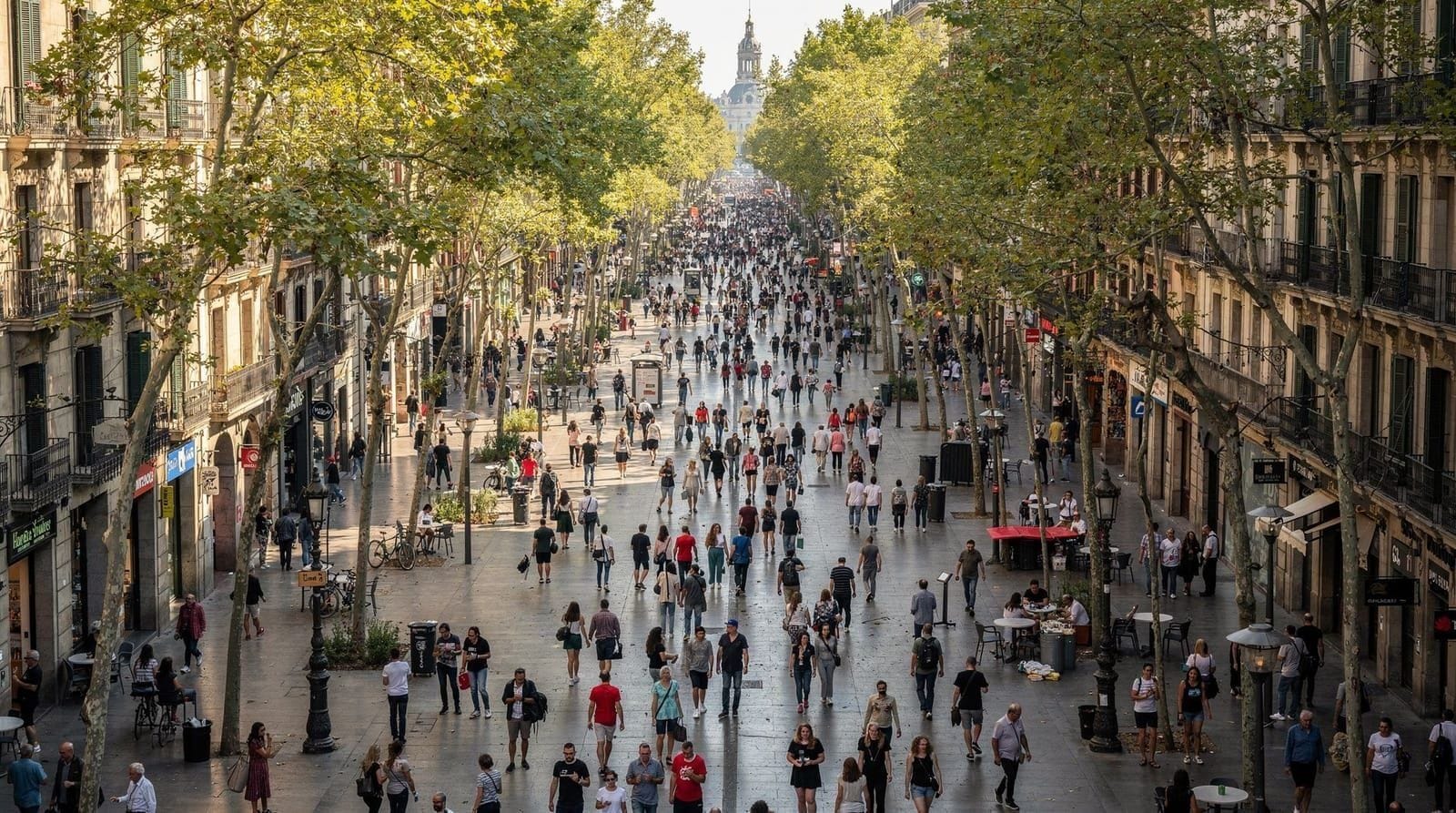
La Rambla gets around 150,000 people a day in peak summer. The central Gothic Quarter streets feel more like a theme park than a neighbourhood. Barceloneta beach in August is genuinely crowded to the point where lying down requires finding an actual gap between sunbeds. These are not scare stories — they’re what you will experience if you visit those places in peak season without managing your expectations.
The overtourism is concentrated, not citywide. Gràcia, Poble-sec, Poblenou, and El Raval are distinctly less overrun. The problem is that most first-timers spend the majority of their time in the overrun areas because those areas contain the major sights. Our tourist traps guide identifies the specific patterns to avoid.
July and August are expensive and very hot
Peak summer — the two most popular months — combines the highest prices of the year with temperatures regularly above 32°C, humidity, and the maximum concentration of visitors. Hotel rates in July–August run 40–60% above shoulder season prices. The combination makes these the least compelling months to visit a city that is genuinely excellent at other times of year.
Ticket booking complexity can be frustrating
Visiting Barcelona well requires advance planning in a way that not all cities do. Sagrada Família books out 8–12 weeks ahead in summer (entry from €26, tower access €36–46). Park Güell Monumental Zone requires advance booking (€13). Getting the right tickets for the right times adds friction. If you’re the kind of traveller who prefers to decide day-by-day what to do, Barcelona in peak season will frustrate you. Shoulder season (April–May, September–October) is considerably more flexible. Our Barcelona itinerary tips guide covers the booking priorities.
Some areas feel saturated with tourist infrastructure
The central Gothic Quarter has reached a point where many of the “local” cafés and shops are actually serving tourists, with pricing and product selection oriented accordingly. Finding authentic neighbourhood life requires walking further than the obvious radius around the main sights. This isn’t unusual for a major tourist city, but it’s worth knowing before you arrive with expectations of discovering hidden medieval streets without other visitors in them.
Noise in some accommodation areas
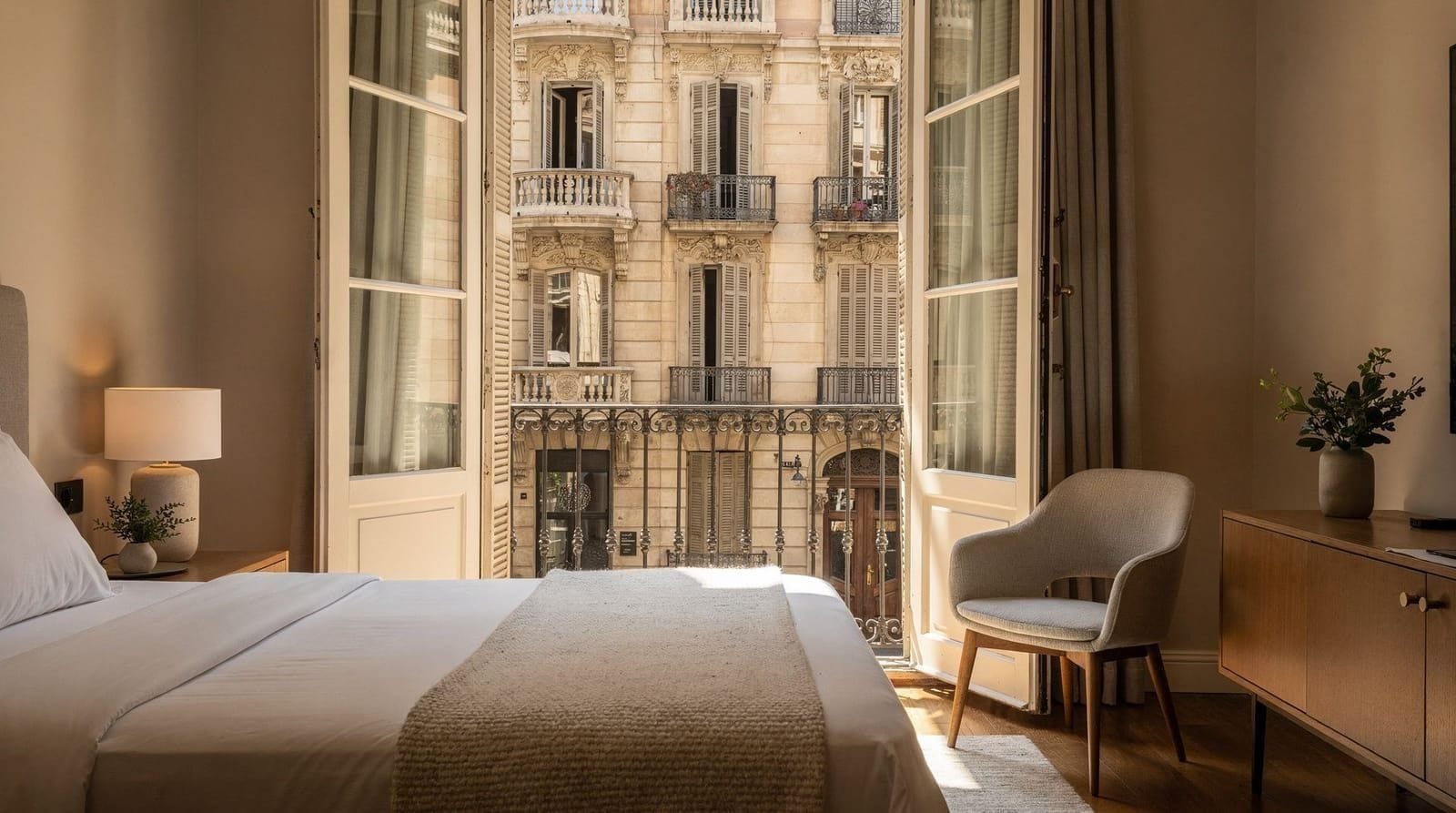
Staying in the Gothic Quarter or on La Rambla means accepting that nights can be loud — particularly on weekends in summer. The density of bars, clubs, and walking traffic means that even well-rated hotels in these areas get noise complaints. El Born and Gràcia are noticeably quieter.
The verdict
Yes, Barcelona is worth visiting in 2026 — strongly so, given the Gaudí centenary milestone at the Sagrada Família. But the quality of the experience depends heavily on when you go, where you stay, and how you approach the more overrun areas.
Go in April–May or September–October. These are objectively better times: weather is excellent (22–26°C), prices are 20–40% lower than peak, crowds are manageable, and the city feels more like itself. September in particular is arguably the best month — the sea is still warm from summer, the tourists have thinned, and the La Mercè festival in late September is genuinely one of the best local events in Europe.
Pre-book Sagrada Família and Park Güell 4–8 weeks out even in shoulder season, longer in summer. These are the two sights that fill first and cause the most frustration when left to chance.
Stay in El Born or Gràcia, not the Gothic Quarter. The difference in noise, authentic neighbourhood feel, and quality of restaurants is significant.
Skip the beachfront restaurants and La Rambla sit-down dining. One street back, the food is better and the prices are fair.
Do these things and Barcelona in 2026 is one of the best city breaks in Europe.
Who Barcelona is genuinely wrong for
Being honest also means naming who should skip it, or at least adjust expectations. If your idea of a good trip is discovering undiscovered medieval streets with no other visitors around, Barcelona’s centre will disappoint you — that experience exists in the city, but you have to walk to Gràcia, Poble-sec or Poblenou to find it, not the Gothic Quarter. If you’re travelling on a fixed, tight budget and can only go in July or August, the value proposition weakens considerably compared to shoulder season. And if you strongly dislike advance planning and prefer spontaneous, decide-on-the-day travel, the booking requirements at the major sights will genuinely frustrate you during peak months. None of these are reasons to avoid Barcelona outright — they’re reasons to time the trip differently or set expectations before you arrive.
Frequently asked questions
Is Barcelona too touristy now?
In certain areas and at certain times of year, yes. La Rambla and the central Gothic Quarter in July are genuinely crowded in ways that diminish the experience. The rest of the city is considerably less so. The answer to this is neighbourhood choice and timing, not avoiding Barcelona altogether.
Is Barcelona safe in 2026?
Generally yes. The main concern is pickpocketing on La Rambla and in crowded tourist areas — manageable with basic precautions (front bag, nothing in outer pockets, phone not left on tables). Violent crime affecting tourists is rare. Our Barcelona safety guide covers the specifics.
Is Barcelona expensive in 2026?
Mid-range, not expensive by Western European standards. A comfortable mid-range trip runs €120–180 per person per day (accommodation, food, transport, sights). Budget travel is possible at €60–80/day. Significantly cheaper than London or Paris for comparable quality.
How many days do I need in Barcelona?
Three to four days is enough to see the major sights without rushing. Five to seven days allows for day trips and a more relaxed pace. Our how many days in Barcelona guide maps out what fits at each duration.
Should I use the Barcelona Card in 2026?
For most visitors, no. The T-Casual card plus individual museum tickets works out cheaper unless you’re doing a very high volume of museum visits on consecutive days. Our Barcelona Card worth it guide does the maths.
Is Barcelona worth visiting if I’ve already been once?
Yes, particularly in 2026 given the Gaudí centenary at the Sagrada Família and the fact that most first-time visitors only scratch the surface of the city. A second trip is a good opportunity to explore Gràcia, Poble-sec or Poblenou, take a day trip to Girona or the Costa Brava, or simply revisit the Sagrada Família now that construction has progressed further.
What’s the single biggest factor in whether Barcelona is worth it for me?
Timing, more than any other factor. The same city in late September feels completely different from the same city in early August — cooler, cheaper, less crowded, and more itself. If you can choose your travel dates, that single decision matters more than which neighbourhood you stay in or which sights you prioritise.