Barcelona in winter: 4-day off-season itinerary
Barcelona: Sagrada Família skip-the-line ticket with audio guide
Duration: 2 hours
- Free cancellation
- Instant confirmation
Why winter is an underrated time to visit Barcelona
Barcelona in summer has extraordinary energy and extraordinary crowds. Barcelona in winter has something rarer: the city functioning as a city rather than a tourist machine. Restaurants take reservations for Saturday night because they are not full by 20:00. The Sagrada Família is bookable three days ahead rather than three months. Hotel prices drop 30–50%. La Boqueria is quiet enough to actually observe the vendors selling to local restaurateurs at dawn.
The Mediterranean winter is mild by Northern European standards: average daytime temperatures run 12–18°C from November to February, with frost essentially unknown in the city centre. January and February are the driest months of the year in Barcelona. You will not swim (sea temperature 13–15°C), and you will need a coat in the evening, but you will not be rained on most days and you will be comfortable walking all day.
| Best for | Off-season travellers, budget-conscious visitors, culture over beach |
| Pace | Easy — indoor attractions and short winter days set a slower rhythm |
| Daily budget | Around €60–90/person, roughly 30–40% below summer prices |
| Getting around | Metro and walking; no seasonal changes to transport |
| Best weeks | Any week outside Three Kings (Jan 4–6), when hotels spike |
Winter calendar highlights:
- Three Kings / Reis Mags (January 5–6): the most important children’s event in the Catalan calendar — a parade (Cabalgata de Reyes) on January 5 evening, Epiphany gifts on January 6. The parade along the main boulevards is spectacular and free.
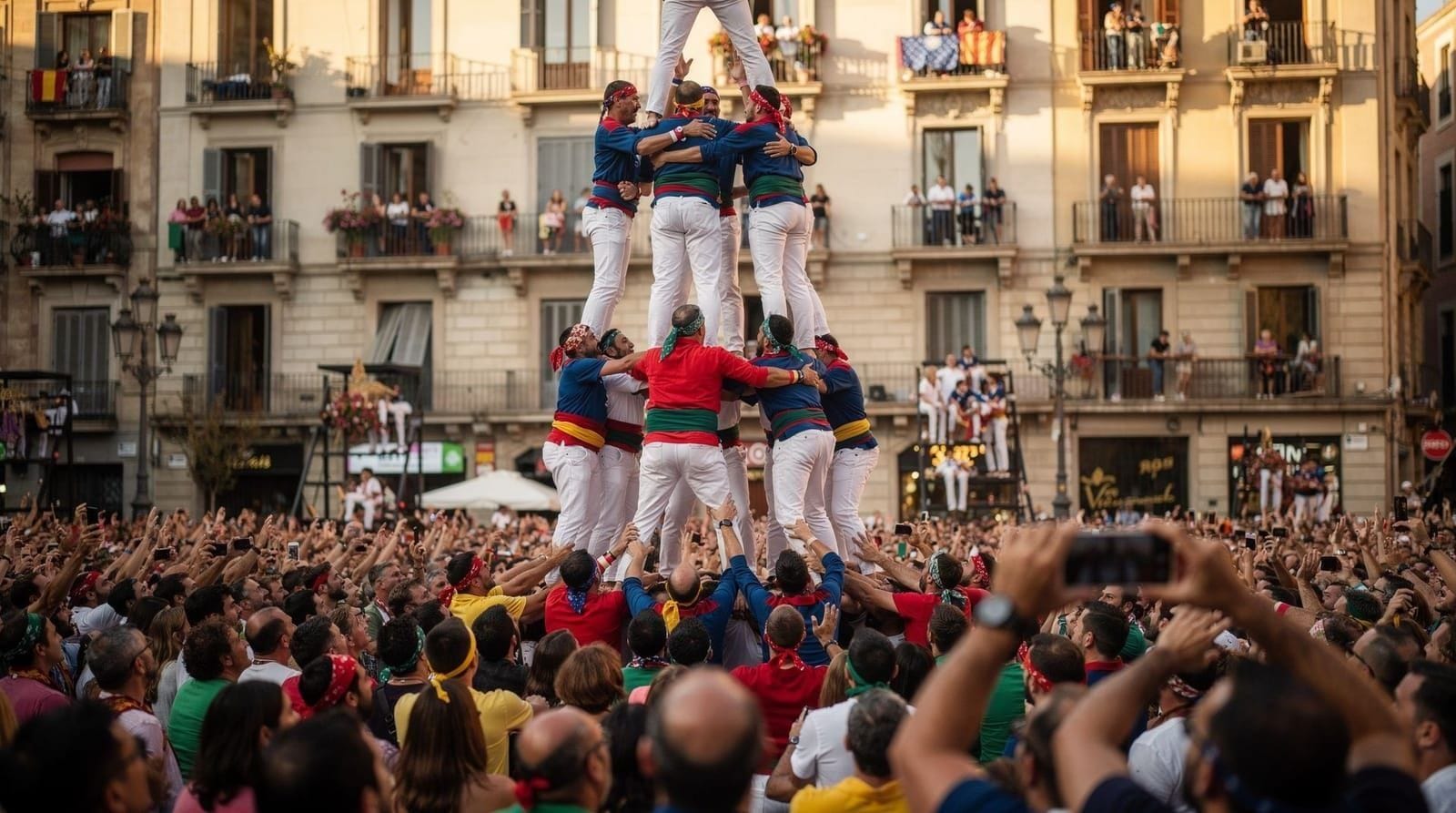
- Santa Eulàlia (around February 12): the city’s secondary patron-saint festival; free concerts, gegants (giant puppets) and castellers (human towers) in the Gothic Quarter.
- Carnival (Carnestoltes) (varies: late February to March): Barcelona’s carnival is quieter than Sitges (which is spectacular and worth a day trip during Carnival weekend) but still lively in the Gothic Quarter and Gràcia.
What to avoid in winter:
- La Pedrera: closed January 12–18, 2026 (check lapedrera.com for current dates in the year of your visit).
- Beach days: not realistic from November to April; Barceloneta in winter is pleasant for a walk but the sea is cold.
- Three Kings weekend (January 4–6): hotels fill and prices spike; book several weeks ahead if you want this period.
Day 1: Sagrada Família and Eixample at winter pace
Morning: Sagrada Família
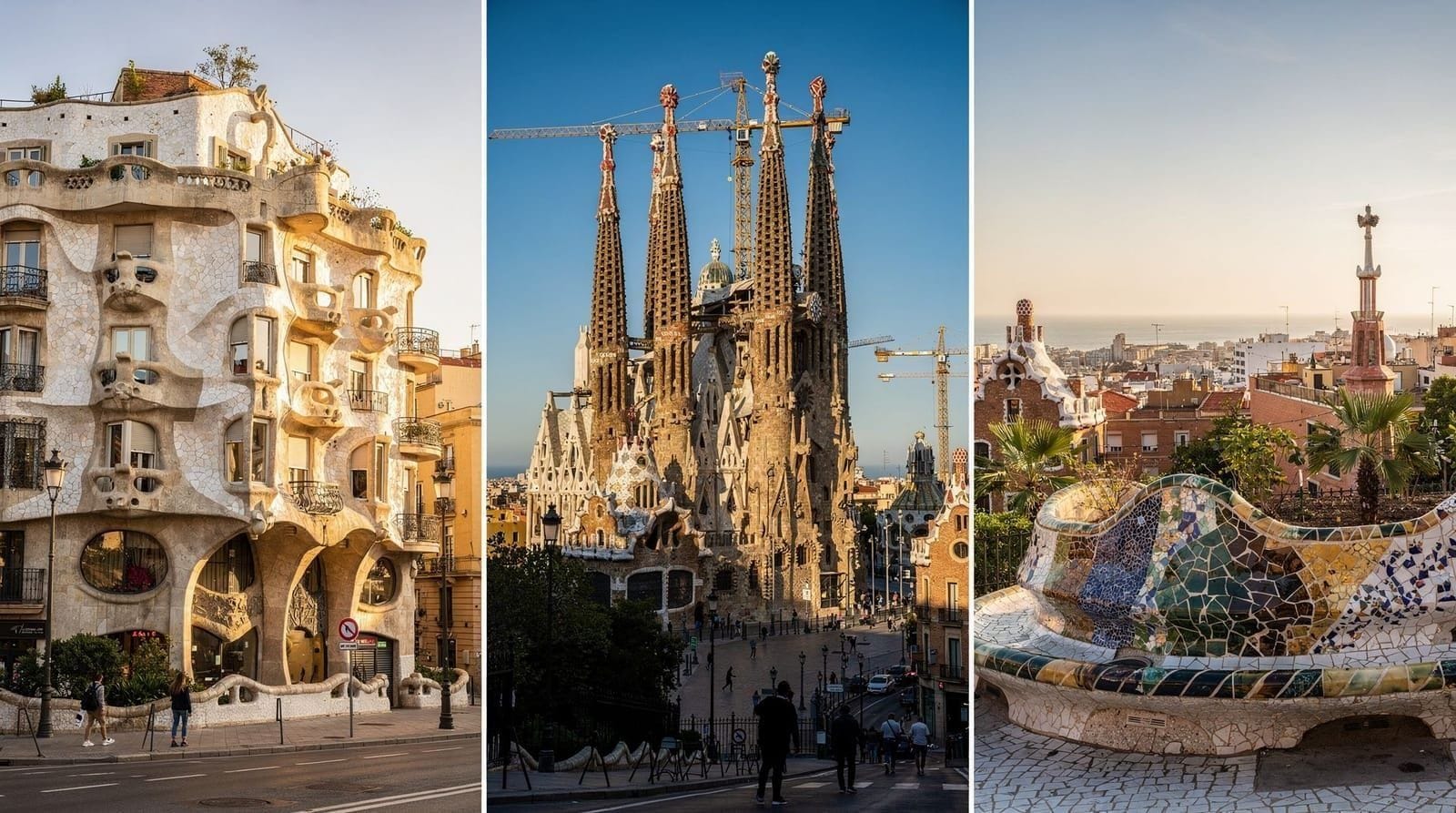
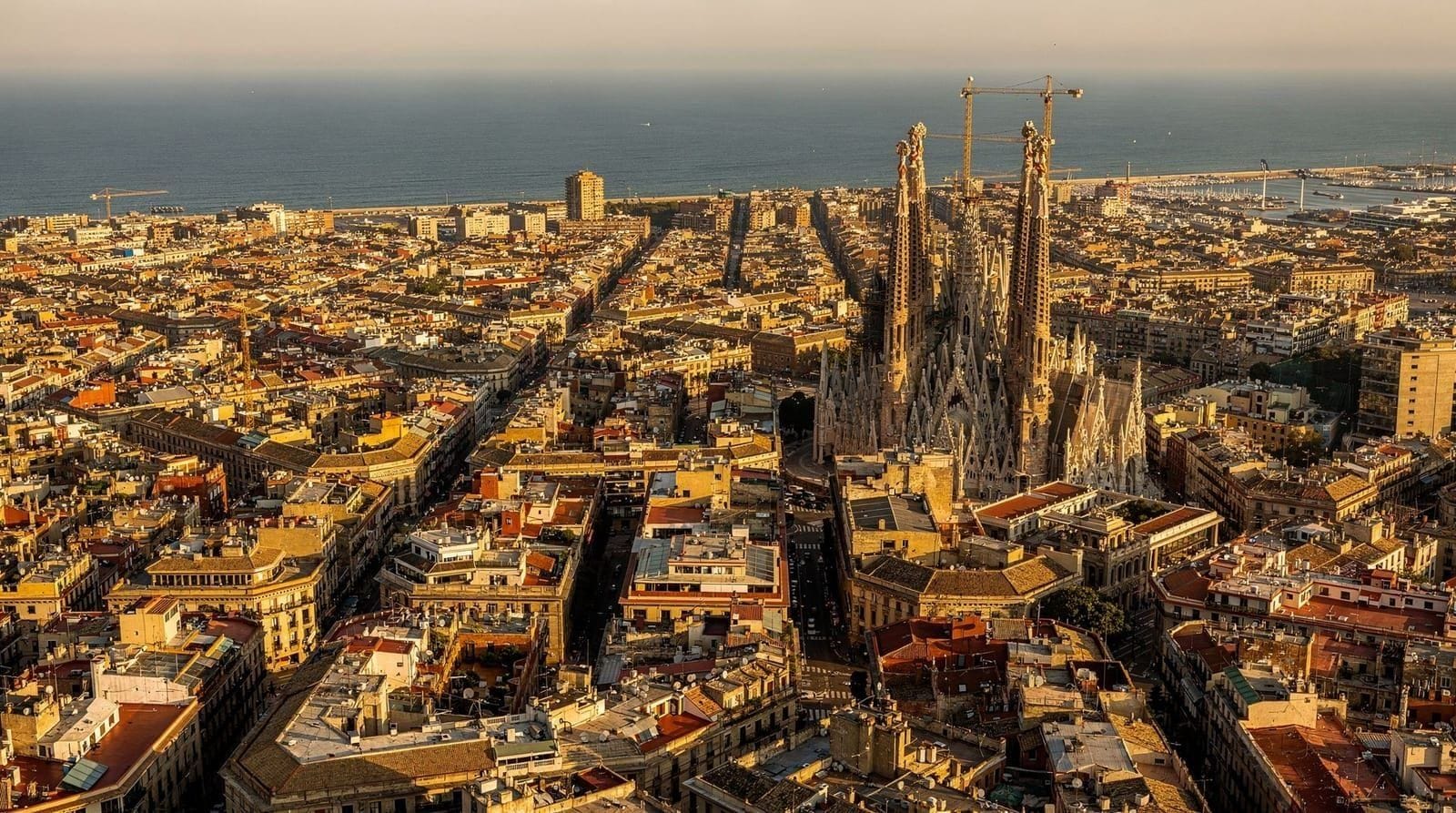
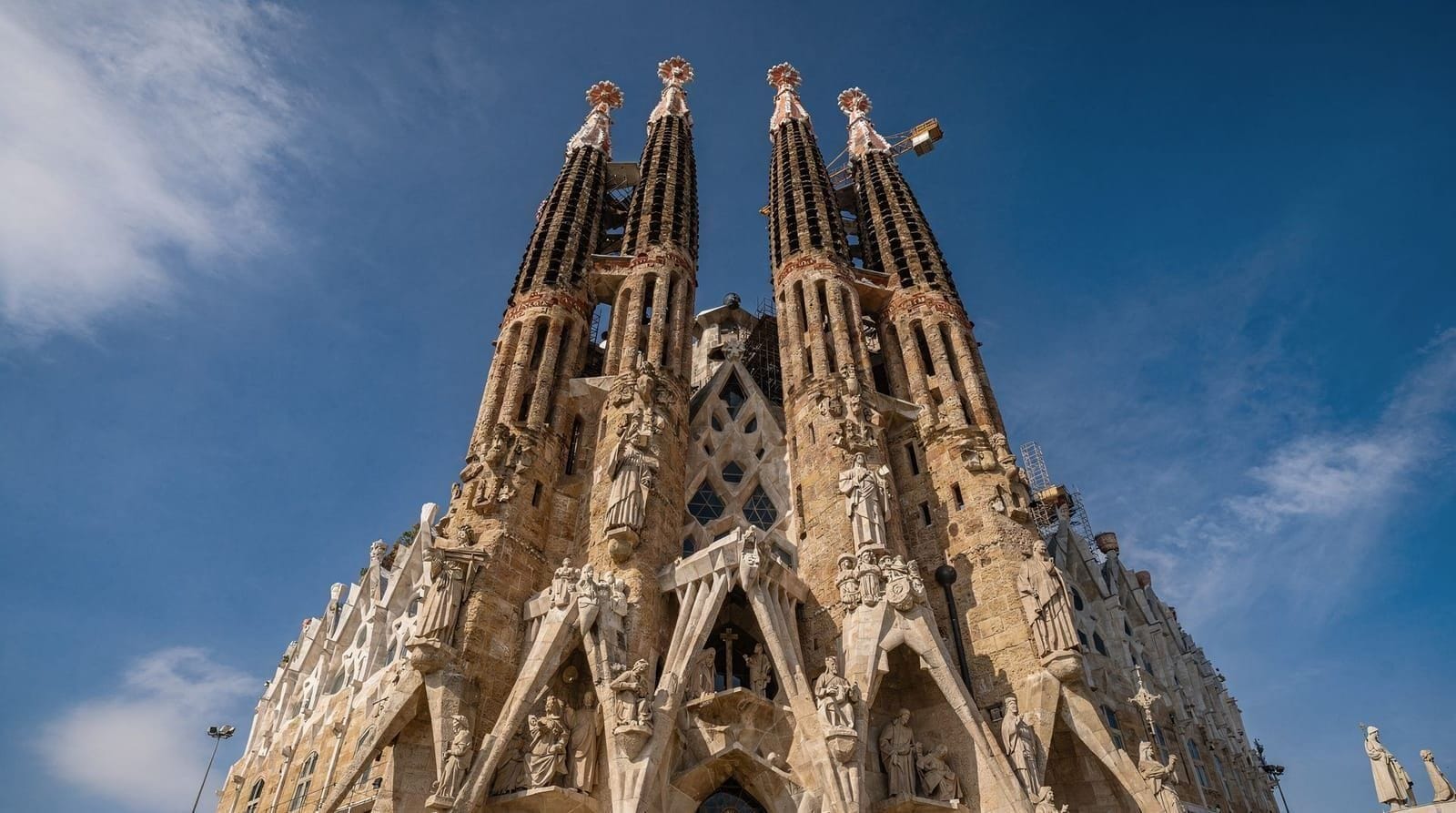
Book the Sagrada Família for the morning slot — in winter (November to March), tickets are often available 3–7 days ahead even for morning slots. Book online at sagradafamilia.org the day before you travel if necessary; this flexibility is one of the genuine advantages of a winter visit. Tower access (€10–15 supplement) is strongly recommended in winter because the winter light on the Nativity façade — lower angle, softer, sometimes misty — is uniquely atmospheric.
The Sagrada Família in winter: the nave interior is consistently warm (the stone mass retains heat), the stained glass on the Nativity side (facing east) creates different coloured light in winter sun than in summer, and the guided tours (€40–45) are given in smaller groups. See our Sagrada Família guide for the interior room priority and the best photo spots.
Winter note: if you visit around the Three Kings period (January 5–6), the Sagrada Família is one of the venues for special centenary events and is busier than usual for a winter week — book slightly earlier.
Midday: Eixample calm
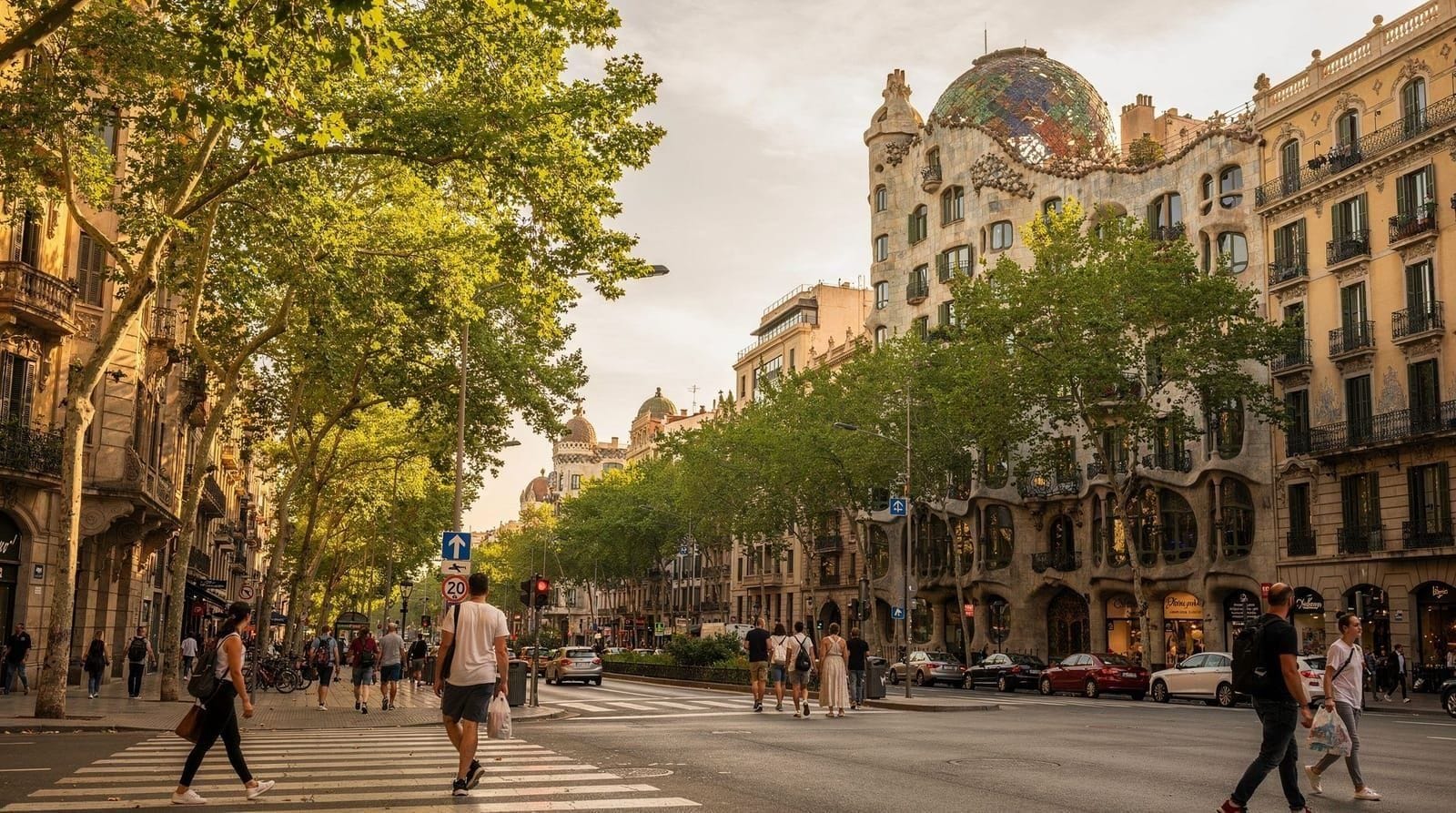
The Eixample in winter is the Eixample at its best: the wide boulevards, the octagonal corners and the Modernisme facades are visible without the summer crowds at the base of every building. Walk Passeig de Gràcia from the Sagrada Família end south to Plaça Catalunya: the three Block of Discord buildings, the Modernisme lamp posts, the stone façade details (Casa Amatller’s St George frieze, Casa Lleó Morera’s floral ironwork). Read our Modernisme route guide for the full pedestrian circuit.
Lunch: Cervecería Catalana (Carrer de Mallorca 236) is warm, reliable and rarely has a winter lunch queue — the tapa selection (croquetes, mussels, grilled calamars, fresh bread with anchovies) is the same year-round. Alternatively, Parking Pizza (Carrer de Londres 98) takes no reservations and rarely has a winter wait.
Afternoon: Casa Batlló or La Pedrera
Casa Batlló (€29–53, book 24–48 hours ahead in winter) in a winter afternoon has one specific advantage: the building’s 10D multimedia experience (projected visuals on the façade) runs in daylight hours in winter because sunset is around 17:30–18:00. The building looks completely different in low winter light. Check the current night-experience schedule as well; La Pedrera’s night show (€38) is a separate winter-only experience.
La Pedrera (€25–38; check winter closure dates before booking): the rooftop chimneys in winter fog or winter sun are equally spectacular. The building is heated inside; the rooftop is cold.
Evening: Gothic Quarter night walk
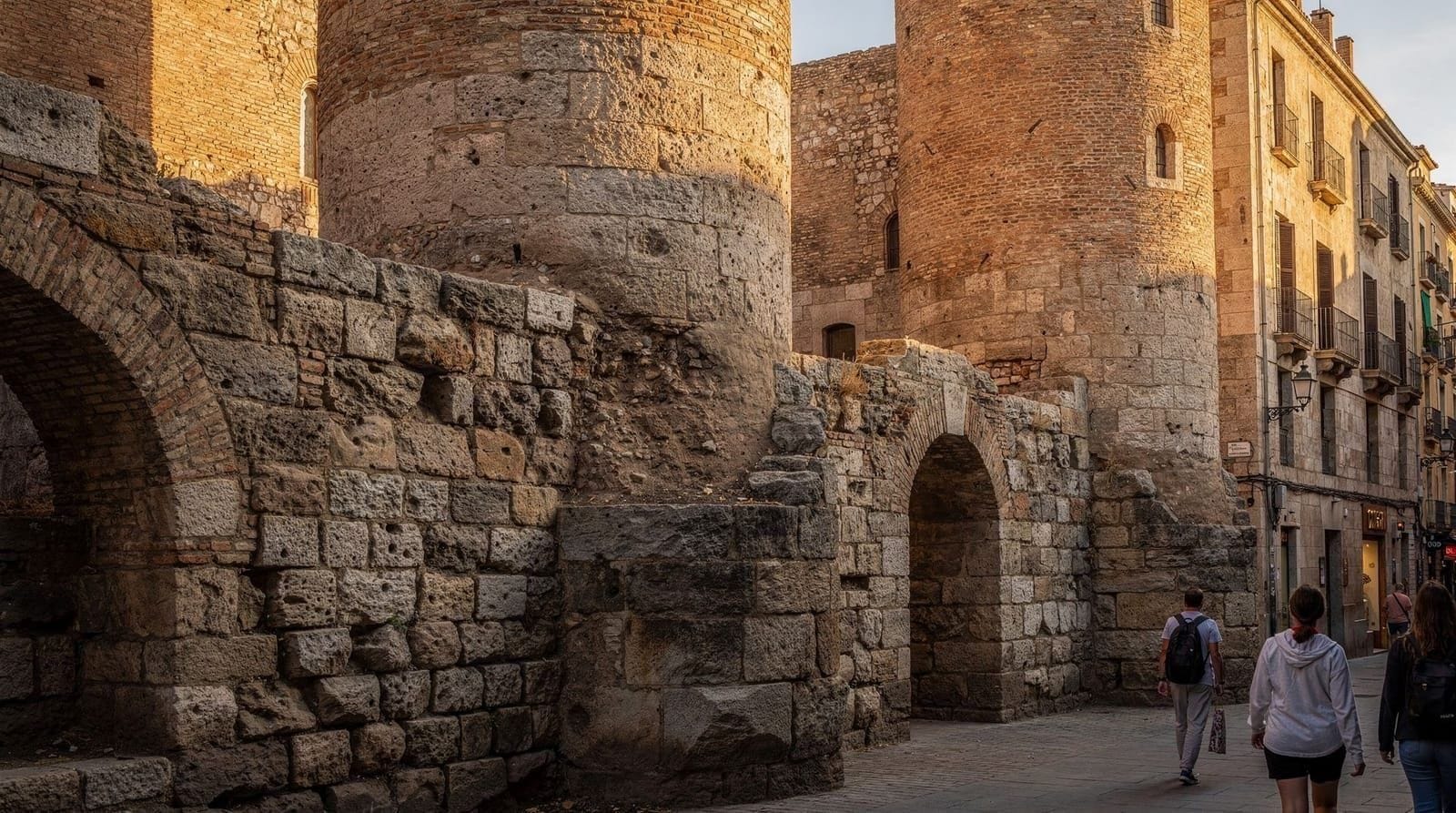
The Gothic Quarter in winter evenings has the atmosphere it lacks in summer overcrowding. A Gothic Quarter mysteries and legends night walk (2 hours, €18–20, small group) covers the Roman ruins, medieval plague stories and the areas most visitors never find by day. The narrow streets lit by gas-replica lamps, with almost no other tourists, are genuinely affecting.
Dinner at El Xampanyet (Carrer de Montcada 22, El Born, opens 19:00) for cava and anchovies — one of Barcelona’s great winter rituals, a warm narrow room with cold cava and reliably excellent salt-cod anchovies. For a fuller dinner, Cafè de l’Acadèmia (Carrer dels Lledoners 1, Gothic Quarter, opens 20:00) does traditional Catalan cooking (white bean stew with botifarra, braised rabbit with alioli) in a room that has barely changed since the 1980s.
Day 2: Park Güell, Gràcia and indoor culture
Morning: Park Güell (winter advantages)
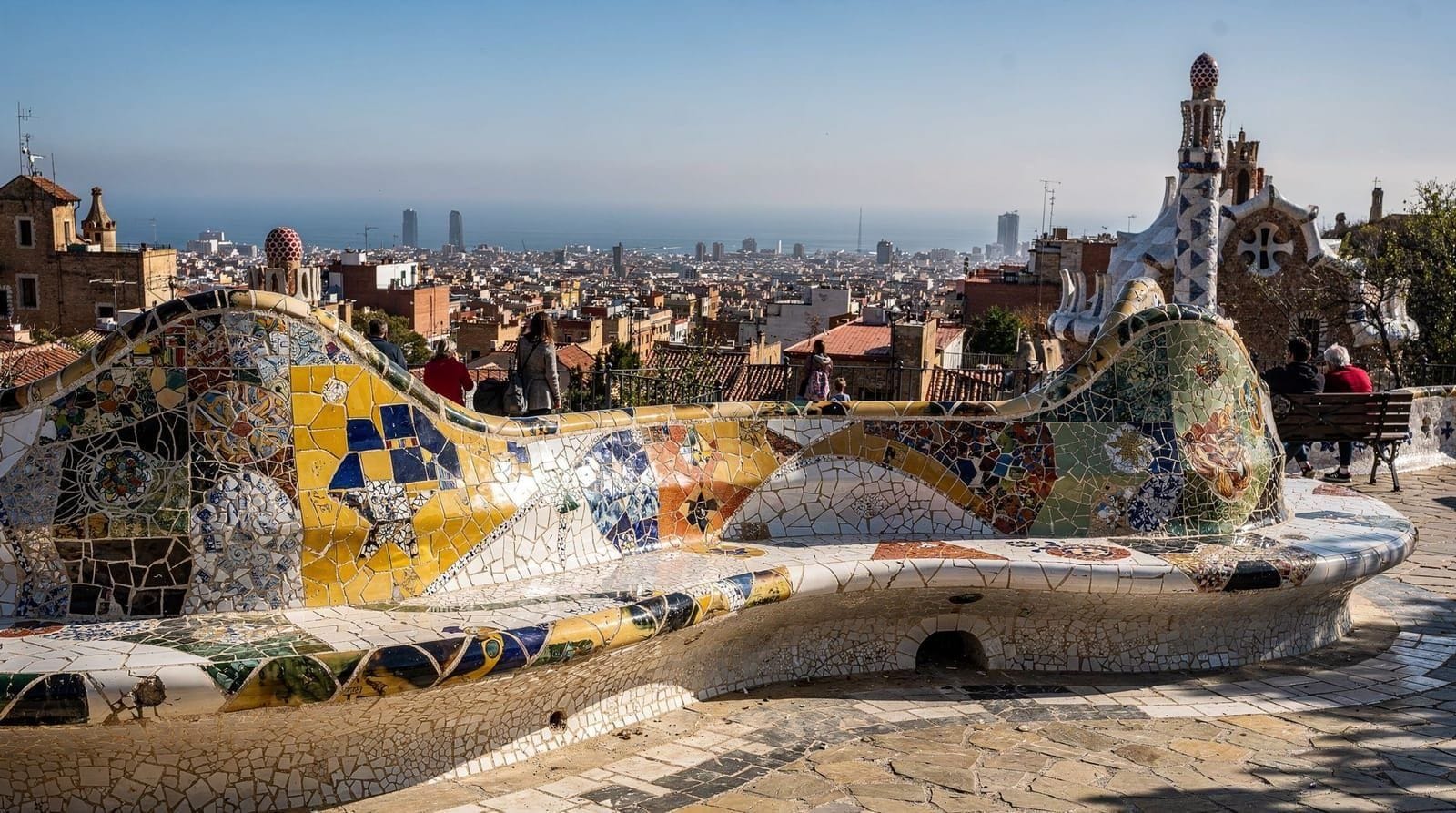
Park Güell in winter is a transformed experience: the Monumental Zone (€13) is bookable 24 hours ahead, the main terrace has three or four visitors rather than three hundred, and the winter light on the trencadís mosaic (broken ceramic tiles) is lower and more directional than summer light — the colours read differently. Book online the night before.
The free forest sections outside the Monumental Zone are even better in winter: the paths through the eucalyptus and pine are quiet, the urban panorama from the Calvary hill includes a horizon line you cannot always see through summer haze, and the viaducts are covered in lichen and winter vegetation that adds texture. See our Park Güell free vs paid guide.
Bring a windproof layer: the hilltop is exposed and winter mornings can be cold (8–12°C).
Midday: Gràcia neighbourhood
Walk downhill into Gràcia. The neighbourhood is at its most authentic in winter — the summer tourists are absent, the local bars and restaurants return to their regular clientele, and the afternoon vermut ritual at the squares is genuinely observable. Plaça del Sol on a winter Sunday at noon (locals warming themselves in the thin sunshine, cold vermut in hand, small dogs at their feet) is one of the quintessential Barcelona scenes and almost invisible to most visitors.
Lunch: Bar Bodega Manolo (Travessera de Gràcia 49, opens from noon) for a proper Catalan winter lunch: lentils or white beans with butifarra sausage, braised chicken with samfaina (Catalan ratatouille), €12–15 for a two-course menu del día with wine. Winter menus del día are Barcelona’s best food value.
Afternoon: MNAC and Montjuïc (indoor option)
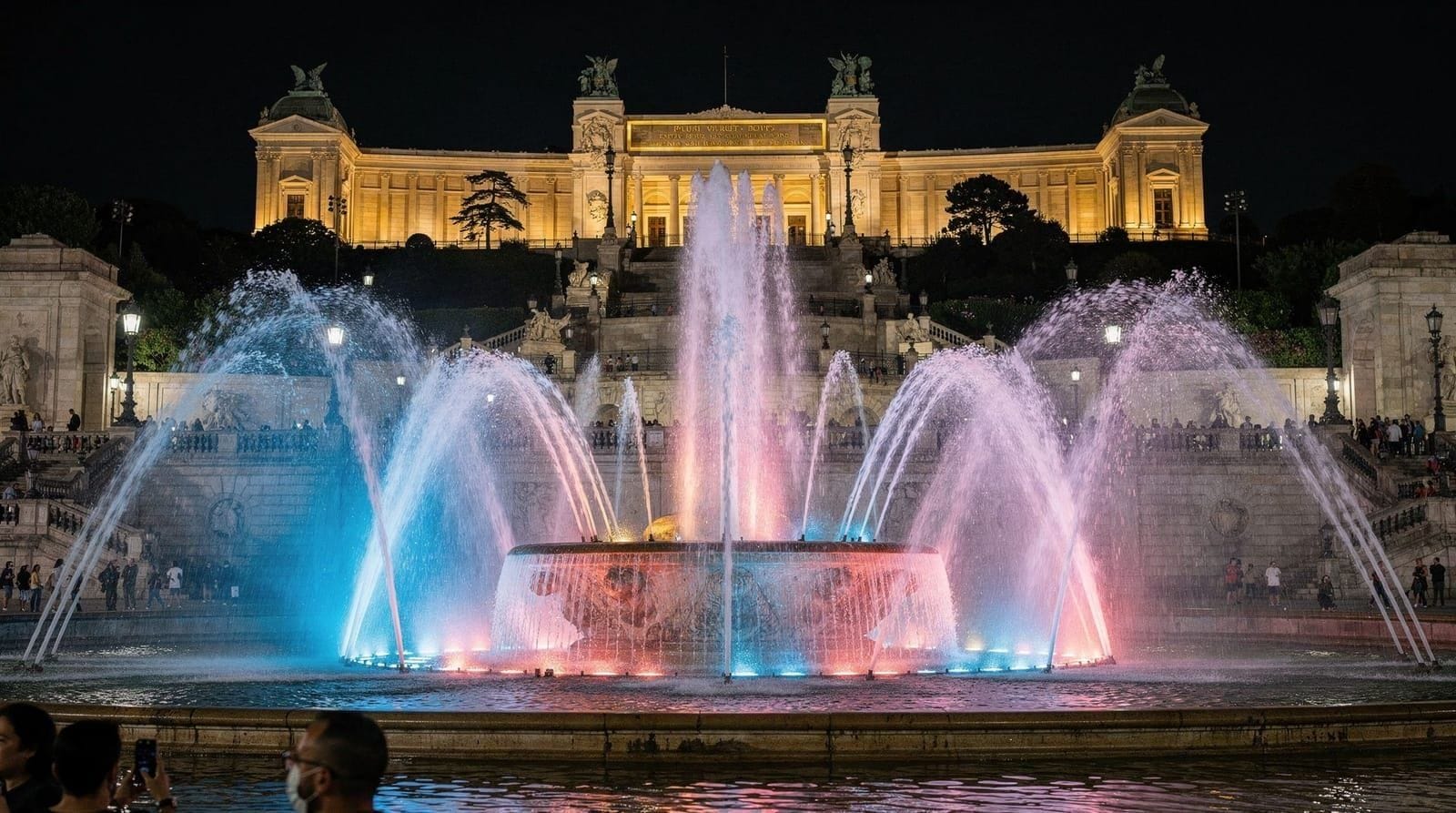
Take the bus (bus 55 from Plaça Catalunya) or metro L3 to Espanya and walk up to the Museu Nacional d’Art de Catalunya (MNAC). The Romanesque art collection here is the finest in the world — 23 intact apse frescoes removed from Pyrenean churches in the 1920s for preservation — and it is overwhelmingly powerful in the vast oval rooms of the Palau Nacional. Winter afternoons in the Romanesque gallery, with natural light through the high windows on the apse paintings, are among the most atmospheric museum experiences in Spain.
MNAC is free the first Sunday of each month and Saturday afternoons after 15:00. Tickets otherwise €12. Allow 2–3 hours. See our MNAC guide for the collection priorities.
The Fundació Joan Miró (adjacent, €15) is equally excellent in winter — smaller and more focused than the MNAC, with better natural light for the paintings. The rooftop sculpture garden is cold but usually open.
Evening: Palau de la Música concert
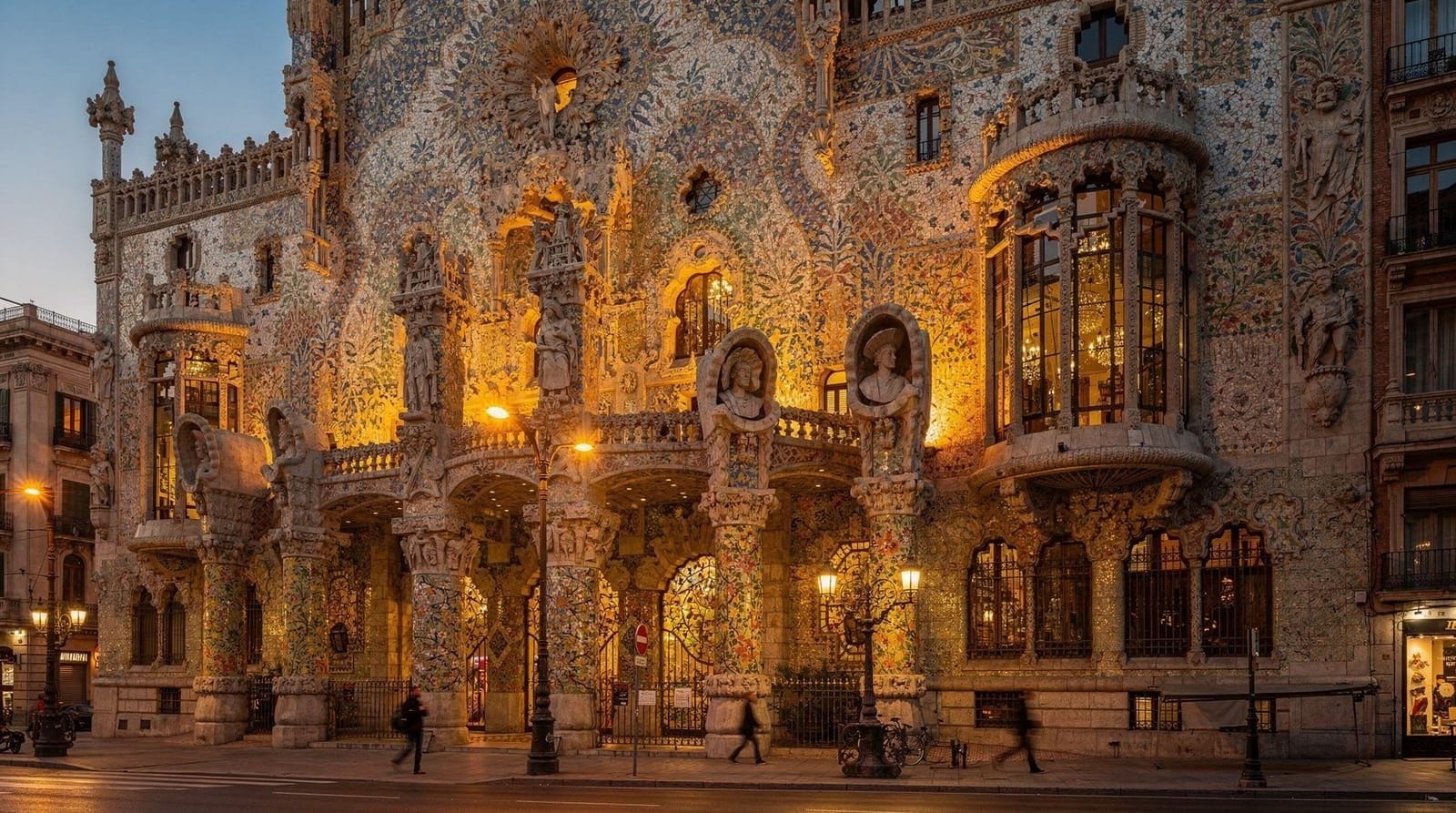
Palau de la Música Catalana (Carrer del Palau de la Música 4–6) is Barcelona’s finest concert venue and most alive in winter, when the resident Orquestra Simfònica de Barcelona fills the UNESCO-listed hall. Book tickets in advance at palaumusica.cat; the schedule runs October–June with concerts Thursday–Saturday typically. Prices range from €20 (upper gallery) to €100 (front stalls for star soloists). Even the daytime guided tour (€30) is different in winter: the building’s extraordinary stained-glass skylight takes on a different character in winter afternoon light. See our Palau de la Música guide.
If not attending a concert, dinner at Bar Brutal (Carrer de la Princesa 14, opens 13:00) for natural wine and small plates, or the classic option at El Xampanyet for one more evening of cava.
Day 3: Montserrat and the mountain in winter
Full day: Montserrat
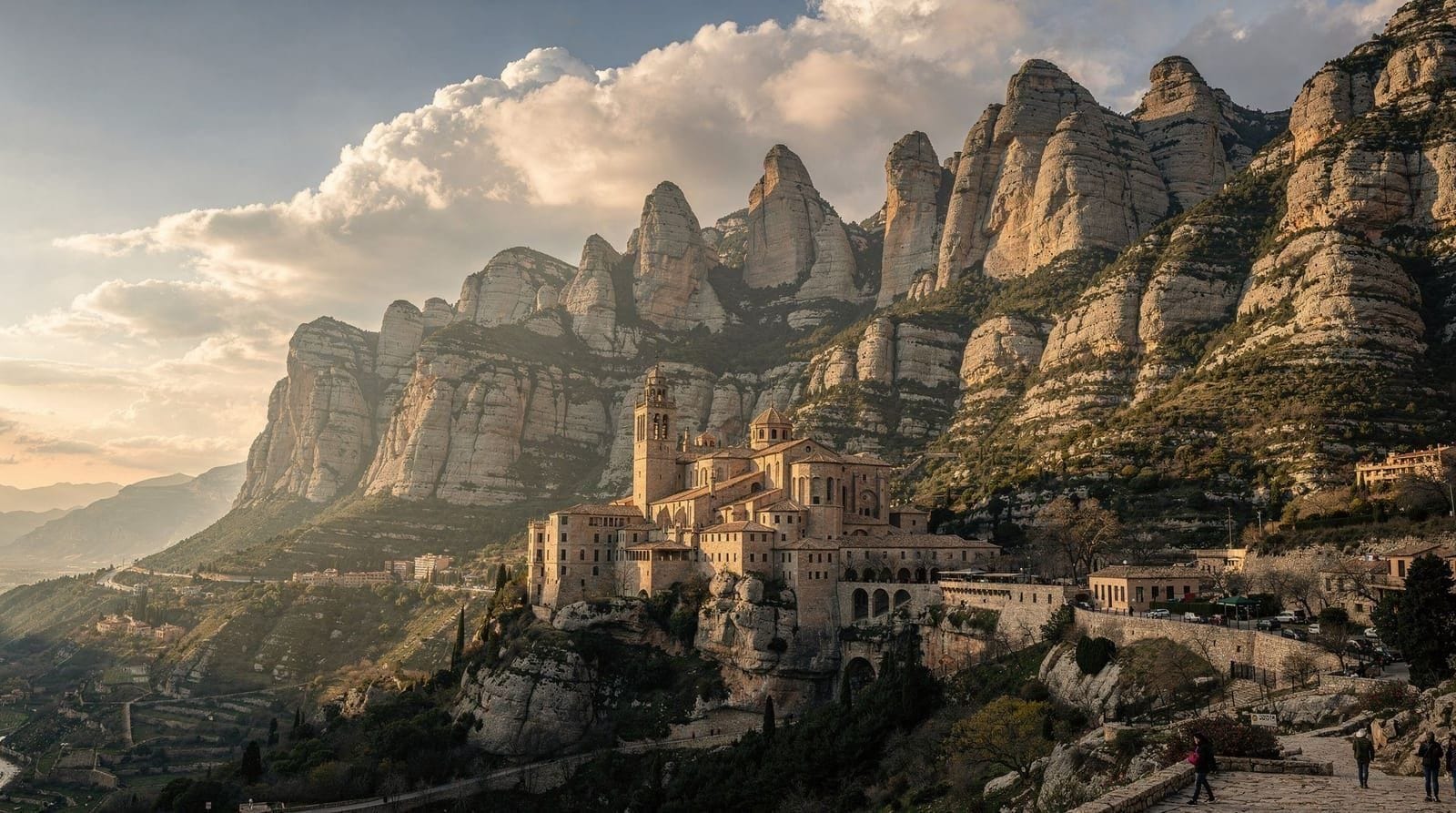
Montserrat in winter is dramatically different from the summer version: fewer visitors, the possibility of snow on the upper peaks (December–February), and a profound quiet in the monastery that is absent in high season. The Escolania choir (the boys’ choir, one of the oldest in Europe) sings at 13:00 and 18:45 on most weekdays October–June — a winter day trip aligns naturally with the 13:00 recital if you leave Barcelona by 09:00 and arrive by 10:00.
See our Montserrat day-trip guide for the train logistics (FGC R5 from Plaça Espanya, ~€30 return combined with cable car or cremallera). Winter tip: the cable car is more spectacular than the cremallera (rack railway) because the mountain ridge view is extended on clear winter days; the cremallera is more protected from wind.
The Sant Joan funicular (€13 return, runs most days outside maintenance) carries you to 1,000 metres altitude; in winter, the trail from the top to the Sant Joan Chapel (20 minutes) is walkable in light snow if you have adequate footwear. The views of the Pyrenees from here (visible on clear days) include peaks in snow — the contrast with the Mediterranean coast 50 km south is extreme.
Return to Barcelona by 17:30–18:00 for a final evening in the city.
Evening: Three Kings context (if visiting January 4–6)
If your visit coincides with the Three Kings (Reis Mags) period, January 5 is the evening of the Cabalgata de Reyes — the parade of the three kings through the city centre. The route changes annually (check bcn.cat for the current year’s route); it typically passes through Passeig de Sant Joan and the Eixample around 18:00–20:00. Children line the streets to catch sweets thrown from the floats; adults drink mulled wine from temporary stalls. The atmosphere is unlike any other event in the city.
Day 4: Indoor Barcelona — Picasso, El Born and nightlife
Morning: Picasso Museum (free Thursday evenings, or Thursday morning)
The Picasso Museum (Carrer de Montcada 15–23; €15 general admission) is free on the first Sunday of the month and on Thursday evenings (October–April: 16:00–21:00; May–October: 19:00–21:00 Thursday, Friday, Saturday). A winter Thursday visit at 16:00 gives you the museum in quiet, late-afternoon light with a free entry. For a morning visit, book online for a timed slot; queues are minimal in winter but the online booking is cheaper and faster.
The permanent collection covers Picasso’s formative Barcelona years (1895–1904): the early academic paintings, the Barcelona cityscape drawings, the Blue Period works and the pivotal Las Meninas series. See our Picasso Museum guide for the must-see rooms.
Midday: El Born winter lunch
El Born in winter has a different texture: the outdoor tables are empty, the neighbourhood is quieter, and the restaurants that cater to locals rather than tourists are more visible. Bar del Pla (Carrer de la Montcada 2, opens 12:00) for Catalan daily specials; Llamber (Carrer de la Fusina 5, reservations for a winter Saturday) for Basque-Catalan cooking.
Walk through the El Born Cultural Centre (Centre Cultural El Born, Plaça Comercial 12, free) — built inside the shell of the 19th-century iron market, it displays the archaeological remains of an entire neighbourhood demolished after the 1714 siege of Barcelona. In winter, the space is calm and the archaeological display (the streets, fountains and collapsed walls of 1714 Barcelona visible underfoot) is profound.
Afternoon: Barcelona’s best indoor attractions
Several of Barcelona’s best cultural experiences are more enjoyable in winter than in summer, purely because of crowd levels:
- Fundació Antoni Tàpies (Carrer d’Aragó 255, €12) — the foundation established by Catalonia’s most important 20th-century painter in a converted Modernisme publisher’s building. Rarely crowded even in summer; exceptional in winter.
- MACBA (Museu d’Art Contemporani de Barcelona, Plaça dels Àngels 1, €12, free Mondays from 16:00) — contemporary art in Richard Meier’s white building in El Raval; the permanent collection includes major Catalan artists of the 20th century alongside international work. See our MACBA guide.
- Hospital de la Santa Creu i Sant Pau (Recinte Modernista de Sant Pau, Carrer de Sant Antoni Maria Claret 167, €16) — Domènech i Montaner’s UNESCO-listed hospital complex, recently restored, with extraordinary Modernisme tilework, sculpture and glass. See our Sant Pau guide.
Evening: farewell in Barcelona
Winter nightlife starts later and runs slightly less late than summer, but the local bars are more genuine. Bar Marsella (Carrer dels Escudellers 65, Gothic Quarter, opens 21:30) — one of the oldest bars in Barcelona (since 1820), serving its own house absinthe in a room that has not changed in decades. The light is dim, the bottles are dusty and the atmosphere is entirely unrepeatable.
For a final dinner, the Bodega Sepúlveda (Carrer de Sepúlveda 173, Eixample, book 24 hours ahead) does a winter tasting menu with Catalan wine pairings that justifies the ~€70 per person price. A more modest option: La Pepita (Carrer del Torrent de l’Olla 74, Gràcia) for croquetes and natural wine to close out the trip.
Winter month by month
Not all winter weeks are the same. The seasonality below helps decide which weeks to target or avoid:
| Month | Weather | Crowds | Notable |
|---|---|---|---|
| November | Mild, 12–16°C, more rain days | Low | Quiet, best hotel prices of the year |
| December | 10–14°C, dry more often than not | Moderate (Christmas) | Christmas markets, festive lights on Passeig de Gràcia |
| January | 9–13°C, driest month | Low, spikes Jan 4–6 | Three Kings parade; cheapest month outside that weekend |
| February | 10–15°C, driest month | Low, spikes at Carnival | Santa Eulàlia festival, approaching Carnival |
For value alone, late January and early February are the strongest weeks of the year: hotel prices are at their annual floor, the Three Kings crowds have gone home, and Carnival hasn’t yet pushed demand back up. If your dates are flexible, this is the window to target.
What to pack for a winter Barcelona trip
Winter packing for Barcelona is closer to a mild European autumn than a genuine cold-weather trip. A warm coat, a couple of layers you can add or remove through the day, comfortable walking shoes (the old town’s cobbles get slick when it rains) and a compact umbrella cover most days. Gloves and a scarf are worth having for evening walks, particularly near the sea where the wind picks up. You won’t need thermal layers or heavy boots — even the coldest January days rarely drop below 5°C in the city centre, and indoor spaces (restaurants, museums, the metro) are consistently well-heated throughout the season. If your trip includes the Montserrat day, an extra layer is worth carrying: the mountain altitude runs several degrees cooler than the coast, and light snow on the upper peaks is possible December–February.
Extending a winter trip: Sitges Carnival and beyond
If your visit lands in February, Sitges Carnival is worth a day trip on its own — it is one of the most spectacular Carnival celebrations in Spain and pairs naturally with this itinerary’s Montserrat or MNAC day. Visitors staying into early spring should read our Christmas in Barcelona piece if travelling in December, or the best time to visit Barcelona guide for how winter compares to spring and autumn shoulder seasons more broadly. For a winter-specific comparison against a summer visit, our honest take on Barcelona covers the trade-offs of visiting off-season versus in peak crowds directly.
is worth booking for a winter visit specifically — winter tour groups are smaller, and the guide can speak to the ongoing 2026 centenary construction in more detail than a rushed summer slot allows.
Practical notes for a winter visit
Clothing: A warm coat and one layer underneath is sufficient most winter days. Rain is possible but not likely; bring a compact umbrella. Evenings can be cold enough for gloves. Indoor venues are well-heated, so a layer you can remove indoors is more useful than one heavy coat you’re stuck wearing all day.
Budget advantages: Hotels in Eixample that cost €150–200/night in summer can be booked for €80–120 in January–February. Restaurant reservation availability is significantly better. Attraction tickets are cheaper in some cases (check individual venues for winter pricing). See our Barcelona on a budget guide for the winter-specific savings.
Transport: No changes from summer. The metro operates the same schedule. The Aerobus and R2 Nord train from the airport run year-round. The Montjuïc cable car and funicular have shorter operating hours in winter (typically 10:00–18:00; check oncablesaeris.cat).
What is closed: Some outdoor terraces are closed or limited November–March. Beach bars (chiringuitos) are closed. The Barceloneta beach sports operators are closed. La Pedrera has a January maintenance closure (check dates). The Tibidabo amusement park operates limited weekend-only schedules November–March.
Frequently asked questions about visiting Barcelona in winter
Is Barcelona worth visiting in winter?
Yes, particularly for visitors who prioritise culture, food, architecture and value over beach and nightlife. The city has excellent indoor resources (the MNAC Romanesque collection alone is worth the trip), the Gaudí sites are at minimum crowd levels, and the neighbourhood character of Gràcia, Poble-sec and El Born is most visible when tourist volume is low.
What temperature should I expect in Barcelona in December and January?
Daytime averages run 12–15°C in December and January. Nights drop to 5–9°C. The city is rarely below 5°C, frost is uncommon in the urban area, and snow in the city centre is a novelty (it occurs perhaps once a decade). Montserrat and the Pyrenees can receive significant snow in the same period — a visible contrast visible on clear days from the city.
When is the Three Kings parade in Barcelona?
The Cabalgata de Reyes (Three Kings parade) takes place on the evening of January 5 (the eve of Epiphany, January 6). It is the largest children’s celebration of the Catalan year, more significant than Christmas. The three kings (Melchior, Caspar and Balthasar) parade through the city on floats throwing sweets to children lining the route. The exact route changes annually; check bcn.cat for the current year’s details. Hotels fill rapidly around this weekend; book 4–6 weeks ahead if you want this period.
Are the Gaudí sites less crowded in winter?
Significantly so. At Sagrada Família, the difference between a July morning and a January morning can be 80% fewer visitors — you can actually see the nave without negotiating around selfie sticks. Park Güell is similarly manageable: the Monumental Zone is bookable 24 hours ahead rather than weeks. Casa Batlló and La Pedrera have a similar winter-vs-summer differential. The one exception is the Three Kings week, when domestic tourism peaks.
Should I book a day trip to Sitges or Montserrat in winter?
Montserrat is excellent in winter (snow on the upper peaks, choir available weekdays October–June, quieter than summer). Sitges in winter has its Carnival (February, spectacular) but is otherwise quieter; the beaches are empty and some seasonal restaurants close. Both are worth the trip. See our Sitges day-trip guide and Montserrat day-trip guide for winter-specific logistics.
Is Barcelona expensive to visit in winter?
No — it’s the cheapest time of year by a clear margin. Flights and hotels both drop from their summer and La Mercè-season peaks, with Eixample hotels often 30–50% cheaper than July–August rates. Restaurant prices don’t change seasonally, but reservation availability is much better, meaning you rarely pay a premium to get into a popular place. See our Barcelona on a budget guide for the fuller winter cost breakdown.
Top experiences
Bookable activities with verified prices and instant confirmation on GetYourGuide.
Barcelona: Sagrada Família guided tour and entry tickets
- Free cancellation
- Small group
Barcelona: Park Güell skip-the-line admission ticket
- Free cancellation
Barcelona: Gothic Quarter night walk – mysteries and legends
- Free cancellation
Barcelona: Palau de la Música guided tour
- Free cancellation
Barcelona: cable car sky views, magic fountain and castle visit
- Free cancellation
Barcelona: old town tapas & paella food tour with 8 tastings
- Free cancellation