3-day Barcelona itinerary: the classic first visit
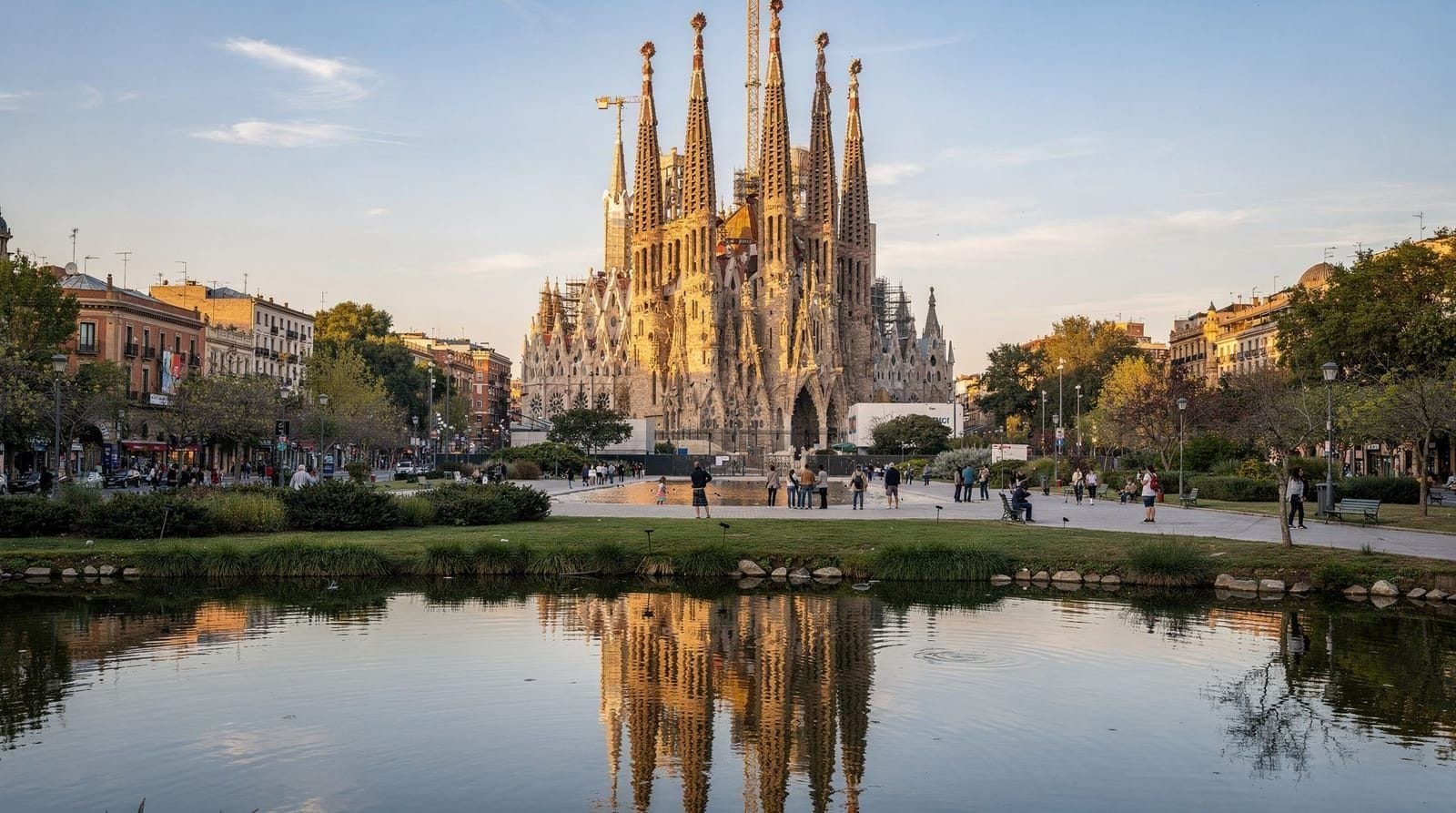
Barcelona: Sagrada Família skip-the-line ticket with audio guide
Duration: 2 hours
- Free cancellation
- Instant confirmation
What this 3-day plan covers
Three days is the minimum to get Barcelona right — enough time for the two UNESCO-listed Gaudí masterpieces, a proper wander through the medieval core, a beach afternoon and one genuinely good meal. This itinerary is built around booking logistics: the Sagrada Família and Park Güell both run on timed entry, and in summer the popular windows disappear weeks in advance. Get those slots confirmed first; the rest of the plan falls naturally around them.
The route is linear and low-stress: Day 1 anchors in the old town (Gothic Quarter and El Born), Day 2 is Eixample and Gaudí, Day 3 combines the hilltop park with Barceloneta and a sunset. You’ll use the metro only a handful of times and walk the rest.
| Best for | First-time visitors, city-break couples |
| Pace | Fast — three intensive days, little downtime |
| Daily budget | Around €80–110/person for activities, food and transport |
| Getting around | Metro plus walking; a T-Casual card covers it |
| Best months | May–June and September–October for light crowds and warm weather |
Before you leave home: Book the Sagrada Família for Day 2 morning (09:00 slot, €33–46 depending on tower access). Book Park Güell Monumental Zone for Day 3 morning (08:00 or 08:30, €13). Book Casa Batlló or La Pedrera for Day 2 afternoon if your budget allows. Everything else is walk-up.
Day 1: Gothic Quarter, El Born and La Barceloneta
Morning: Roman layers and a Gothic cathedral
Start at Plaça de Catalunya (metro L1/L3, Plaça Catalunya) and walk south down La Rambla for orientation — but don’t linger. Read our honest guide to La Rambla before you go: pickpockets operate heavily here, and the restaurants lining the boulevard are overpriced without exception. La Boqueria market is photogenic but similarly tourist-saturated at mid-morning; come back early on Day 2 if you want to buy rather than photograph.
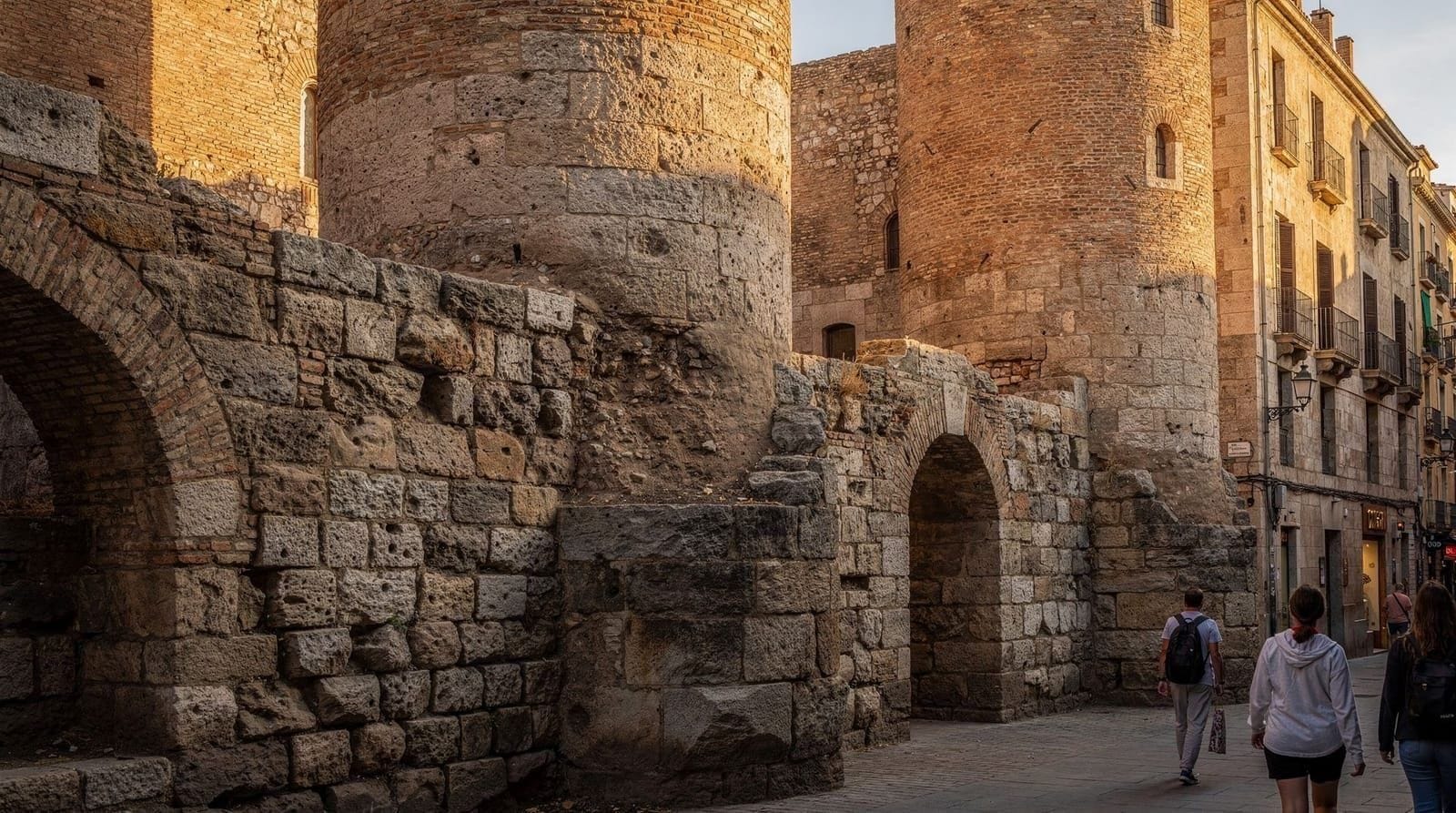
Turn left off La Rambla and enter the Gothic Quarter. Allocate 90 minutes for a self-guided walk. Key stops:
- Barcelona Cathedral (entry free before 12:30 with a €3 suggested donation; €9 after): Gothic exterior from the 14th century, a 13-sided cloister with geese. Opens at 09:30.
- Plaça de Sant Felip Neri: a quiet square with a shell-marked wall (Civil War damage) — one of the most affecting spots in the city.
- Pont del Bisbe: the neo-Gothic bridge connecting the Generalitat to the Palau del Lloctinent; a required photograph.
- Temple d’August: four Roman columns standing 9 metres high inside a medieval courtyard, free to enter weekdays until 19:30.
For a guided Gothic Quarter walk, 2-hour small-group tours depart around 10:00 most mornings from Plaça Nova and add considerably more historical depth than a guidebook.
Midday: El Born and the Picasso Museum
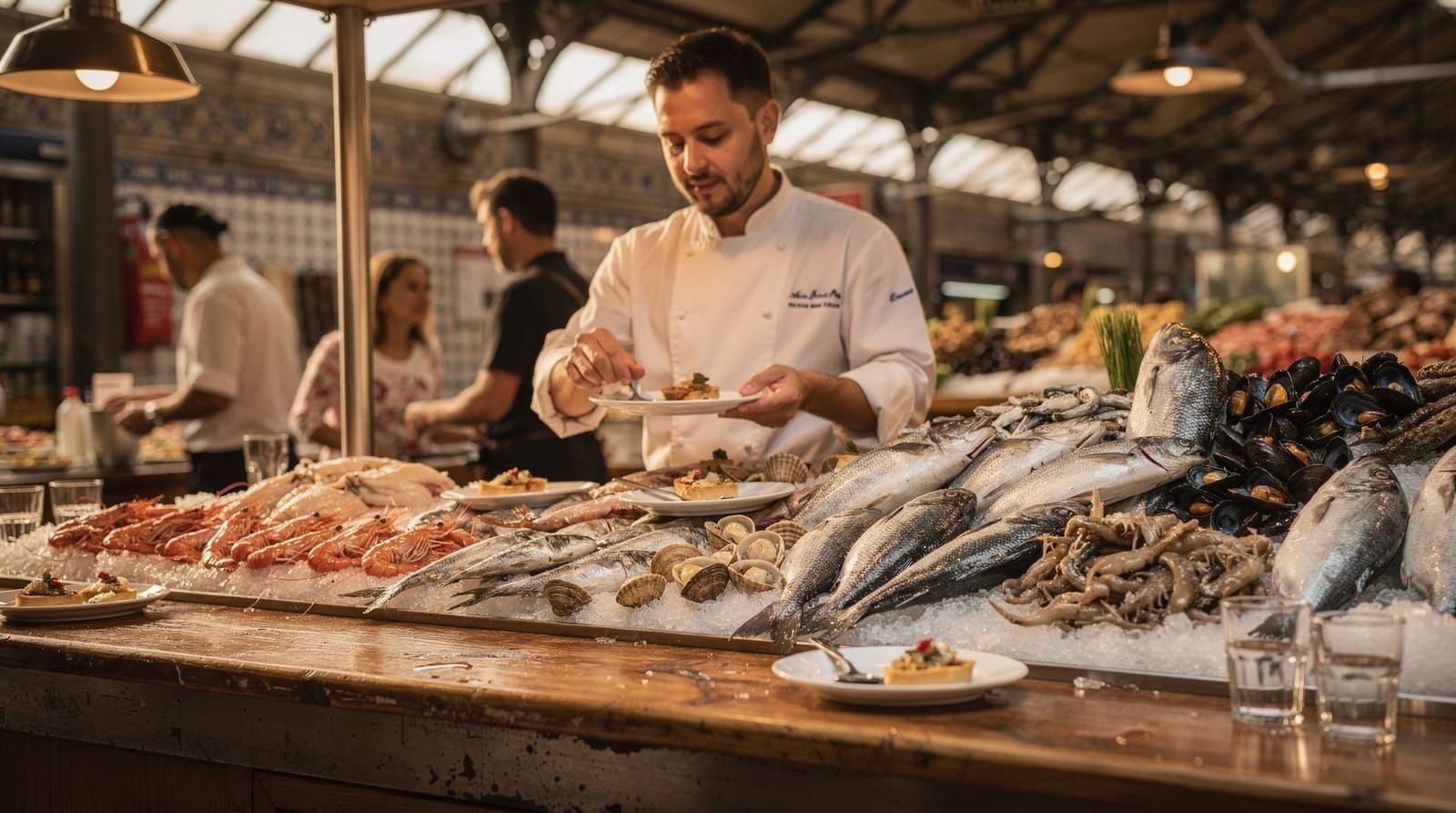
Cross Via Laietana into El Born. This neighbourhood is more fashionable than the Gothic Quarter and less saturated with tourist restaurants. Eat lunch at Bar del Pla (Carrer de la Montcada 2, open 12:00–23:00) — reliable Catalan food, honest pricing, no reservation needed for lunch. Alternatively, the Mercat de Santa Caterina (the colourful-roofed market, five minutes’ walk away) has a food court with better produce than La Boqueria and far fewer crowds.
After lunch, visit the Picasso Museum (Carrer Montcada 15–23; €15 permanent collection, free first Sunday of the month and Thursday evenings in low season). Pre-book a timed slot online to avoid the queue. The collection focuses on Picasso’s formative Barcelona years and his Las Meninas series — it rewards the €15 more than most museum tickets in the city. See our Picasso Museum guide for the rooms worth prioritising.
Afternoon: Palau de la Música and El Born tapas
Walk north to the Palau de la Música Catalana (guided tour €21; book online). The interior — a cascade of stained glass and ceramic — is Domènech i Montaner’s masterpiece, and the 55-minute guided tour is one of the best-value experiences in Barcelona. See our guide for evening concert options.
Return to El Born for the afternoon. Carrer del Parlament in Poble-sec is the local pintxos street, but El Born’s Carrer del Rec and Passeig del Born are lined with bars where you can nurse a vermut (the Catalan aperitif; order it cold with an olive) from around 17:00.
Evening: tapas dinner in El Born
The old-town tapas food tour (three hours, eight tastings, €75) is the single best way to orientate yourself to Catalan food on an opening night: a guide walks you between five or six stops covering pan amb tomàquet, jamón, croquetes, seafood, cava and patatas bravas. Independent restaurant option: El Xampanyet (Carrer de Montcada 22, opens 19:00, closed Monday) is the neighbourhood’s most beloved cava bar, with excellent house cava and solid tapas at honest prices.
Day 2: Eixample and Gaudí
Morning: Sagrada Família (pre-booked, 09:00)
Take metro L2 or L5 to Sagrada Família (10 minutes from Plaça Catalunya). Arrive 10 minutes before your time slot. For a comprehensive overview of what to see inside and whether tower access is worth it, read our Sagrada Família guide and the booking guide.
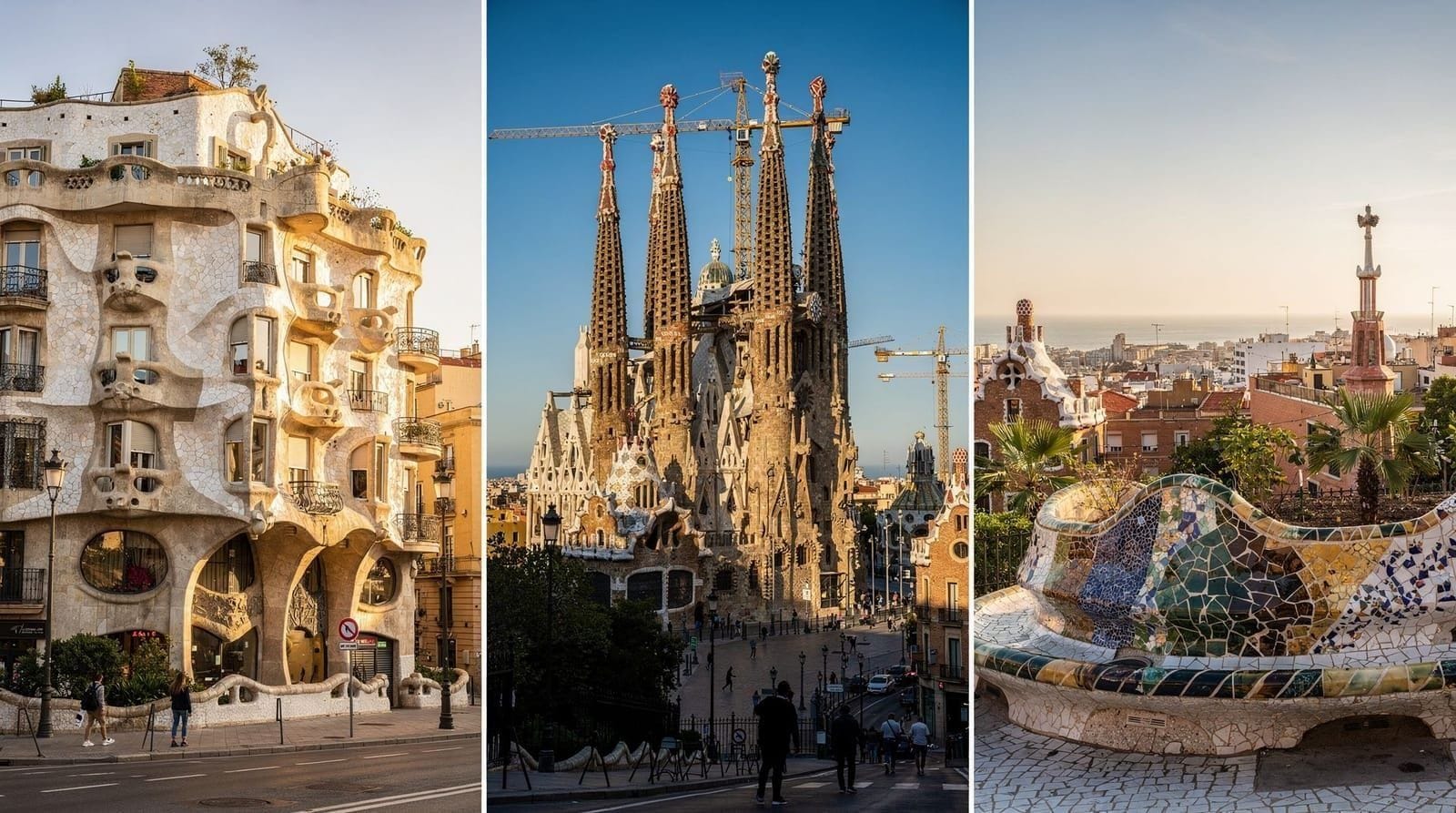
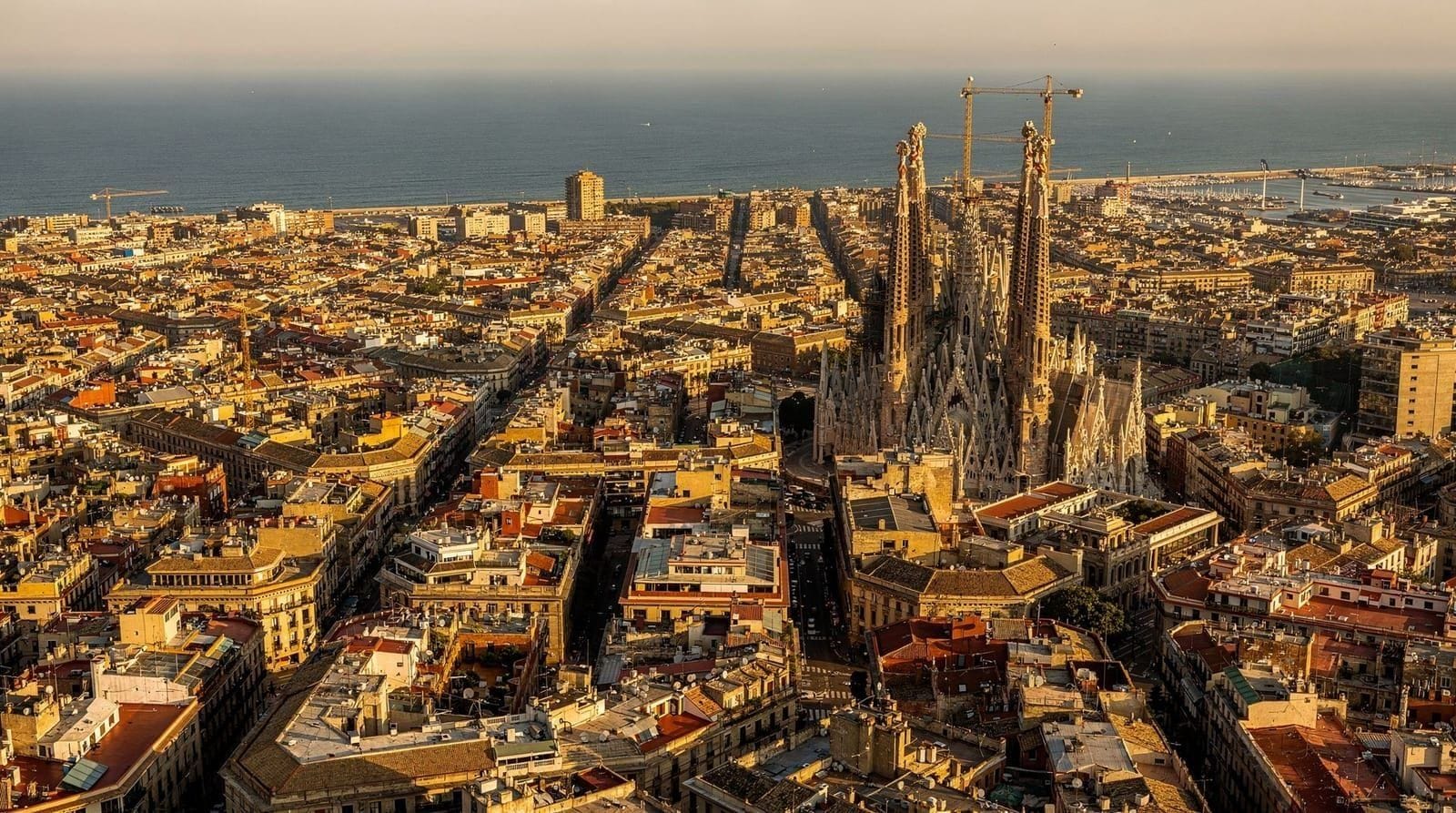
In brief: the Nativity façade (eastern side, facing Avinguda de Gaudí) is the original section and the one carved under Gaudí’s supervision — spend your first 15 minutes examining it before going inside. Inside, the forest of branching columns and the stained-glass nave are extraordinary in morning light; the Passion façade (western side) rewards a second look on the way out. Tower access adds 20–30 minutes and a good aerial view of the Eixample grid; it is not strictly necessary for a first visit but adds depth if you have the time.
Budget two full hours minimum. Coffee at Cafeteria Sagrada Família (outside the exit on Carrer de Sardenya) is fine for a post-visit break.
Midday: Passeig de Gràcia and the Manzana de la Discordia
Walk 20 minutes south-west (or take L2 one stop to Passeig de Gràcia). The stretch of Passeig de Gràcia between Carrer d’Aragó and Carrer del Consell de Cent is known as the “Block of Discord” — three rival Modernista architects built houses within metres of each other:
- Casa Amatller (Domènech i Montaner; façade free, interior tours from €17)
- Casa Lleó Morera (Puig i Cadafalch; ground floor free)
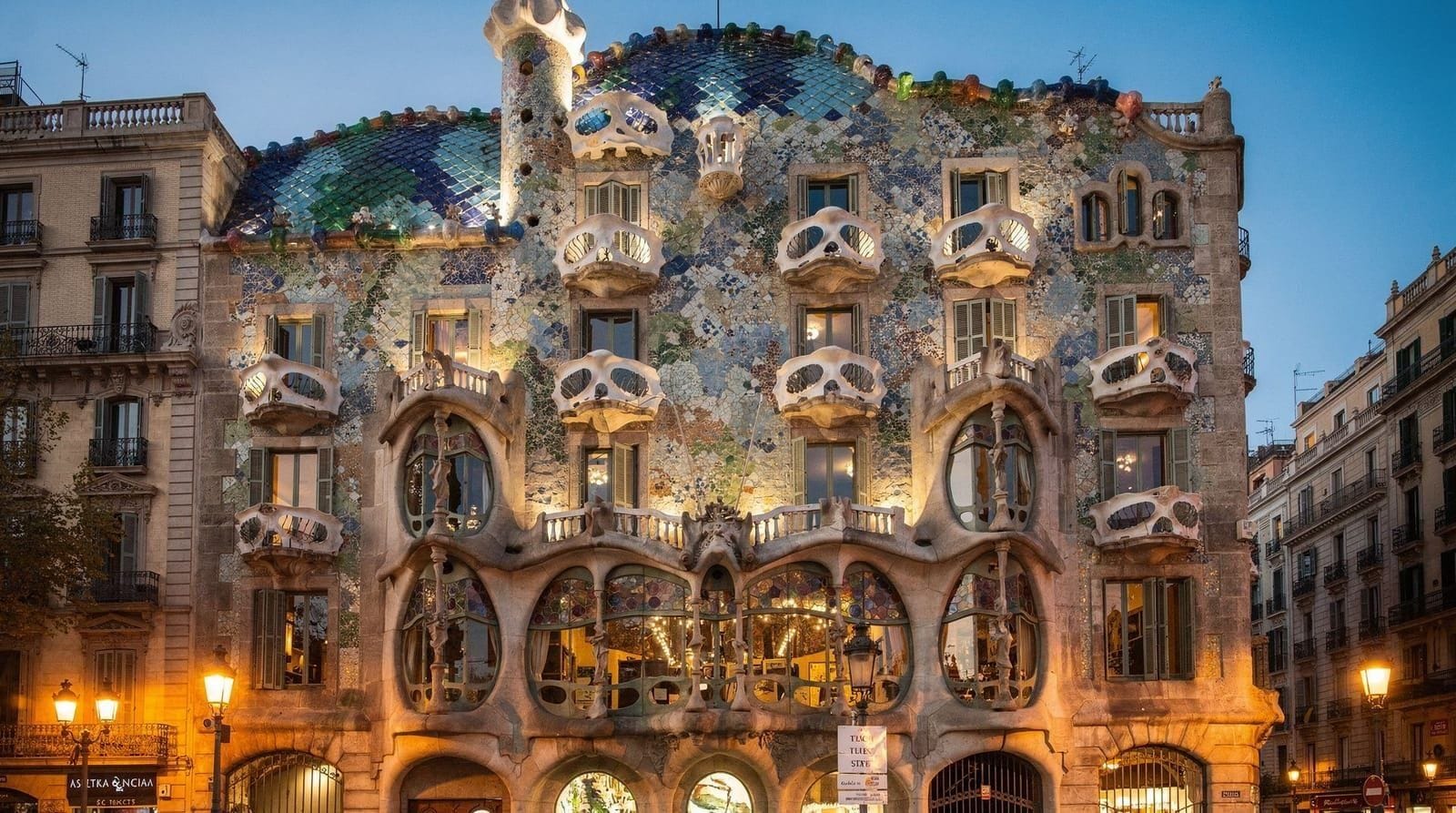
- Casa Batlló (Antoni Gaudí; tickets from €29–53, pre-book essential)
Casa Batlló is the centrepiece. The guided audio experience through the interior — the dragon-scale roof, the marine-themed main floor, the Blue Room — is genuinely impressive and justifies the price. The rooftop is particularly spectacular. Book the “Be the First” early-morning slot (08:30, €45) if you want emptier spaces, or the standard afternoon slot if Sagrada Família is your morning priority.
Lunch: Cervecería Catalana (Carrer de Mallorca 236, opens 13:00; no reservations, queue from 12:45) is a reliable mid-range choice for seafood tapas two blocks from Passeig de Gràcia. Expect a 20-minute wait but it moves fast.
Afternoon: La Pedrera rooftop
La Pedrera (Casa Milà, Passeig de Gràcia 92) is five minutes’ walk from Casa Batlló. The building’s wave-like stone façade is Gaudí’s most Martian exterior; the apartment interior (recreated 1910s furnishings) is interesting but the rooftop with its warrior-chimneys is the draw. Tickets from €25, pre-booked. The audio guide (included) explains the construction logic well. Allow 90 minutes.
Walk south down Passeig de Gràcia towards Plaça de Catalunya for window-shopping. The 1.3-km boulevard has Barcelona’s best international brands alongside Catalan designers.
Evening: Eixample dinner
Eixample has Barcelona’s highest concentration of good restaurants. For budget-friendly: Parking Pizza (Carrer de Londres 98, opens 13:00 and 20:00) is consistently regarded as the city’s best pizza. For mid-range Catalan: Bodega Celler Cesc (Carrer de la Diputació 201, reservations recommended) offers an outstanding wine list by glass and honest Catalan dishes under €20 each.
Day 3: Park Güell, Gràcia and Barceloneta
Morning: Park Güell Monumental Zone (08:00–08:30 slot)
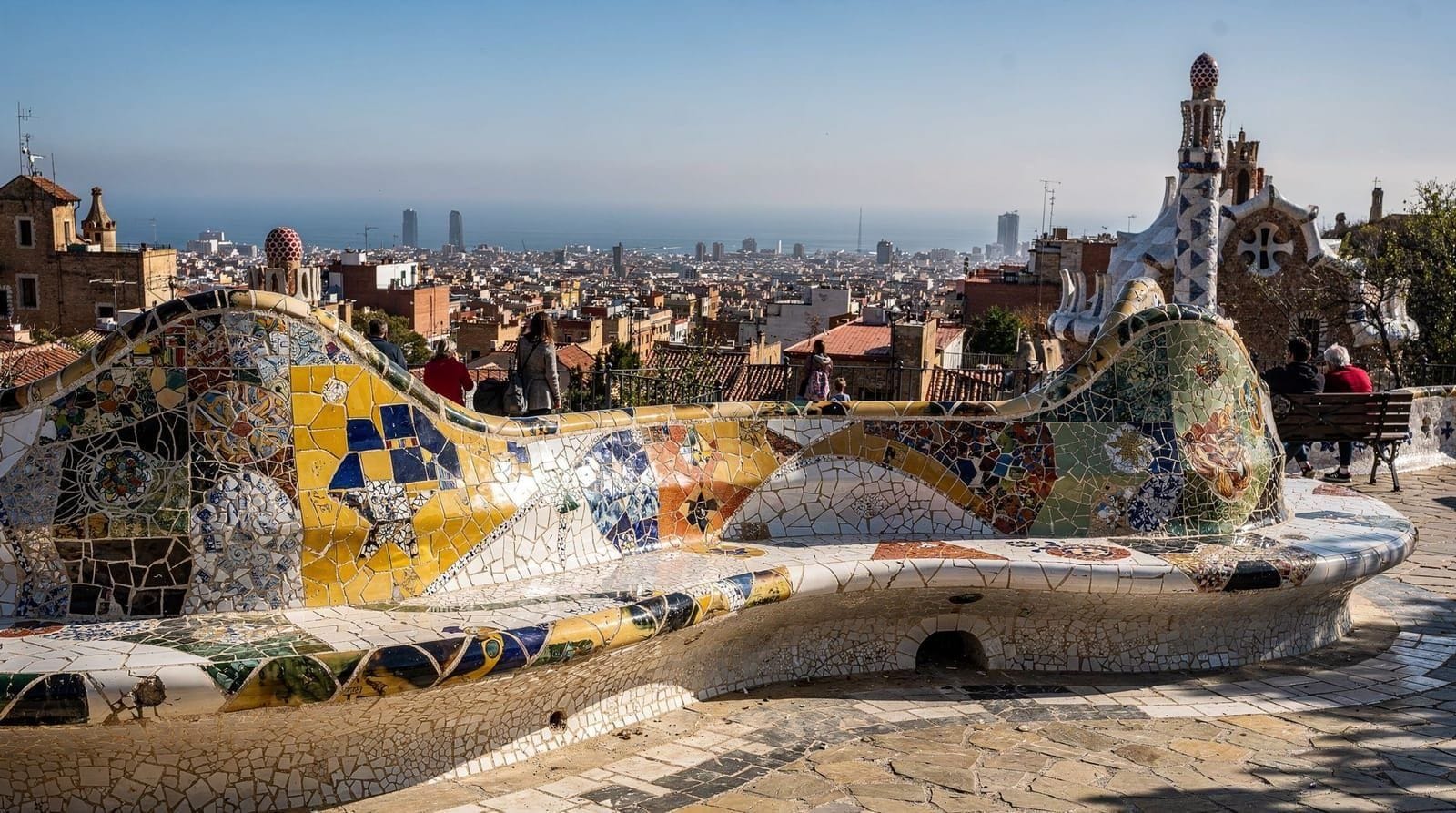
Take L3 to Vallcarca and walk 10 minutes uphill (or FGC to Gràcia and walk 15 minutes). The Monumental Zone timed-entry ticket (€13, booked in advance) covers the Dragon Staircase, Hypostyle Room and the famous mosaic terrace — the section most people recognise from photographs. Read our Park Güell free vs paid guide for detail on what the free zone includes: the wooded paths, viaducts and viewpoints around the perimeter are completely free and genuinely beautiful.
Book the 08:00 or 08:30 slot for the best light and thinnest crowds. By 10:30 the mosaic terrace is noticeably busier. Budget 90 minutes for the full Monumental Zone plus a walk through the free sections.
Midday: Gràcia neighbourhood lunch
Walk 20 minutes downhill into Gràcia. This former independent village has Barcelona’s most authentic neighbourhood feel: squares ringed by local bars, independent shops and no tourist menus. Plaça del Sol (nearest metro L3, Fontana) has several reliable café-bars open from 09:00; Plaça de la Vila de Gràcia is calmer. For lunch: La Pepita (Carrer del Torrent de l’Olla 74, opens 13:30, queue from 13:15 on weekends) is a celebrated croqueta and sandwich spot with a queue that moves fast.
Afternoon: Barceloneta beach
Metro L4 from Passeig de Gràcia to Barceloneta (five minutes). The neighbourhood was originally built for fishermen displaced by the Ciutadella fortress in the 18th century; the grid of narrow streets behind the beach still has a working-class character distinct from the rest of the city.
The main beach (Platja de la Barceloneta) stretches 1.1 km; it is clean, blue-flagged and swimmable from June through October. Beach chair rental runs €6–10; you do not need it. Warning on the beachfront restaurants: the paella on La Barceloneta’s front strip is almost universally frozen rice reheated to order, priced at €25–30 minimum — see our paella trap guide for the honest picture. Instead, eat one street back on Carrer de la Barceloneta or Carrer del Baluard.
A sunset catamaran cruise departs from Port Vell (10 minutes’ walk from the beach) most afternoons from 17:00–19:00. The 90-minute circuit with live music and drinks costs €30–40 and provides a spectacular finale to the three days.
Evening: El Born or Barceloneta farewell dinner
For a final dinner, return to El Born. El Bodegueta del Born (Carrer del Rec 49) serves natural Catalan wines by the glass alongside cheese and charcuterie boards until midnight — relaxed, unhurried, local. Alternatively, La Cova Fumada (Carrer del Baluard 56, Barceloneta, opens 09:00–15:00 Monday–Saturday, cash only) is the birthplace of the bomba (the original potato-and-meat fried ball that is now a Barcelona staple) — go for an early lunch on Day 3 if you want the authentic version.
If your Gaudí budget is tight: Casa Batlló vs La Pedrera
This itinerary books both, but if three days and a mid-range budget mean you have to choose one, here’s the honest comparison:
| Casa Batlló | La Pedrera | |
|---|---|---|
| Price | €29–53 | Around €25 |
| Standout feature | Dragon-scale roof, Blue Room, immersive audio guide | Warrior-chimney rooftop, undulating façade |
| Interior character | More theatrical, more colour | More austere, more architectural |
| Crowds | Busier — book the early “Be the First” slot | Slightly calmer, especially on the rooftop |
| Best for | First-time Gaudí visitors who want the “wow” | Architecture-focused visitors |
If you can only fit one, most first-timers get more out of Casa Batlló. Both are covered together, with skip-the-line entry, on the, which is worth considering if you’d rather book once and not juggle three separate timed tickets.
Extending or shortening this route
Three days is tight but complete. If you can add a fourth day, the natural next step is a Montserrat mountain excursion or a slower Montjuïc afternoon — see our 4-day itinerary for how that day slots in. Travelling with kids changes the pacing considerably: the Barcelona with kids guide covers which sights hold children’s attention and which to skip. Food-focused visitors should look at the foodie 3-day itinerary instead, which swaps some of the Gaudí time for markets and cooking. And if Gaudí himself is the whole point of your trip, the dedicated Gaudí 3-day itinerary goes deeper on Casa Vicens and the lesser-known commissions this route doesn’t have time for.
For a general sense of whether three days is the right length at all, our how many days in Barcelona guide compares this plan against four, five and seven-day options.
What this route deliberately leaves out
Three days is not enough for everything Barcelona offers, and this itinerary is built around that trade-off rather than pretending otherwise. It skips Montjuïc entirely (the cable car, MNAC and Fundació Joan Miró all need a half-day of their own), it does not include a day trip to Montserrat, Sitges or the Penedès, and it only touches the Eixample’s Modernisme in passing rather than walking the full Modernisme route. None of that is a flaw in a three-day plan — it is simply what “the classic first visit” means. If any of those sound like a bigger draw than a third Gothic Quarter evening, that is the signal to book four or five days instead. Our honest take on whether Barcelona is worth the hype also covers the trade-offs between a short, intense visit and a longer, calmer one.
Practical notes for this itinerary
Transport: A T-Casual card (€13, 10 trips) covers all metro journeys for a 3-day visit with trips to spare. Buy at any metro station from the automated machines. The Hola Barcelona 3-day card (€27.30) is only worth it if you also need the airport metro. See getting around Barcelona for the full comparison.
Booking timeline: Sagrada Família → book the moment your dates are confirmed. Park Güell → book 3–5 days ahead (2–3 weeks in summer). Casa Batlló → book 1–2 weeks ahead in peak season. Everything else is walk-up or book 24–48 hours ahead.
Accommodation: Stay in Eixample for Day 2 logistics, or El Born for atmosphere. Avoid La Rambla hotels: noise and pickpocket density are not worth the location. See our where to stay in Barcelona guide for neighbourhood-by-neighbourhood options.
Budget summary (mid-range, per person):
- Sagrada Família with one tower: €38
- Park Güell Monumental Zone: €13
- Casa Batlló standard: €29
- Picasso Museum: €15
- Palau de la Música tour: €21
- T-Casual metro card: €13
- Total activities: ~€130
- Food (3 days, mid-range): ~€120–150
- Accommodation (3 nights): €150–300 depending on season and neighbourhood
Frequently asked questions about this itinerary
Can I do Sagrada Família and Park Güell on the same day?
Technically yes, but the logistics are tight and you’ll feel rushed. Sagrada Família requires a minimum of two hours; Park Güell Monumental Zone another 90 minutes. The two sites are 3 km apart and connected by L3 metro or a 35-minute uphill walk. If you do combine them, take the 09:00 Sagrada Família slot and the 12:00 Park Güell slot — but morning light at Park Güell is much better, so this itinerary separates them for good reason.
Is three days enough to see Barcelona properly?
Three days covers the essentials well if you pre-book the timed-entry attractions and don’t waste time in queues. You’ll miss Gràcia’s slower pace, the Montjuïc viewpoints, a proper day trip and the lesser-known Modernisme buildings. Four or five days adds those layers without feeling rushed. See our 4-day itinerary for the extended version.
What is the best time of year to do this 3-day plan?
May, early June and September–October offer the best balance: warm enough for Barceloneta, short enough queues to make the Gaudí sites manageable, and hotel prices 30–40% below July–August peak. In January–March the city is quiet, prices are lowest and the Sagrada Família is easily booked days rather than weeks ahead — though the beach day is less appealing.
How do I avoid the main tourist traps on this route?
Three rules: (1) Never eat on La Rambla or the Barceloneta seafront strip. (2) Book Sagrada Família and Park Güell directly at the official websites — resellers on Google add €5–10 to the price. (3) If someone on La Rambla offers you a friendship bracelet, walk away without stopping: once it is on your wrist you will be pressured for payment. Full coverage in our Barcelona safety and scams guide.
Do I need to tip in Barcelona restaurants?
Tipping is not mandatory and not expected in the same way as in the United States. At sit-down restaurants, rounding up or leaving €1–2 on a small bill is appreciated; 5–10% on a larger meal at a mid-range restaurant is generous. In tapas bars and cafés, tipping is minimal or absent. The service charge is included in the price in Catalonia.
Is this itinerary suitable for a family with children?
It can work, but the pace is built for adults without nap schedules. Families usually do better slowing Day 2 down — pick one Gaudí house instead of two — and adding a playground stop in Gràcia or extra beach time on Day 3. See the Barcelona with kids guide for age-specific advice on the Gaudí sites and which restaurants are genuinely child-friendly.
Top experiences
Bookable activities with verified prices and instant confirmation on GetYourGuide.
Barcelona: Sagrada Família skip-the-line ticket with audio guide
- Free cancellation
- Instant confirmation
Barcelona: Park Güell skip-the-line admission ticket
- Free cancellation
Barcelona: Casa Batlló fast-track tickets and architecture tour
- Free cancellation
Barcelona: 2-hour Gothic Quarter walking tour
- Free cancellation
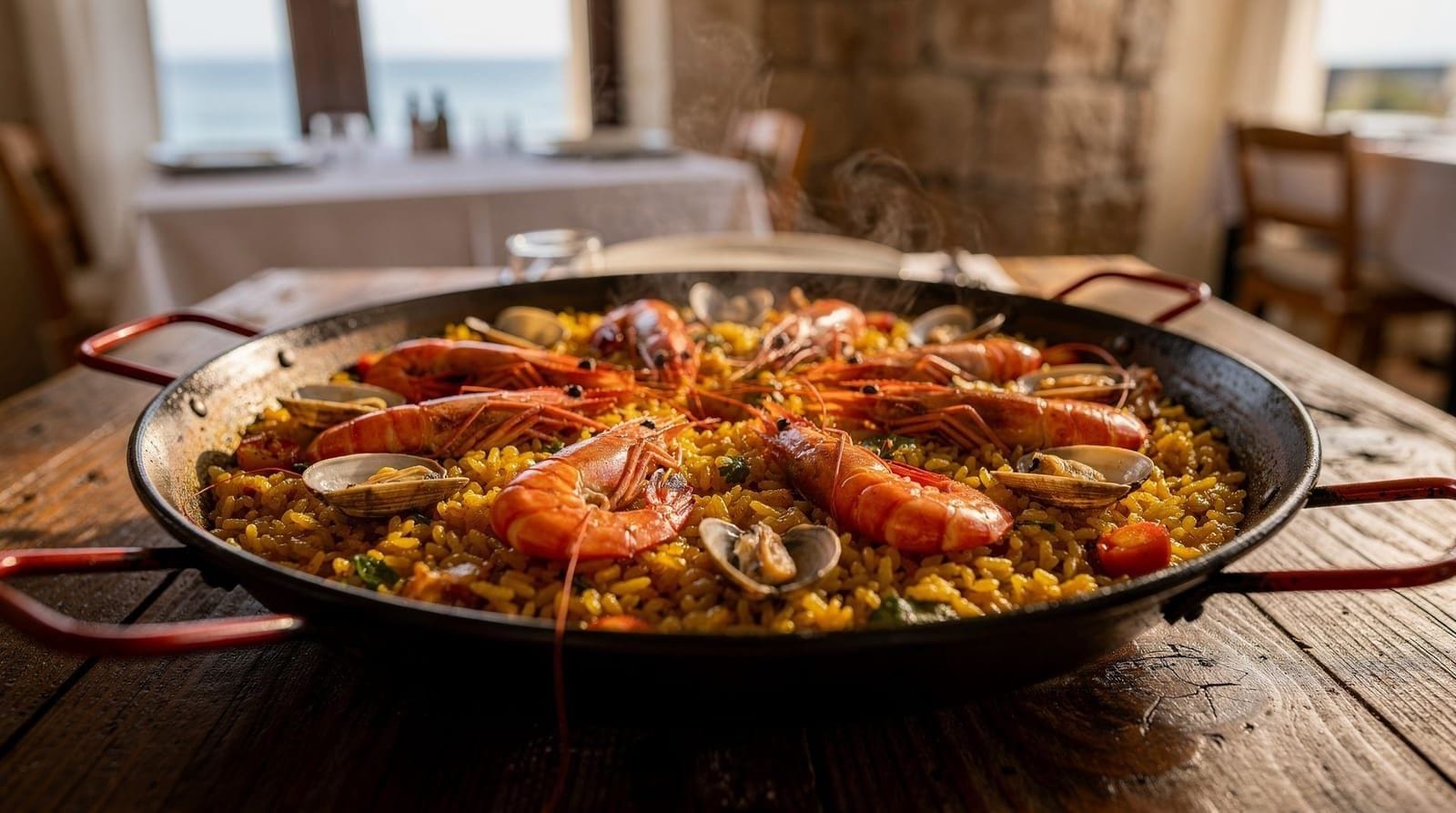
Barcelona: old town tapas & paella food tour with 8 tastings
- Free cancellation
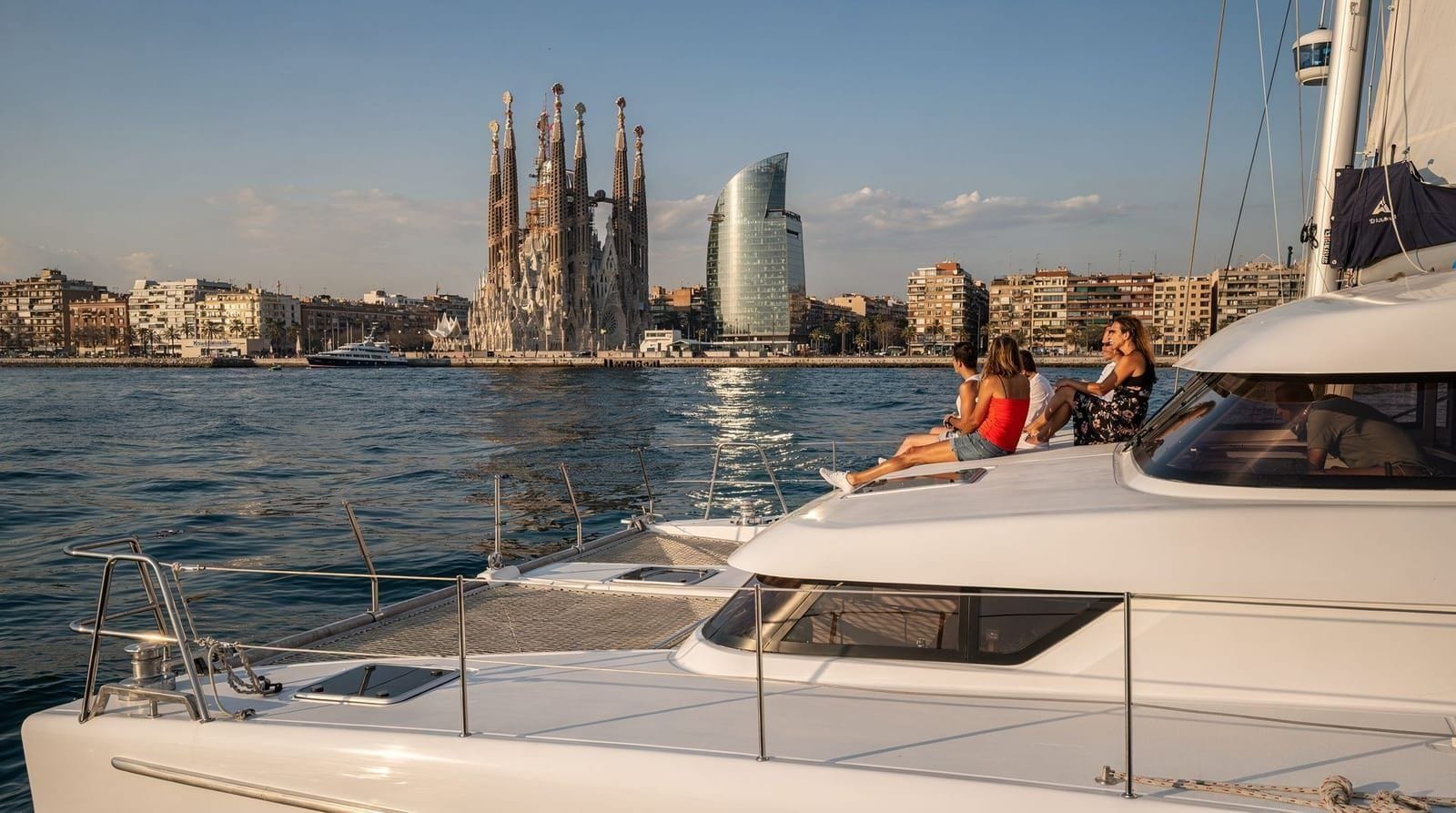
Barcelona: sunset catamaran cruise with live music
- Free cancellation