Barcelona and Costa Brava 7-day road trip itinerary
From Barcelona: Costa Brava and Girona small-group tour
Duration: Full day
- Free cancellation
- Small group
- Hotel pickup
Planning a Barcelona to Costa Brava road trip
This seven-day itinerary divides almost evenly: three days in Barcelona for the city essentials, four days exploring the Costa Brava coast north by car. You can drive the entire route or use it as a guide for a combination of public transport and organised tours — trains serve Girona and Figueres well; Cadaqués and the smaller coves require a car or taxi.
The Costa Brava (“wild coast” in Catalan) runs 200 km from Blanes north to the French border. The name is accurate: the northern stretches between Begur and Cadaqués remain some of the least developed coastline in the Mediterranean, backed by the serrated ridges of the Cap de Creus peninsula. Combining it with Barcelona gives you the maximum contrast of a Catalan trip: Gothic stone, Modernisme brick, fishing-village white.
Car rental logistics: Pick up at Barcelona El Prat airport or in the city (Europcar, Hertz and local operators all have Eixample offices). Do not drive into central Barcelona — park at your hotel or in the Saba underground garages and use the metro. Cars become useful from Day 4 onward when you head north.
Pre-trip bookings:
- Sagrada Família: Day 1 morning (€33–46, book weeks ahead in summer)
- Park Güell: Day 2 morning (€13, book 3–5 days ahead minimum)
- Dalí Theatre-Museum (Figueres): Day 6 morning (€15, book at salvador-dali.org — sells out in summer)
| Best for | Road trip lovers, Gaudí and Dalí fans, coastal walking |
| Pace | Moderate to active — three city days, four days with driving and walking |
| Daily budget | Around €90–130/person including car hire, tolls and coastal hotels |
| Getting there | Car from Day 4; metro and walking for Days 1–3 |
| Best months | May, June and September for swimmable coves without peak-season congestion |
Day 1: Barcelona — Sagrada Família and Eixample
Morning: Sagrada Família
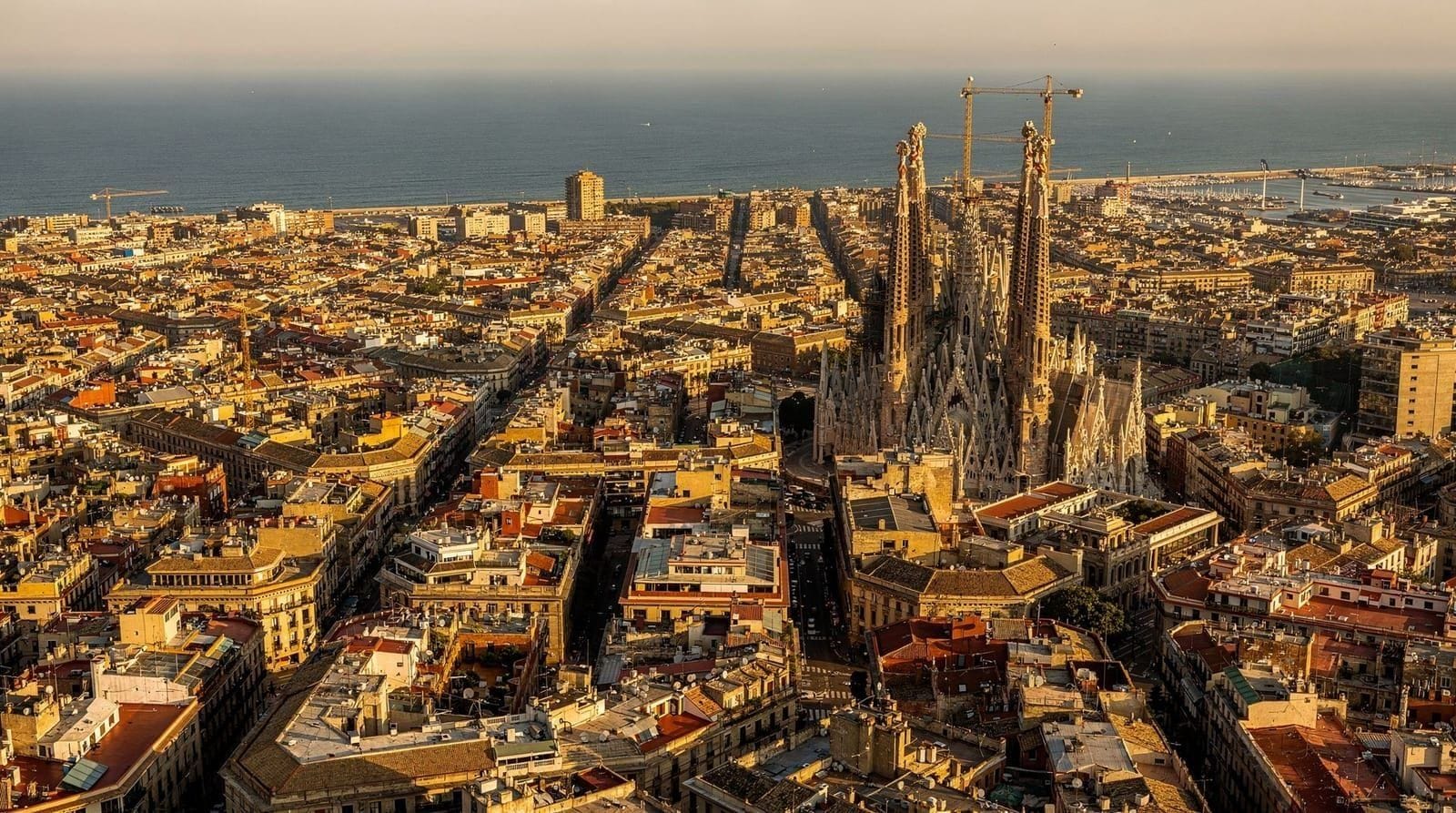
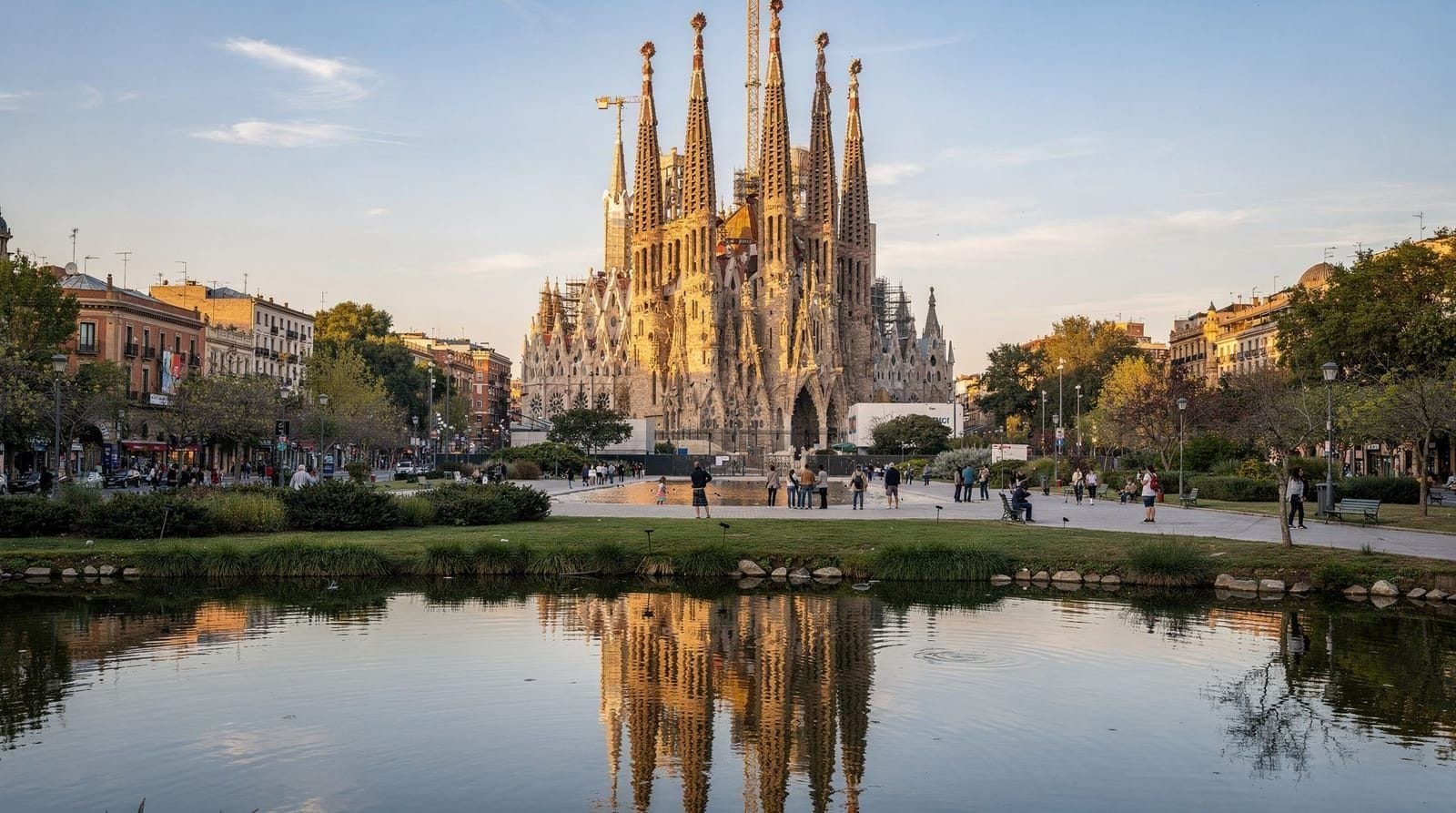
Start at the Sagrada Família with a pre-booked 09:00 slot. This is the most time-sensitive booking of the entire trip: in July–August, the basic entry sells out 1–2 weeks ahead, tower access 6–12 weeks ahead. See our Sagrada Família guide for the room-by-room breakdown.
The 2026 Gaudí centenary (the hundredth anniversary of his death, October 7, 1926) brings special exhibitions and centenary events to the building; guides can speak to the completion timeline in ways audio guides cannot. Budget 2 hours minimum.
Afternoon: Passeig de Gràcia and Casa Batlló
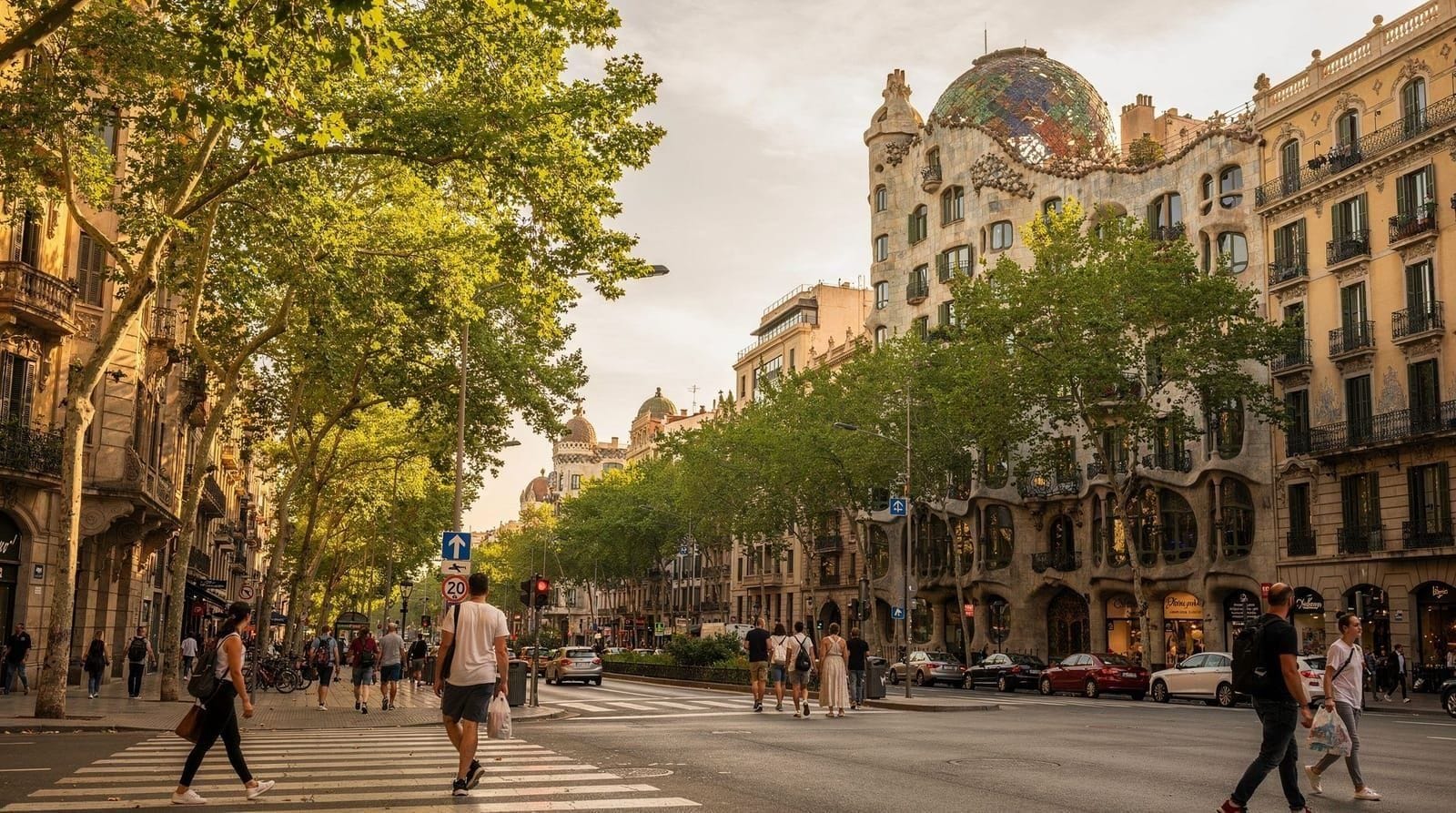
Walk south-west to Eixample and the Passeig de Gràcia. Visit Casa Batlló (€29–53, book in advance) in the afternoon — the building deserves 90 minutes. The Manzana de la Discordia (Block of Discord) can be walked in 20 minutes just from the street before you go inside.
Lunch: Cervecería Catalana (Carrer de Mallorca 236). Dinner: Parking Pizza (Carrer de Londres 98) or a neighbourhood bodega in the Eixample; see our tapas guide for options.
Day 2: Park Güell, Gràcia and old town
Morning: Park Güell (08:30 slot)
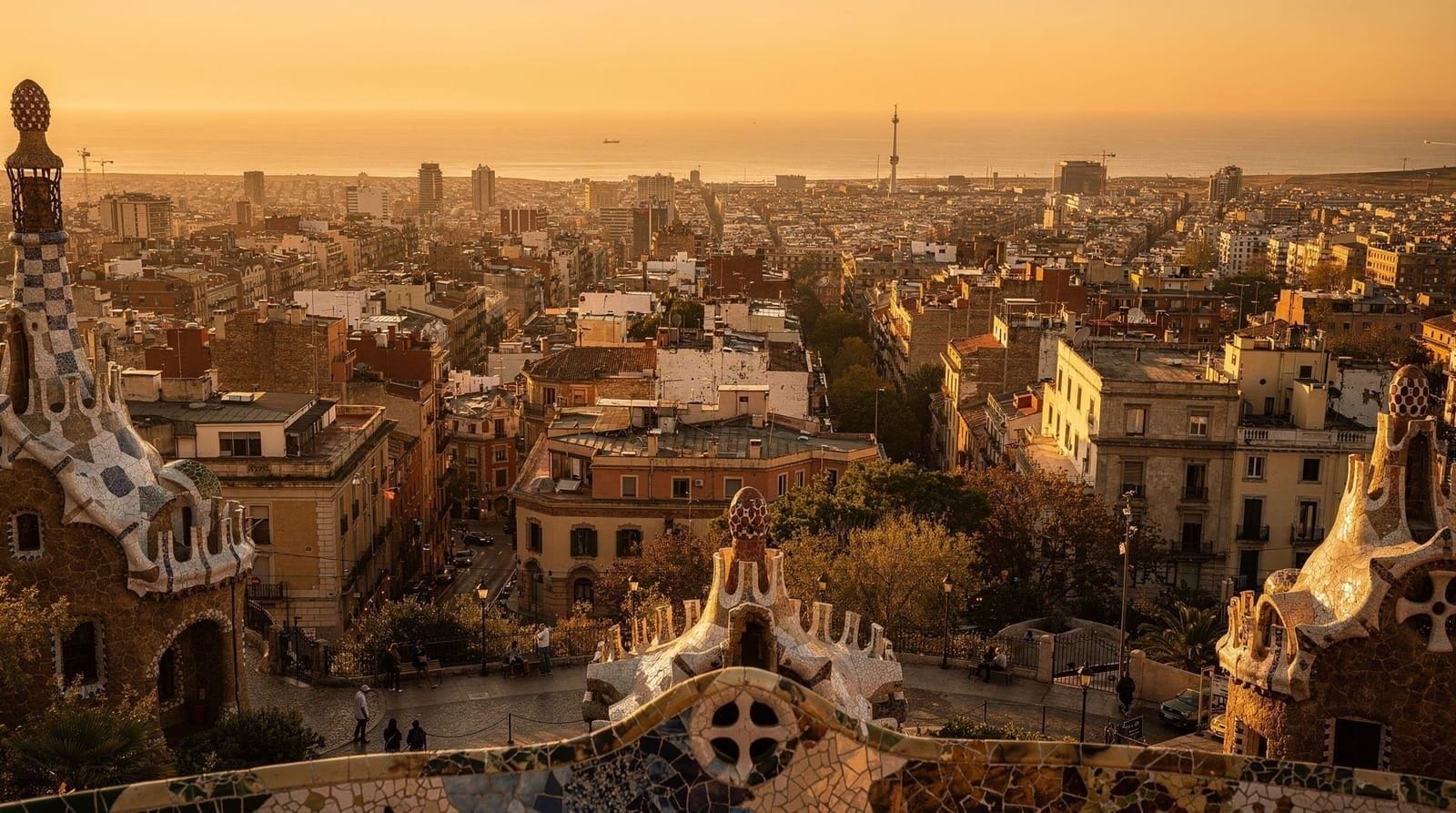
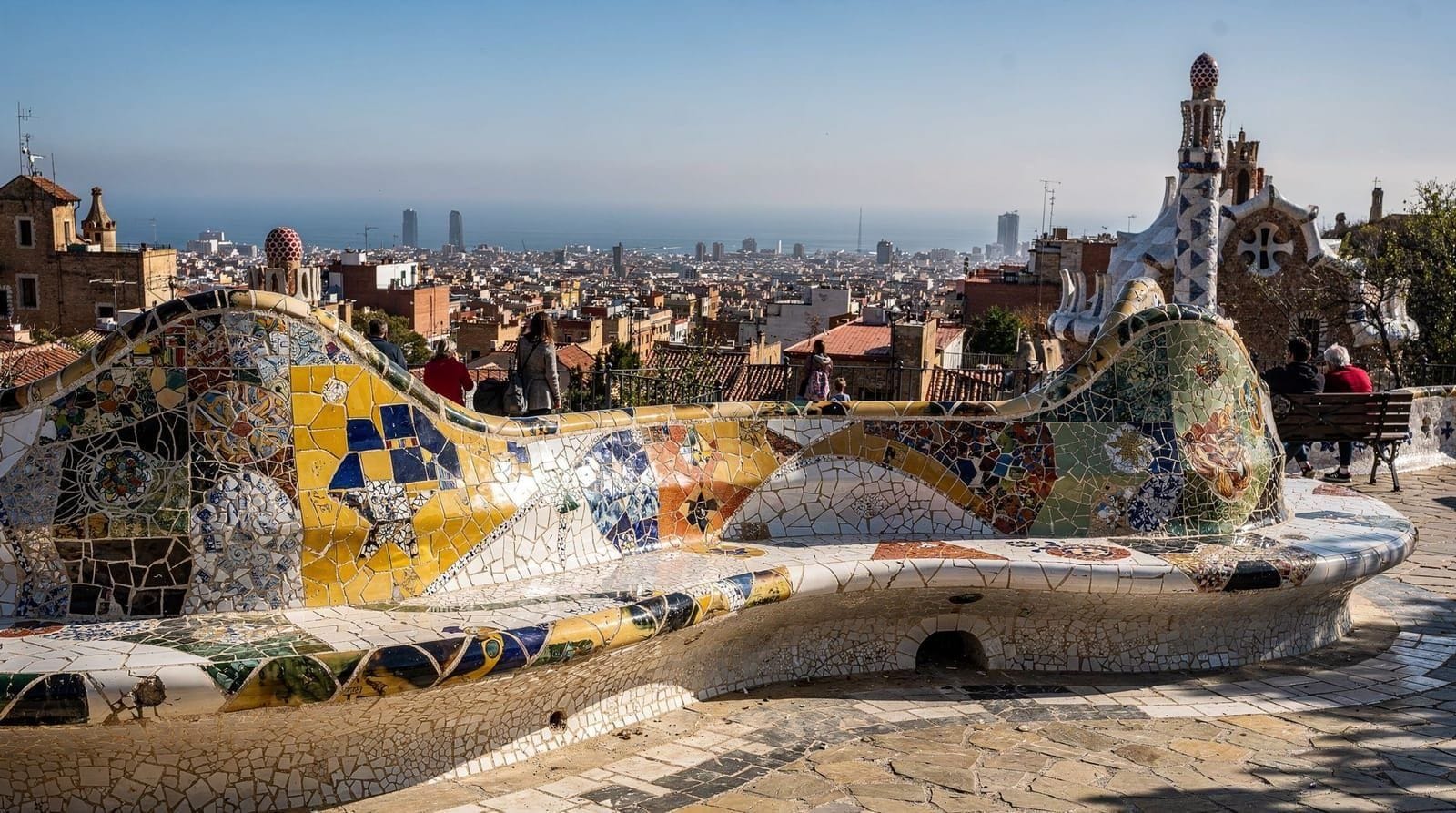
Metro L3 to Vallcarca, 10 minutes’ walk uphill to the Monumental Zone entrance. The 08:30 slot gives you the mosaic terrace in good light before crowds build. See our Park Güell free vs paid guide — the forested sections outside the paid zone are equally beautiful and free.
Walk down into Gràcia for a midday lunch at Bar Bodega Manolo (Travessera de Gràcia 49) or a quick stop at La Pepita (Carrer del Torrent de l’Olla 74).
Afternoon: Gothic Quarter and El Born
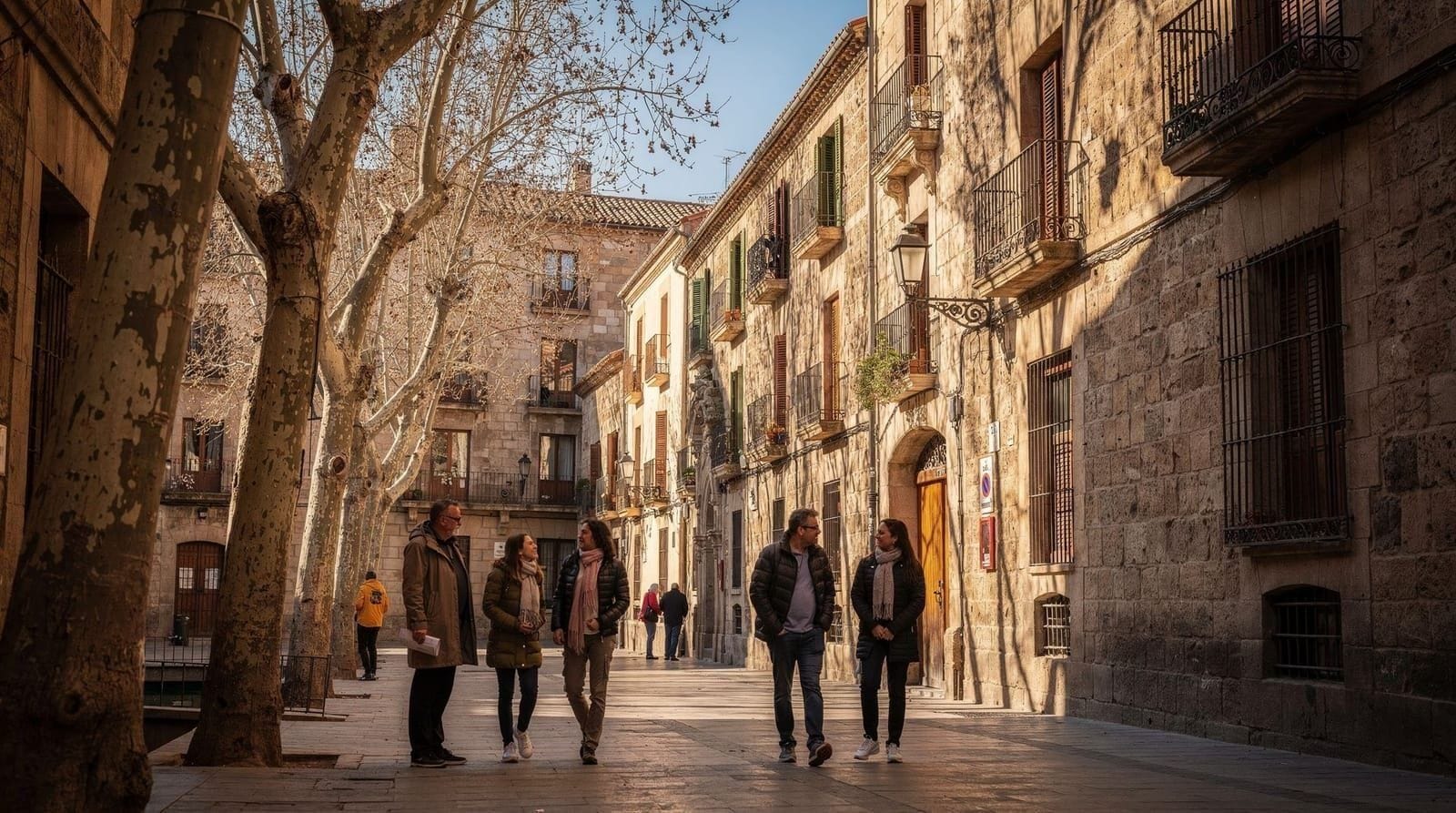
Metro to Jaume I or walk from Gràcia. Spend the afternoon in the Gothic Quarter: the Cathedral, Plaça de Sant Felip Neri, the Roman columns inside the Centre Excursionista de Catalunya. Cross into El Born for the Picasso Museum (€15, book online).
Evening tapas in El Born — El Xampanyet (Carrer de Montcada 22) for cava, Bar del Pla (Carrer de la Montcada 2) for a fuller meal.
Day 3: Barceloneta, Montjuïc and departure prep
Morning: Barceloneta beach
A morning swim before the drive north. Metro L4 to Barceloneta, 90 minutes on the beach. See our Barceloneta beach guide for the different beach sections along the coast — the city beaches run north to south from Platja de la Mar Bella (nudist, quieter) to Platja de la Barceloneta (central, busiest). Avoid beachfront restaurant paella; see our paella trap guide.
Afternoon: Montjuïc
Funicular from Paral·lel (L3) to Montjuïc. Two hours on the hill: the MNAC Romanesque collection is the finest in the world, or the Fundació Joan Miró for a Dalí-adjacent perspective on Catalan surrealism (Miró and Dalí were contemporaries and rivals). See our Montjuïc guide.
Pick up the rental car in the late afternoon (or collect from airport if arriving). Spend the evening packing and eating a final Barcelona dinner in your neighbourhood.
Day 4: Drive to Girona and first Costa Brava
Morning: drive to Girona (100 km, AP-7 motorway, 1 hour)
Leave Barcelona by 09:00 to beat traffic on the AP-7 (toll motorway north; budget ~€8 in tolls). Girona is 100 km north; the drive takes under an hour in light traffic.
Girona is one of Catalonia’s best cities and one of the most-filmed old towns in Europe (the Game of Thrones production used the Cathedral steps). The medieval walls circuit (free, 1.5 km, opens from sunrise), the Cathedral (€7), the Call (Jewish quarter, 9th–15th century) and the Arab Baths (€3) can all be covered in a half-day morning.
Lunch in Girona: La Fabrica (Carrer dels Abeuradors 8, opens 08:30) is a coffee-and-pastry institution; for lunch proper, Restaurant Divinum (Carrer l’Albereda 7, opens 13:00) or the market stalls at the Mercat del Lleó (Plaça de la Independència).
Afternoon: Tossa de Mar
Drive 30 km south-east from Girona to Tossa de Mar (45 minutes). Tossa is the Costa Brava’s most visually arresting fortified town: a walled medieval vila vella on a promontory above a curved bay, with a lighthouse and Roman remains. The walls can be walked in 20 minutes; the town beach (Platja Gran) is excellent.
Tossa de Mar was a haven for artists in the 1930s — Marc Chagall called it “Blue Paradise”. The Municipal Museum (Carrer la Guardia 1, €4) has a small Chagall collection.
The Costa Brava boat trips run from Tossa harbour to the Cap de Bou coves and the Cala Pola beach (accessible only by boat) — worth booking for the afternoon if the sea is calm.
Stay overnight in Tossa or nearby Lloret de Mar (more hotels, less atmosphere).
Day 5: Coastal drive north — Begur and the Coves
Morning: Calella de Palafrugell and Cap Roig
Drive 50 km north from Tossa (1 hour via C-65). Calella de Palafrugell is the archetypal whitewashed Costa Brava fishing village: painted boats, a quiet harbour, a small beach and almost no development. Park at the top of the village (free) and walk down the 15-minute path.
From Calella, the Camí de Ronda coastal path runs north to Llafranc (45-minute walk, moderate, views of the Formigues islands). Llafranch has a broader beach and good seafood restaurants — El Far de Sant Sebastià (Passeig de Cipsela 1) is the best positioned, inside an old lighthouse with panoramic terrace.
Cap Roig Botanical Garden (Carrer del Cap Roig, Calella, tickets €12, open daily) is worth a stop: the gardens host one of Spain’s premier summer music festivals (July–August) and are beautiful year-round above the sea.
Afternoon: Begur and Sa Riera beach
Drive 15 minutes north to Begur. The hilltop town itself has a ruined castle (free to climb, views of the Baix Empordà plain and the Pyrenees), an excellent weekly market (Wednesday morning) and several good restaurants. The castle tower survived enough fires and sieges to be interesting architecturally.
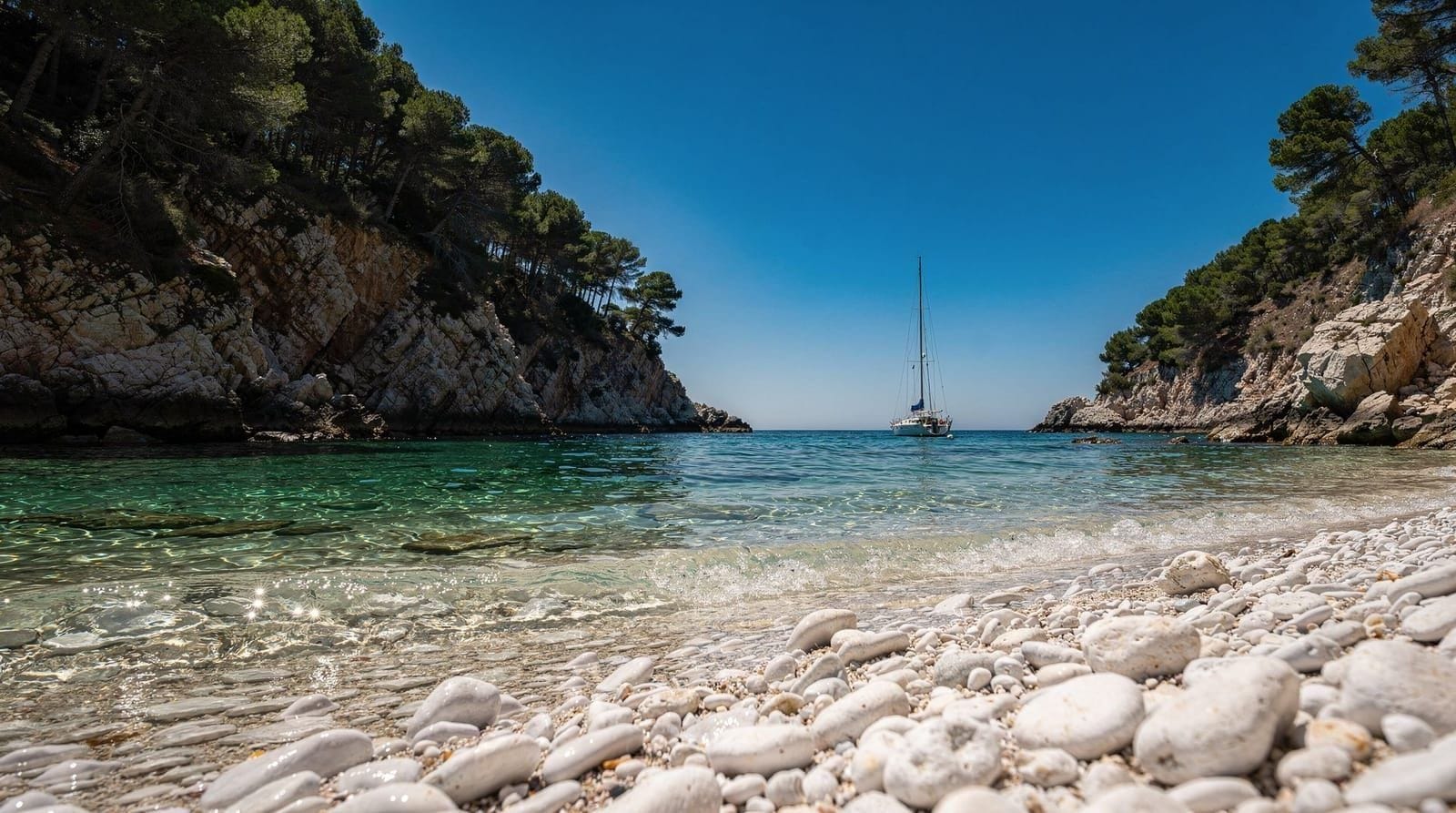
Below Begur, the coves — Sa Riera, Aiguablava, Sa Tuna — are among the best beaches in Catalonia: clear water, craggy rocks, pine-backed coves with no development. Sa Riera is accessible by car; Platja de Aiguablava (boat-only or 30-minute trail from Begur) is the most beautiful. See our best beaches near Barcelona guide for the full comparison.
Stay overnight in Begur (book ahead in summer: the town has limited but excellent small hotels and cases de pagès rural guesthouses).
Day 6: Figueres, Dalí Museum and Cadaqués
Morning: Dalí Theatre-Museum in Figueres (09:30 opening)
Drive 45 km north from Begur to Figueres (45 minutes). The Teatre-Museu Dalí is the centrepiece of Dalí’s self-constructed surrealist universe: he built it in his birthplace, designed every room personally and is buried in the crypt below the stage. The building is a work of art as much as a container for art. Tickets €15 at salvador-dali.org (book in advance — July–August sells out weeks ahead); the museum opens at 09:30 and is best visited early before tour groups arrive.
Budget 2–2.5 hours. The Jewel Room, the Mae West sofa room, the Cadillac-rain car installation and the ceiling-painted bedroom are all worth detailed attention.
See our day trips from Barcelona guide for the Dalí triangle (the three Dalí museums in Figueres, Púbol and Portlligat) if you want the full picture.
Afternoon: Cadaqués
Drive 35 km east from Figueres over the Serra de Rodes to Cadaqués (50 minutes, mountain road — spectacular, one-lane in places, take it slowly). The descent into Cadaqués is one of the finest coastal approaches in Spain.
Cadaqués remains what it has been for a century: a whitewashed fishing village on a rocky bay, inaccessible enough that mass tourism never quite arrived. Picasso, Man Ray, Garcia Lorca and Marcel Duchamp all spent time here. Dalí’s house is at Portlligat (10 minutes’ walk north of the village centre, tickets €14, book in advance — maximum 8 people per session).
Walk the coastal path north from the village to the Portlligat house in 20 minutes; walk south to Cala Nans lighthouse in 40 minutes for the view back over the bay. Restaurant La Galiota (Carrer Narcís Monturiol 9) and Casa Anita (Carrer de Miguel Roset 16) are the two most reliable restaurants in the village.
Stay overnight in Cadaqués — the village has several small hotels and apartments; book well ahead in summer. The cap de Creus lighthouse (10 km east, accessible by car or on foot) is worth a sunrise or sunset detour.
Day 7: Return to Barcelona via medieval villages
Morning: Besalú and Vic (optional)
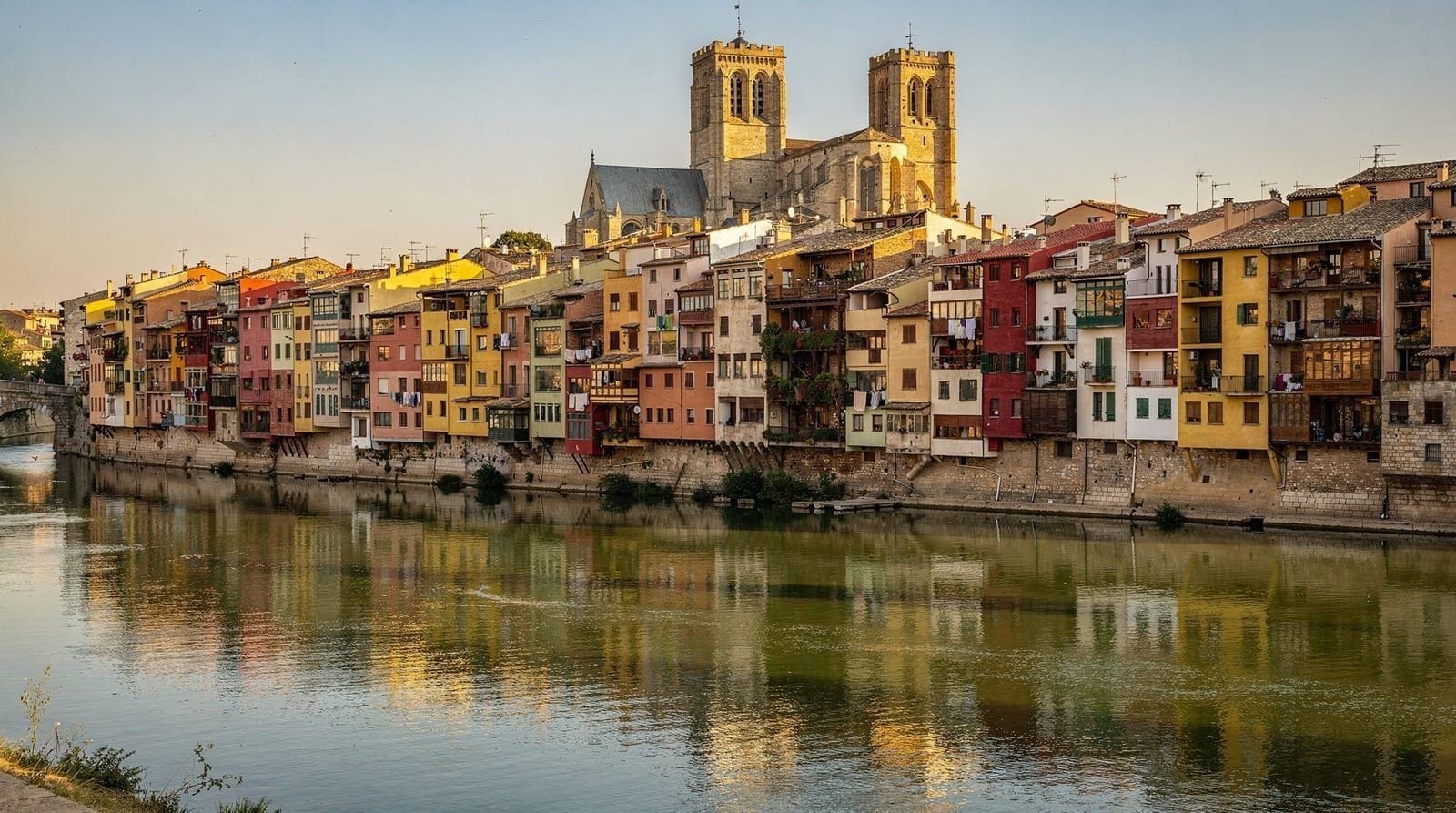
Drive south from Cadaqués on the C-260 and C-31 (2 hours to Barcelona without stops). The medieval walled town of Besalú (45 minutes from Cadaqués on the C-31) is worth a 90-minute stop: the Romanesque bridge over the Fluvià, the Jewish baths (mikveh, one of three surviving in Spain), and the monastery of Sant Pere (10th century). Besalú is compact and walkable.
From Besalú, rejoin the AP-7 south to Barcelona.
Afternoon: return Barcelona
Arrive back in Barcelona by midday–13:00. Return the rental car at the airport (or a city office) and take the Aerobus or R2 Nord train if departing directly. If you have an evening flight or an extra night, Barceloneta for a final swim and lunch at La Cova Fumada (Carrer del Baluard 56, cash only, closes 15:00) is the right ending.
Seven days at a glance
| Day | Location | Focus |
|---|---|---|
| 1 | Barcelona | Sagrada Família, Eixample |
| 2 | Barcelona | Park Güell, Gràcia, old town |
| 3 | Barcelona | Barceloneta, Montjuïc, car pickup |
| 4 | Girona → Tossa de Mar | Old town, medieval walls, fortified coastal town |
| 5 | Begur, coves | Whitewashed villages, coastal path, beaches |
| 6 | Figueres → Cadaqués | Dalí Theatre-Museum, whitewashed fishing village |
| 7 | Besalú → Barcelona | Medieval town, return drive |
Doing the coastal section without a car
If driving the narrow Cadaqués road doesn’t appeal, the Costa Brava section can be restructured around organised day tours instead, keeping the car hire out of the budget entirely. A Girona and Costa Brava day tour covers Girona and a coastal stop in a single day from Barcelona, and the Costa Brava boat trips reach coves that are otherwise only accessible by car. For Cadaqués and Figueres specifically, a guided day trip from Barcelona removes the mountain-road driving entirely.
The trade-off is real: a car gives you Tossa, Begur’s coves and Cadaqués at your own pace over multiple days, while day tours from Barcelona compress the same region into single long days without overnight stays outside the city. For a shorter version of this trip focused purely on Girona and the coast without the full week, the day trips from Barcelona guide lays out the public-transport options in full.
Pairing this trip with the Catalan Pyrenees
Travellers with more time sometimes extend Day 7 north instead of returning directly — the Catalan Pyrenees are within reach of Besalú and Girona and pair naturally with a Costa Brava trip for visitors who want mountains as well as coast. That’s a genuine extension rather than part of this seven-day plan, but worth knowing about if you have an extra two or three days available.
Road trip logistics
Car hire: Pick up from El Prat airport (best rates; all major companies). One-way rentals (pick up BCN, drop off Girona or Figueres airport) are available for an extra fee — useful if you prefer to end the trip in the north.
Road tolls: Barcelona to Girona via AP-7 costs approximately €8–12 in tolls; the N-II coastal route is free but slower. Carry cash or a credit card for toll booths.
Parking: Tossa de Mar, Calella and Cadaqués all have paid car parks at the village entrance; central streets are usually pedestrianised. Budget €5–10/day. In Girona, the central car park underneath Plaça de la Independència is the most convenient.
Fuel: Petrol stations are common on the AP-7 corridor; coastal roads have gaps. Fill up before heading to Cadaqués — the village has one small petrol station.
For public transport alternatives to the car sections: see our day trips from Barcelona guide for bus and train options to Girona, Figueres and the Costa Brava.
Frequently asked questions about this itinerary
Do I need a car for the whole 7 days?
No. Days 1–3 in Barcelona are better without a car. Pick up the rental on Day 4 morning. Many visitors prefer to take the train to Girona and Figueres (37–110 minutes from Barcelona Sants) and rent a car only for the coastal section between Tossa, Begur and Cadaqués, returning it at Girona or Figueres station.
When is the best time to do this trip?
May and June are ideal: warm enough for swimming, roads not yet at summer-peak congestion, and Cadaqués still navigable. July–August is possible but Cadaqués gets very busy, coastal roads are congested on weekends, and accommodation prices peak. September is excellent: sea temperature 24°C, fewer crowds, lower prices. October has extraordinary light but the sea is cooling.
Can I skip Figueres and still see Cadaqués?
Yes. Drive directly from Begur to Cadaqués (90 minutes via Figueres bypass or L’Escala). The Dalí Theatre-Museum is unmissable if surrealism or Dalí interests you at all, but Cadaqués stands entirely on its own as a destination.
Is the mountain road to Cadaqués difficult to drive?
The road from Figueres (C-260 via Roses and Cadaqués) is scenic but narrow in places, with hairpin bends and limited overtaking. In a standard car it is perfectly manageable; the key is to take it at 40–50 km/h rather than rushing. In summer, a coach service runs from Figueres to Cadaqués if you prefer not to drive it.
How does this compare to doing it all by public transport?
Girona and Figueres are excellent by train. The day trips guide covers those options. The weak link is the coastal section: Tossa, Calella, Begur and Cadaqués all require buses that run infrequently or not at all in winter. For the Costa Brava properly, a car or organised day-trip tour is significantly more practical.
Is this itinerary suitable if I only want to see Barcelona and Girona, skipping the coast?
Yes — Days 1–4 stand alone as a shorter, car-free trip: three days in Barcelona plus a train day trip to Girona (37 minutes from Barcelona Sants), returning the same evening rather than continuing north. That gives you the city and one of Catalonia’s best small cities without the coastal driving. Add a second day trip to Figueres for the Dalí Theatre-Museum if surrealism interests you, also reachable by train.
Top experiences
Bookable activities with verified prices and instant confirmation on GetYourGuide.
Barcelona: Sagrada Família skip-the-line ticket with audio guide
- Free cancellation
- Instant confirmation
Barcelona: Park Güell skip-the-line admission ticket
- Free cancellation
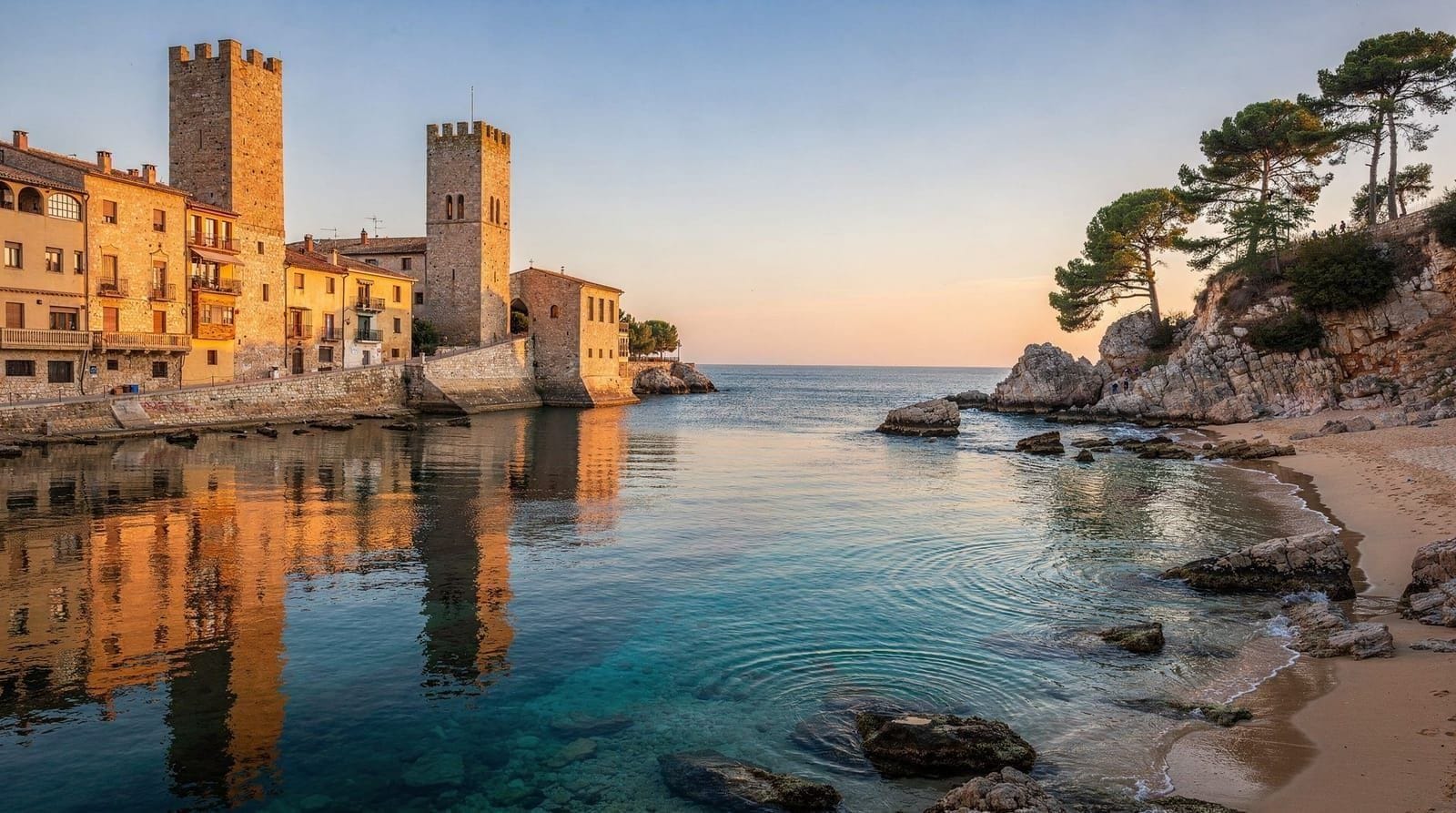
From Barcelona: Costa Brava and Girona small-group tour
- Free cancellation
- Small group
- Hotel pickup
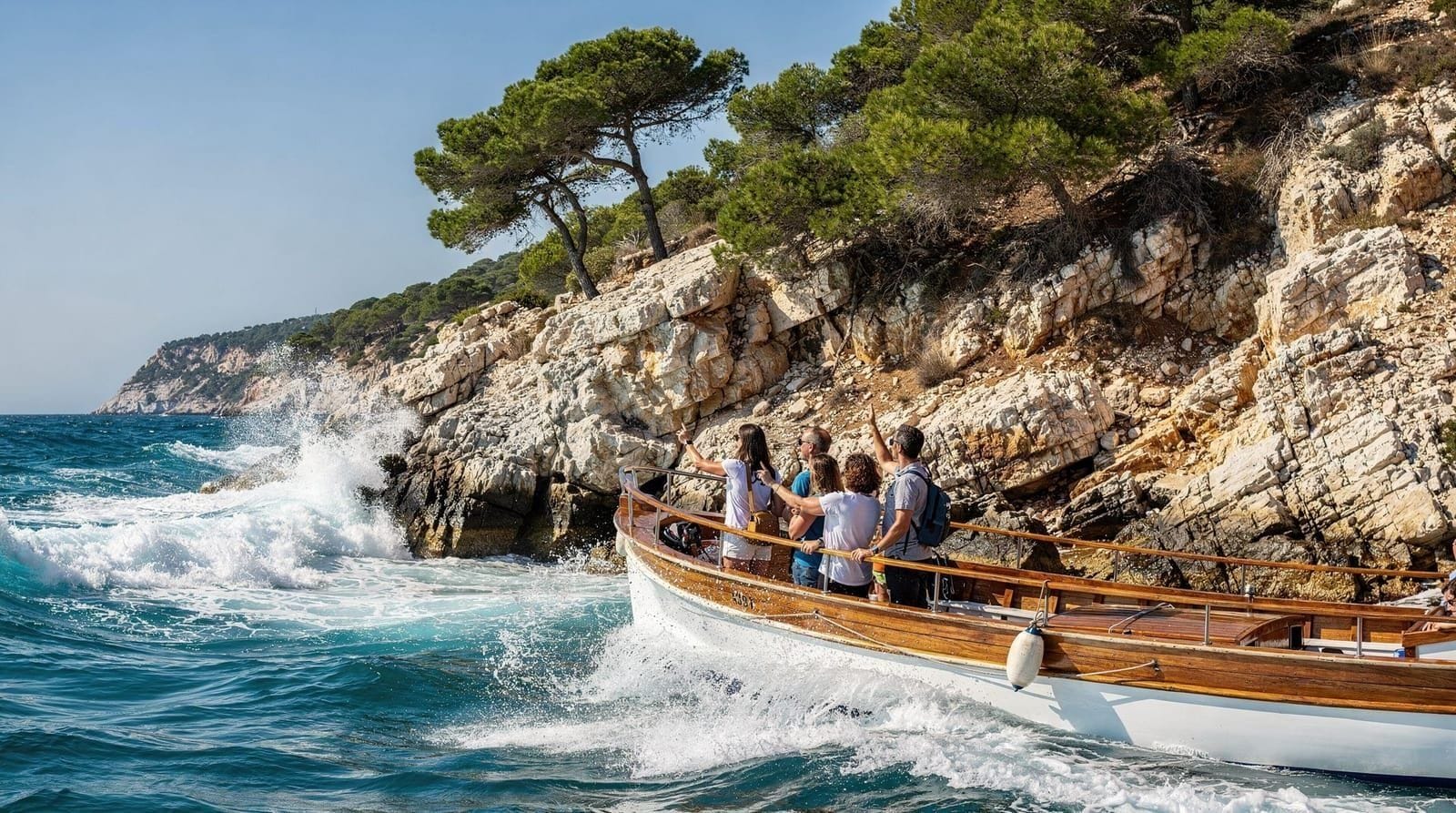
Barcelona: Costa Brava boat ride and Tossa de Mar visit
- Free cancellation
- Hotel pickup
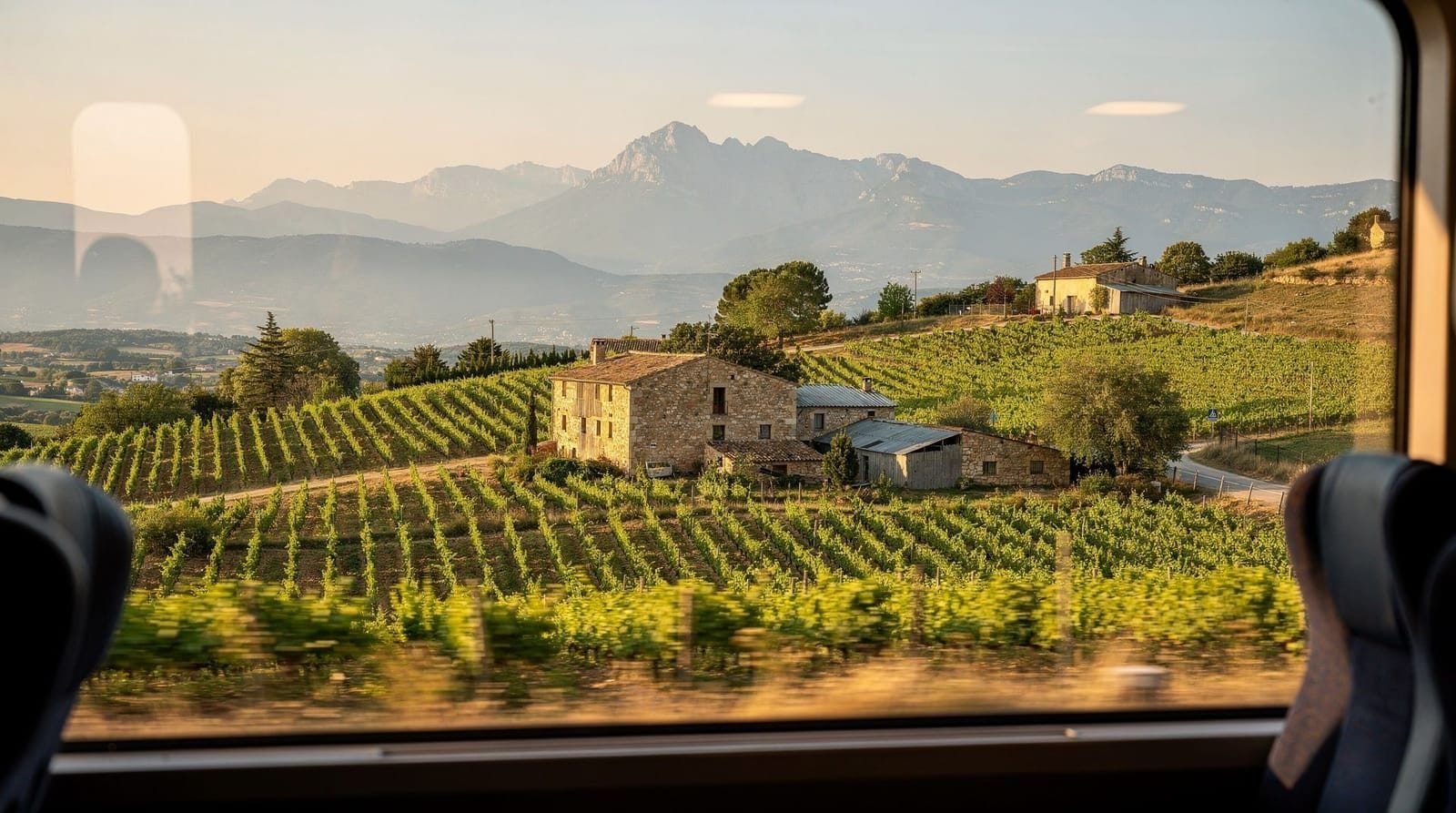
From Barcelona: Figueres 5-hour Dalí Museum tour
- Free cancellation
From Barcelona: Dalí triangle and Cadaqués tour
- Free cancellation
- Hotel pickup